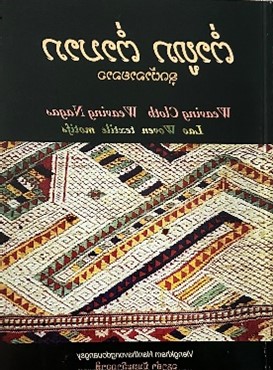
Author: Viengkham Nanthavongdouangsy, 2004. 44pg. (Lao and English)
Publisher: Phaeng Mai Gallery, Vientiane, Lao PDR
The Naga is a prominent motif in Lao woven textiles, reflecting the imagination and respect of the weavers. It is deeply connected to the livelihood of the Lao people. When discussing their work, weavers often link the Naga to their craftsmanship. Known by various names, the Naga's significance is shaped by Buddhist and Animist beliefs, with each ethnic group having its own tales and interpretations of this sacred creature.
Author: Marie-Louise Nabholz Kartaschoff, Ruth Barnes, David J. Stuart Fox, editors, 1991. 459pg. (English). Photocopied version.
Publisher: Museum of Ethnography, Basil, Zwitserland.
This photocopied version includes papers from: Jan Wisseman Christie. (Ikat to Batik? Epigraphic data on Javanese Textiles from 9th to 15th Centuries). Woro Ariyandini Sumaryoto. (Textiles in Javanese texts.) Alit Veldhuizen-Djajasoebrata. (Snakeskin motifs on some Javanese textiles.) H.I.R. Hinzler. (On Protection and textiles in Bali.) David J. Stuart Fox. (Textiles in Ancient Bali.) Ruth Barnes. (Change and Tradition in Lamaholot textiles. The Ernst Vatter Collection.) Suwati Kartiwa. (Buginese Weaving in the Metropolitan area of Jakarta.) Sandra A. Niessen. ( Indigenous Batak Cloth Production and Trade in 19th century……) Francine Brinkgreve. (The Woven Balinese Lamak. Reconsidered.) E. Douglas Lewis. (Mother Warp and Father Weft. Social meaning of textiles in Sikka….) Rens Heringa. (Tilling the cloth and weaving the land.) Barbara Leigh.( The theme of the Heavenly Garden.) Traude Gavin. (The Patterns of the Pua Kumbu in an Iban cultural context.) Danielle Geinaert. (The Sumbanese Textile Puzzle. A comparative exercise.) Janet Hoskins. (Snakes, smells, and dismembered brides. Kodi, West Sumba.) Edgar Keller. (Headdresses as a medium of expression in Laboya, Sumba…..) Roy W. Hamilton.( Textile Change in 20th Century Ndona, Flores.) Hetty Nooy-Palm. (Sacred Swords and Magic Cloth: A Saadan Toraja ritual.) Sven Cederroth. (Sacred Cloths in the Wetu Telu cosmology of Bayan, North Lombok.) Judith Schlehe. (Garments for the Goddess of the Sea.) Martowikrido Wahyono. (Notes on Lurik.) Jet Bakels. (Symbolism of Baduy Adat clothing ….. colors, patterns and plants.) Barbara Lůem. (A Tissue of Textiles. Textiles & ethnicity in Tengger society) Petra Martin. (Banana-fibre weaving in Sangihe and Talaud.) Christian Pelras. (Textiles and Weavings of the South Sulawesi Muslim Peoples….) Christiane Kron-Steinhardt. (Isinai Kinnutiyan. Traces of … weaving trad in Luzon…) Harmen C. Veldhuizen. (Batik Belanda 1840 – 1940.) Nian S. Djoemena. (Batik treasures of the special region of Yogyakarta.) Annegret Haake & Hani Winotosastro. (Batik or Plagiate? How to distinguish between Batik Tulis, Batik Cap, and direct prints.)
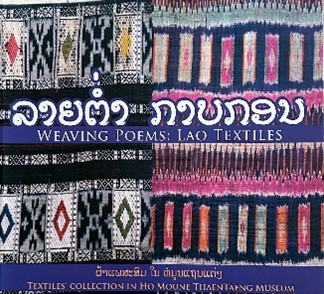
Author: Douangdeouane Bounyavong, 2015. 140pg. (Lao and English language)
Publisher: Dokked Publishing House, Vientiane, Lao PDR
The book prominently features textiles from the Ho Mount Thaentaeng Museum, unequivocally illustrating that valuable information sources arise from both literature and oral traditions, including sayings, proverbs, folktales, and texts inscribed on palm leaf manuscripts. Through literature, weavers decisively acquire a deep understanding of the origins of patterns and techniques that have been meticulously passed down through generations. The Khounbourom legend is fundamentally the cornerstone of Lao history, covering the period from 1000 BCE to 700 CE, and it is clearly documented in palm leaf manuscripts.
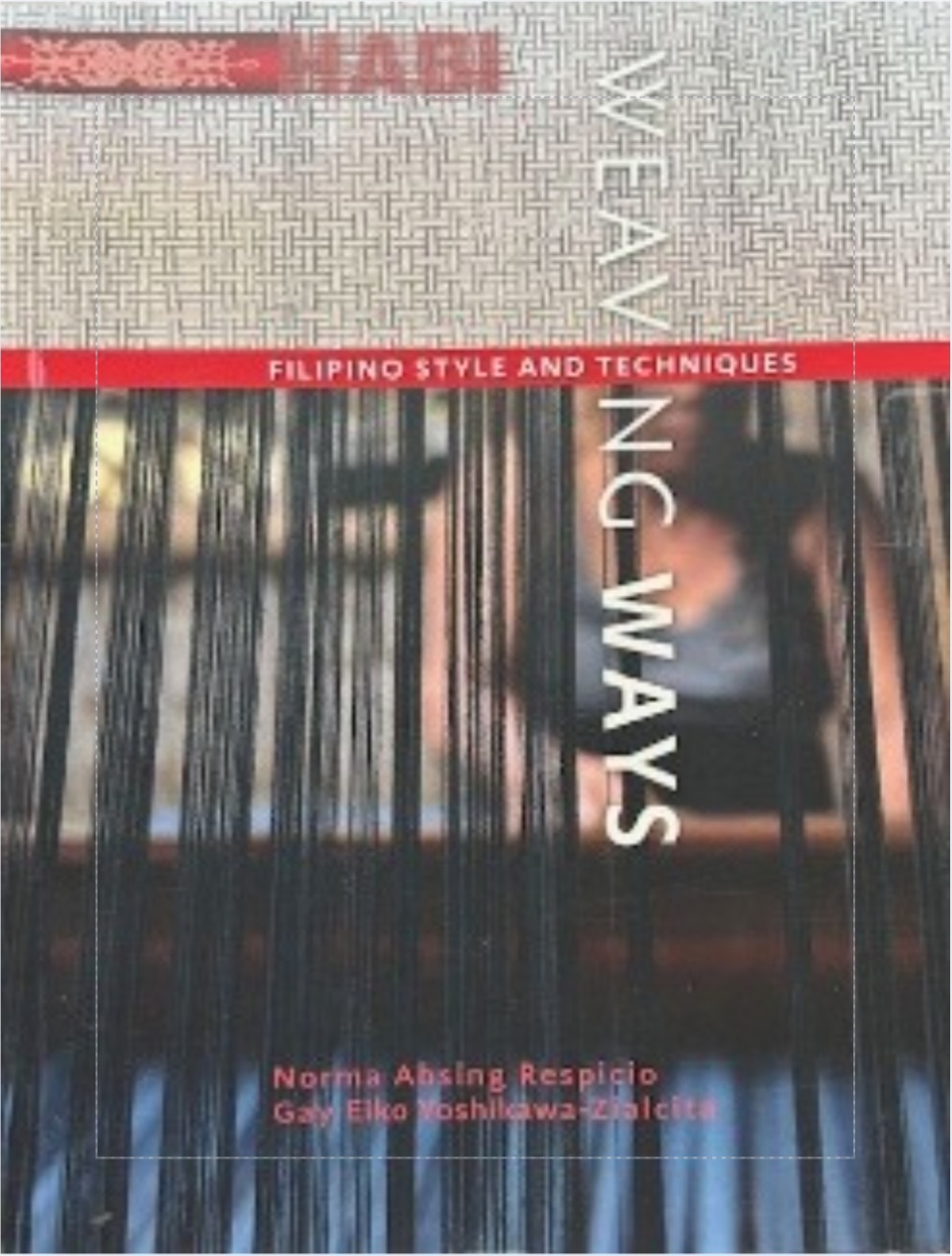
Author: Norma Absing Respicio & Gay Eiko Yoshikawa Zialcita, 2020. 271pgs. (English). Spftcover.
Publisher: HABI, The Philipine Textile Council
The initial section of this volume delineates the fundamental dimensions of weaving practice, beginning with a detailed exposition of the structural anatomy of the floor loom and the ancillary implements indispensable to the craft. It proceeds to outline the preparatory procedures required for loom installation and the technical repertoire through which artisans generate a multiplicity of woven designs. This segment functions as a methodological primer, situating weaving not merely as a mechanical process but as a disciplined engagement with material culture. The subsequent section extends beyond technical instruction to foreground the distinctive textile traditions and weaving modalities of selected ethnolinguistic communities across the Philippine archipelago—from the highland societies of northern Luzon to the diverse cultural landscapes of Mindanao. While not intended as a comprehensive survey, this portion of the text endeavors to illuminate the remarkable heterogeneity of Philippine weaving practices. It seeks to open a discursive space wherein textiles are apprehended not only as aesthetic artifacts but as cultural texts, encoding histories of community, cosmology, and identity. In this regard, the book aspires to inspire its readership to engage more deeply with the woven heritage of the Philippines. Each textile constitutes a repository of collective memory and social meaning, embodying the interplay of tradition, innovation, and identity formation. By situating weaving within its ethnographic and cultural contexts, the work underscores the role of textiles as vital expressions of Philippine cultural continuity and as enduring symbols of national identity.
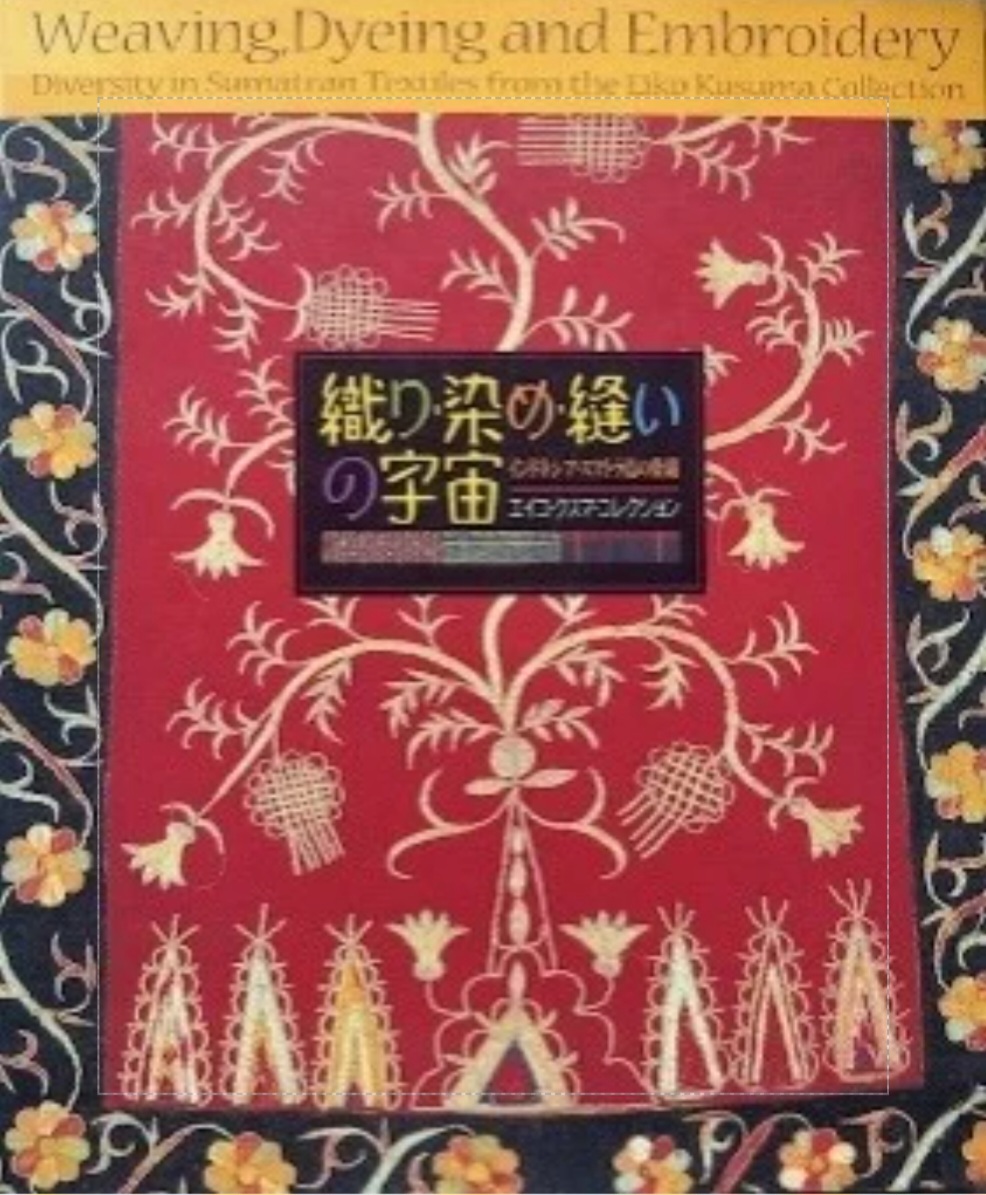
Author: Judi Achjadi, 1999, 152pg. (Japanese & English). Softcover.
Publisher: Fukuoka Art Museum, Japan
This catalog showcases the richly varied corpus of woven, dyed, and embroidered textiles originating from Sumatra. These works are produced by the island’s four principal ethnic communities—Aceh, Melayu, Batak, and Minangkabau—who inhabit its eight constituent states. The textiles embody profound symbolic resonance, serving not only as garments but also as ceremonial hangings. Their functions are deeply embedded within systems of religious belief, cosmological interpretation, customary practice, and aesthetic sensibility, all of which have been transmitted across generations.
Page 106 of 108