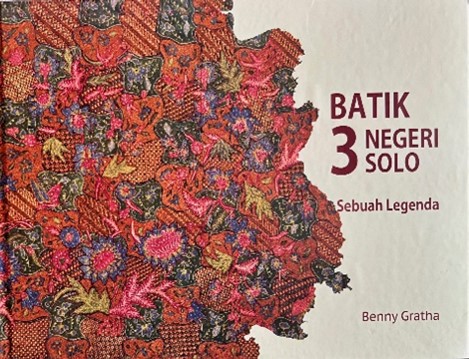
Author: Benny Gratha, 2018. 238pg (Indonesian)
Publisher: Komunitas Peranakan, Tanggerang Banten
This book, published by the Peranakan community in Indonesia, highlights Batik Tiga Negri, a single piece of batik dyed in three places (brown in Solo, blue in Pekalongan, red in Lasem) to achieve its intended colors. Created by Indo-Chinese artisans in Solo from the early 20th century onwards. It features the Tjoa family, known for their intricate batiks, and shares the legends behind these pieces. The book also mentions the Batik Ling family and other smaller manufacturers in Solo who produce similar styles.
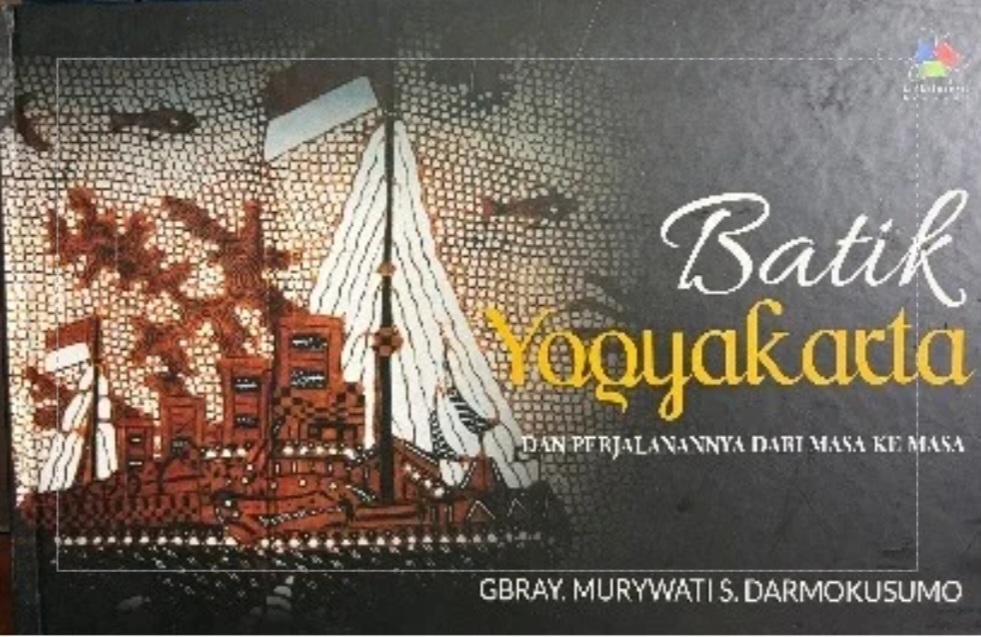
Author: GBRAy. Murywati S. Darmokusumo, 2015. 200pgs. (Indonesian). Hardcover
Publisher: Kakilangit Kencana, Jakarta
The author of this volume is the sister of Sri Sultan Hamengkubuwono X of Ngayogyakarta. The collection of Yogyakarta batik documented in the book originates from members of the royal family, with several pieces created by the royals themselves. The work is of considerable scholarly importance, as it not only provides a meticulous inventarisation accompanied by annotations of the royal collection, but also offers a comprehensive account of the historical evolution, the pakem (codified standards), the philosophical underpinnings, and the preservation practices surrounding these exquisite textiles. It has thus become a principal reference for the study of Yogyakarta court batik. The author also served as advisor in the recreation of a 21st century ceremonial batik dodot made for the 2018 exhibition of King Chulalongkorn’s batik collection in Bangkok. The dodot—a voluminous, oversized ceremonial cloth traditionally worn by Javanese nobility—was reconstructed on the basis of a rare photograph depicting King Chulalongkorn adorned in such a garment. The cloth featured a striking Parang Barong motif with a scale of approximately 22 centimeters, a size only worn by Sultans. The photograph, taken during one of Chulalongkorn’s visits to the Sultan of Yogyakarta in the early twentieth century, was fortuitously rediscovered at an antique market in Bangkok. Within the book, the author traces the trajectory of court batik prior to the formalization of patterns, including seminal designs such as Parang, Kawung, and Lereng. The narrative then progresses to the development of Kawung and Ceplok, Lereng or Parang, Nitik, Lunglungan, and the Semen group. A dedicated chapter explores the motifs Nitik and Truntum, followed by an examination of the stylistic evolution of Yogyakarta batik across different historical periods. The volume concludes with a curated gallery of batik exemplars, underscoring the enduring cultural and aesthetic significance of this royal art form.
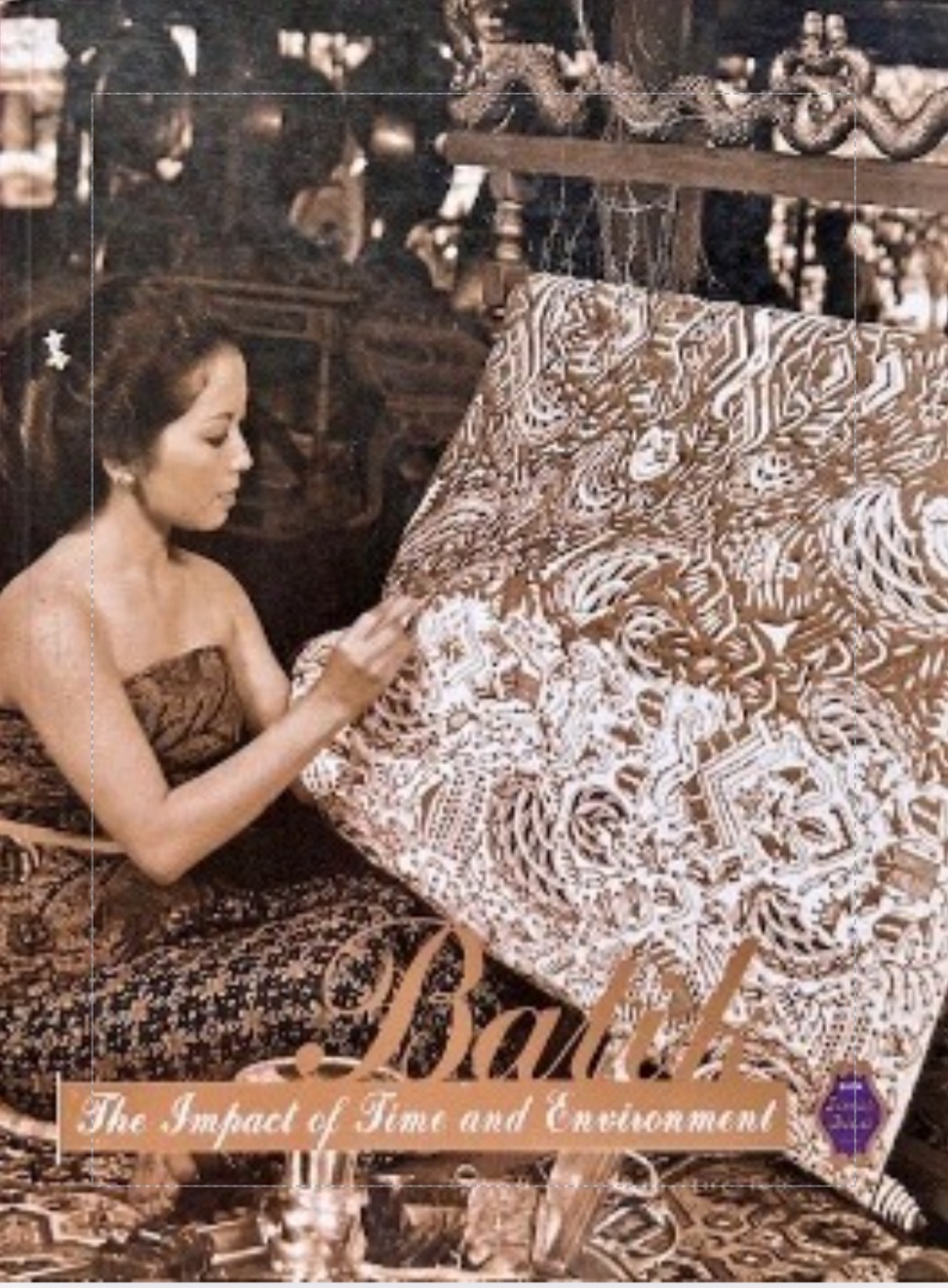
Author: Santosa Doellah, 2002, 263pg. (English). Softcover
Publisher: Danar Hadi, Surakarta
The book conveys H. Santosa’s profound knowledge of batik—its historical trajectory, aesthetic designs, production processes, and philosophical underpinnings—as part of his enduring commitment to preserving and advancing Javanese culture, particularly the art of batik. Over time, shifting social contexts and environmental conditions have shaped batik’s growth, leading to the emergence of diverse stylistic traditions: court batik, merchant batik, village batik, Dutch-influenced batik, Chinese batik, Batik Djawa Hokokai, and Batik Indonesia. Today, batik encompasses not only traditional, social, and artistic dimensions but also an economic dimension, manifested through the batik industry, which increasingly caters to a younger and more contemporary clientele.
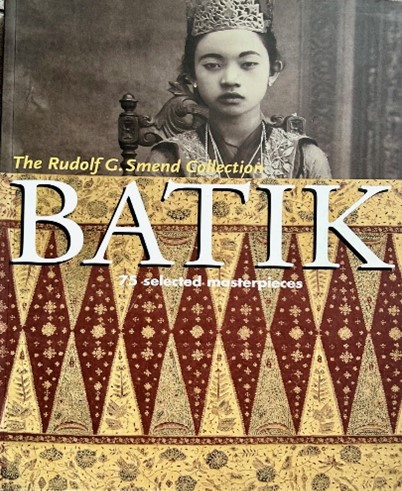
Author: Rudolf Smend, 2006. 179pg. (German & English)
Publisher: Galerie Smend, Cologne, Germany
The book offers an overview of batik production in Java, serving as a valuable resource for collectors, students, and textile enthusiasts. It includes contributions from Isa Fleishman-Heck, who discusses the introduction of Javanese batiks to Germany, as well as Maria Wronska-Friend and Donald J. Harper.
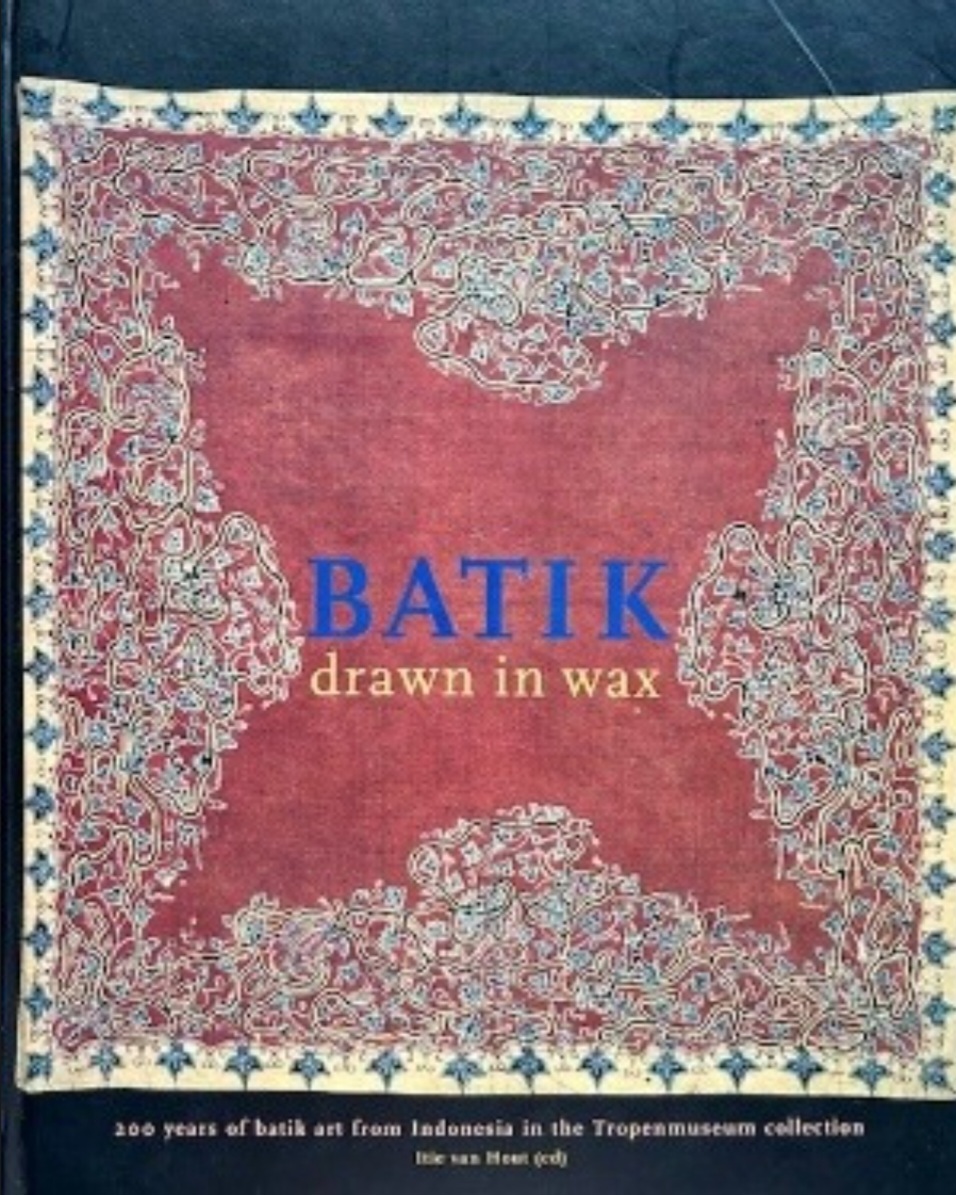
Author: Itie van Hout (editor), 2001, 208pg. (English). Hardcover. Catalog
Publisher: Royal Tropical Institute, Amsterdam
The book was published in conjunction with the exhibition entitled “200 Years of Batik Art from Indonesia”. The book details Indonesian batik traditions based on a collection of historical pieces from the Tropen Museum Amsterdam. It features essays and photographs on various types of Indonesian batik, including Java, Madura and Jambi, as well as those influenced by European and Japanese styles. The publication includes insightful essays and numerous high quality photographs of the batik pieces. The appendices include list of identified names in Pekalongan area, Chinese genealogies, a Bibliography and a list of objects.
Page 16 of 108