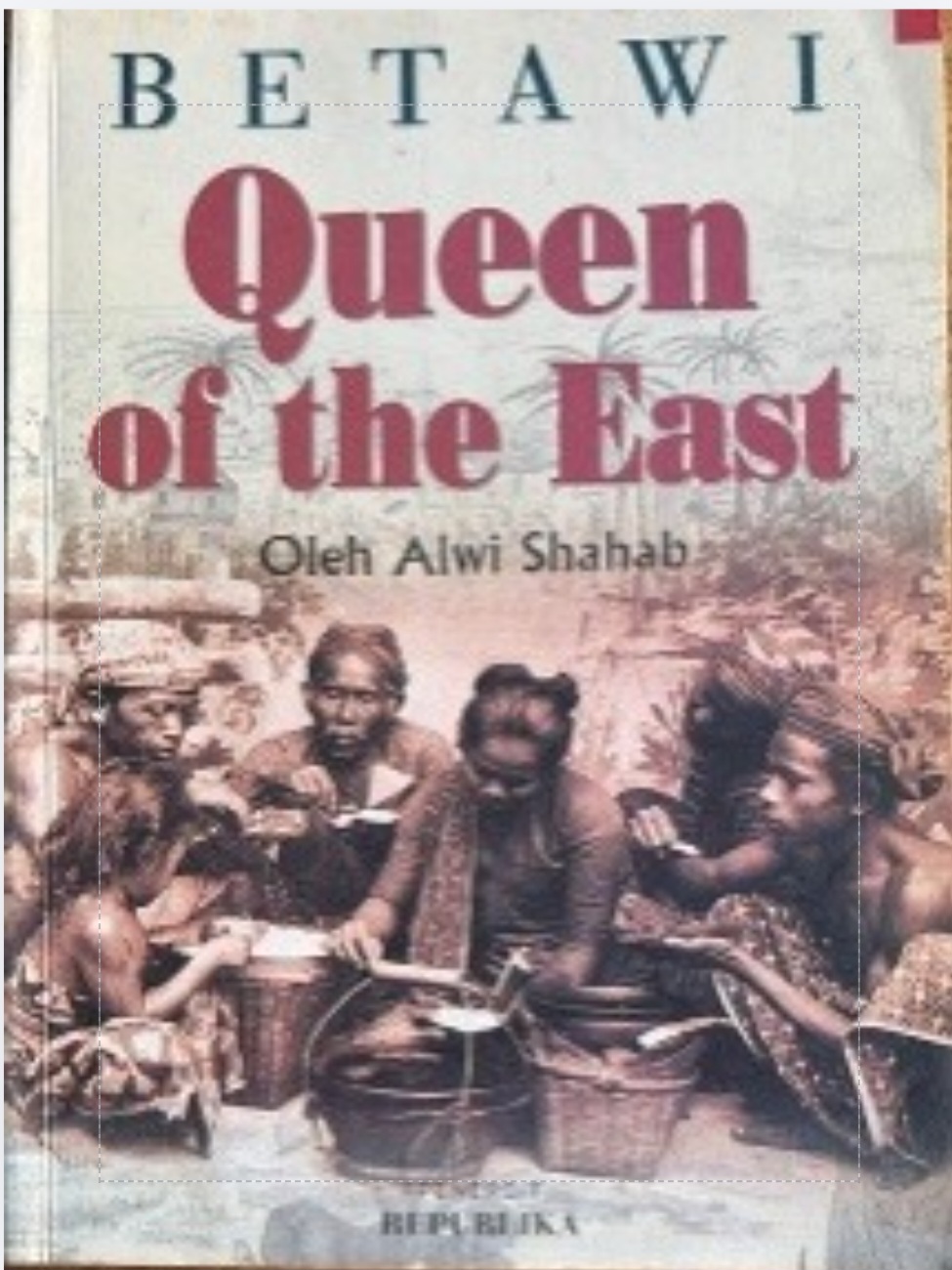
Author: Alwi Shahab, 2002. 190pgs. (Indonesian). Softcover
Publisher: Republika, Jakarta
Queen of the East positions itself as a historical and architectural record of Batavia (Jakarta) during the late eighteenth to early twentieth centuries, foregrounding the city’s colonial grandeur and European cultural imprint. While the volume succeeds in cataloguing streets, gardens, and residential districts with descriptive detail, its scholarly limitations are evident in both scope and methodology. The narrative tends to romanticize Batavia’s urban landscape, emphasizing its “tropical beauty” and “well-planned city planning” without sufficiently interrogating the colonial power structures that enabled such transformations. The focus on European enclaves—French in Rijswijk and Noordwijk, English in Menteng—reinforces a Eurocentric lens, marginalizing indigenous perspectives and the lived experiences of local communities who were profoundly affected by these spatial reorganizations. Moreover, the book’s reliance on descriptive passages, while valuable for preservation, risks reducing architecture to aesthetic spectacle rather than situating it within broader socio-political contexts. The absence of critical engagement with issues such as labor exploitation, segregation, and the environmental consequences of colonial urbanism weakens its analytical depth. By privileging the monumental and picturesque, the authors inadvertently perpetuate a nostalgic vision of Batavia that obscures the complexities of colonial modernity. As a documentary archive, Queen of the East undoubtedly contributes to the preservation of Jakarta’s architectural heritage. However, its lack of critical interrogation limits its utility for scholars seeking to understand the entanglements of architecture, colonialism, and cultural hybridity. The work is best approached as a descriptive resource rather than a comprehensive analysis of colonial urban history.
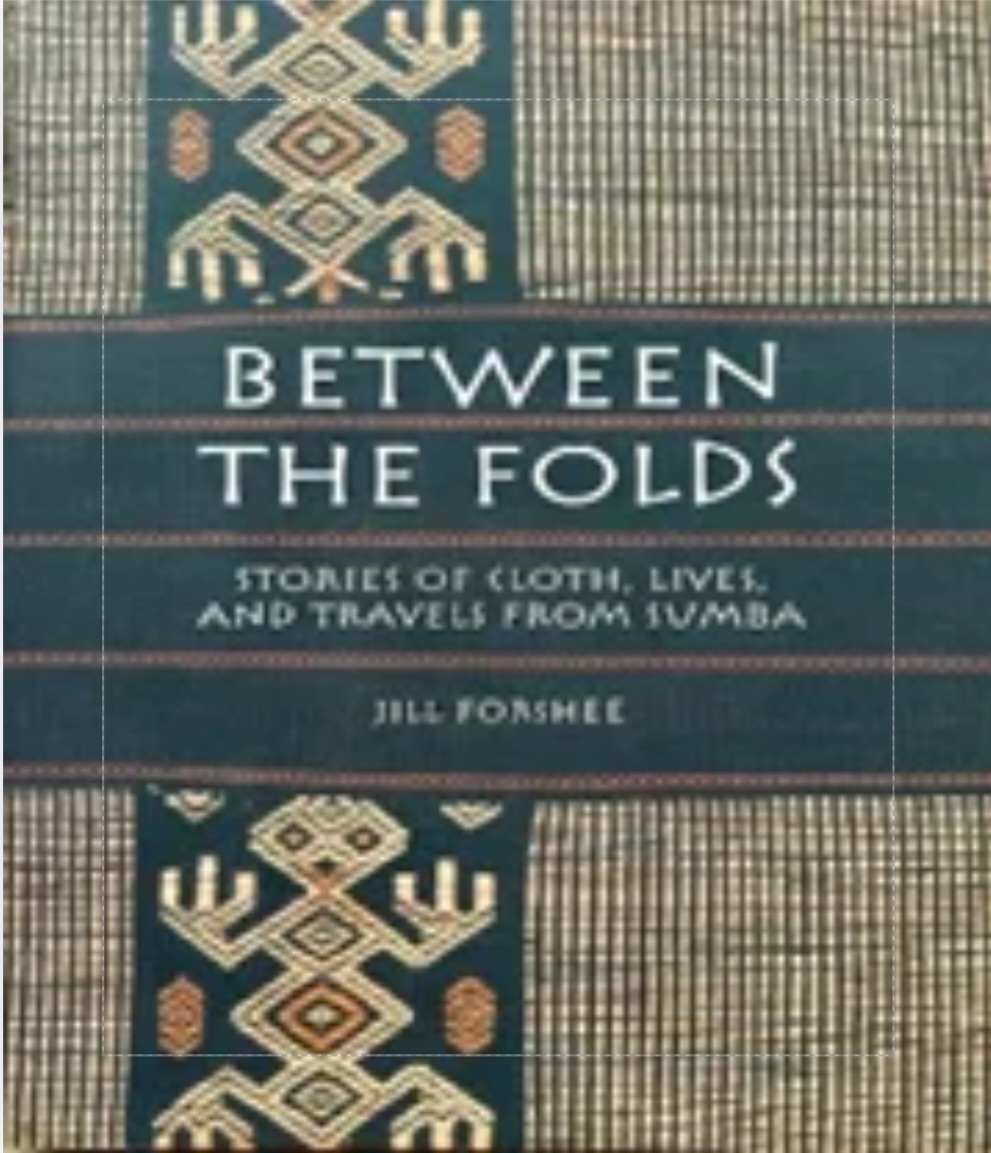
Author: Jill Forshee, 2000, 266pg. (English). Softcover.
Publisher: University of Hawaii, USA
The book successfully integrates personal life narratives, historical accounts of intercultural contact, and analyses of trade and commerce with a nuanced interpretation of cultural encounters between tourists and local communities. The result is a work that, while theoretically sophisticated, remains accessible, personal, and engaging. Its interdisciplinary scope makes it particularly well-suited for undergraduate courses in art, tourism, globalization, and symbolism, as well as for broader curricula on Southeast Asian cultures.
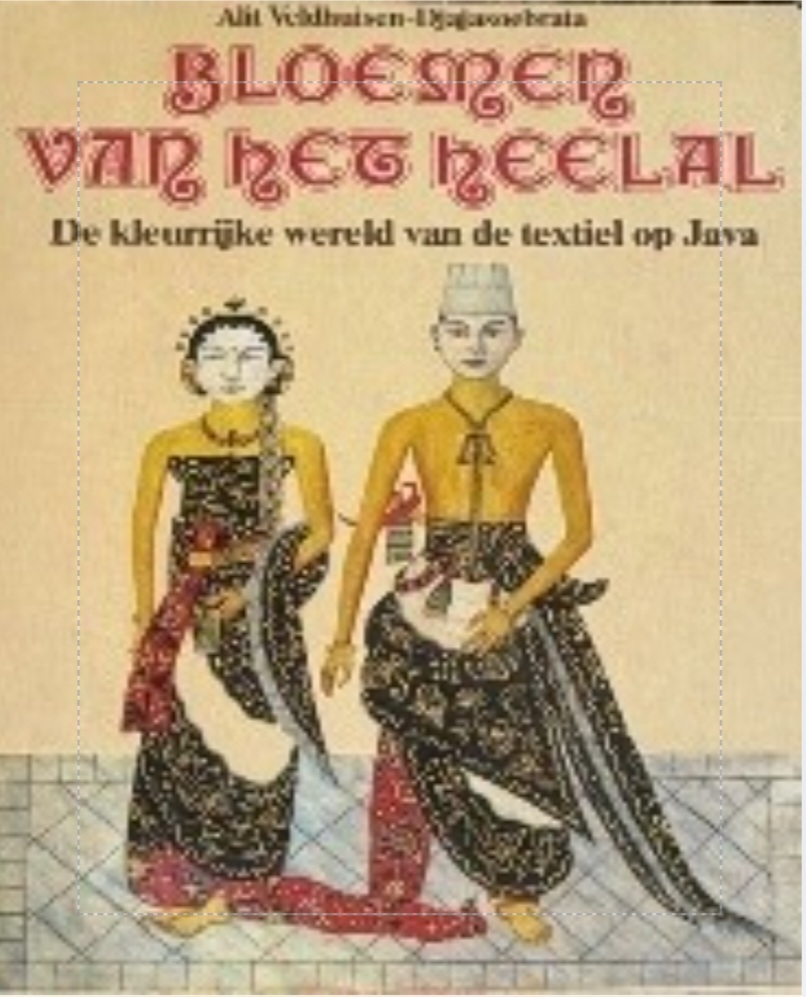
Author: Alit Veldhuisen – Djajasoebrata, 1984, 160pgs. (Dutch). Hardcover
Publisher: Sijthof, Amsterdam
The author’s upbringing in a multicultural household—with a Dutch administrator father and a Sundanese mother—imbued her perspective with a unique hybridity of colonial and indigenous worldviews. The volumes she produced delineate the diverse techniques of batik decoration, situating them within broader cultural encounters between the Dutch and the Javanese. These accounts include an exploration of the mythological symbolism of weaving, chromatic classifications ranging from uncolored to light and dark, and indicates an early practice of batiks incorporating glutinous rice. Her narrative then transitions to Cirebon, a historic port city on the north coast of Central Java, where she examines the Chinese diaspora in Java and its aesthetic contributions. She observes that batiks from this milieu were richly ornamented with floral motifs and characterized by polychromatic vibrancy. Within Javanese cosmology, cardinal wind directions functioned as a symbolic compass, embedding textiles within a broader epistemological framework. The discussion extends to the Vorstenlanden—the autonomous indigenous monarchies of Yogya and Solo during the Dutch East Indies—where she catalogues both canonical and proscribed batik patterns. Alit further articulates the Javanese worldview, emphasizing the sacrality of mountains and forests, the ritualized life cycles of human life, and the Kain Kembangan, the tie and dye textiles also called “jumputan” emblematic of Central Java. Returning to her paternal lineage, she reflects on the lives of Dutch administrators’ wives in the colony, before concluding with the metaphor of “new sprouts on an old tree,” a poetic evocation of innovation within enduring tradition. This edition was later adjusted, rewritten in English and published in 2018, under the title “Flowers from Universe” (see this Library).
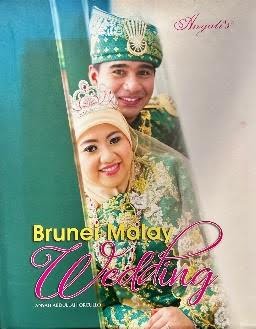
Author: Anyati Abdullah Orchullo, 2014. 312 pg. (English)
Publisher: Bruneian Press Sdn. Bhd, Bandar Seri Begawan
The book features a variety of Bruneian wedding outfits designed by Anyati, celebrating her 20 years as a fashion designer. For traditional weddings, she utilizes songkets that are handwoven in Brunei. The book offers readers the enjoyment of viewing a wide variety of beautiful textiles.
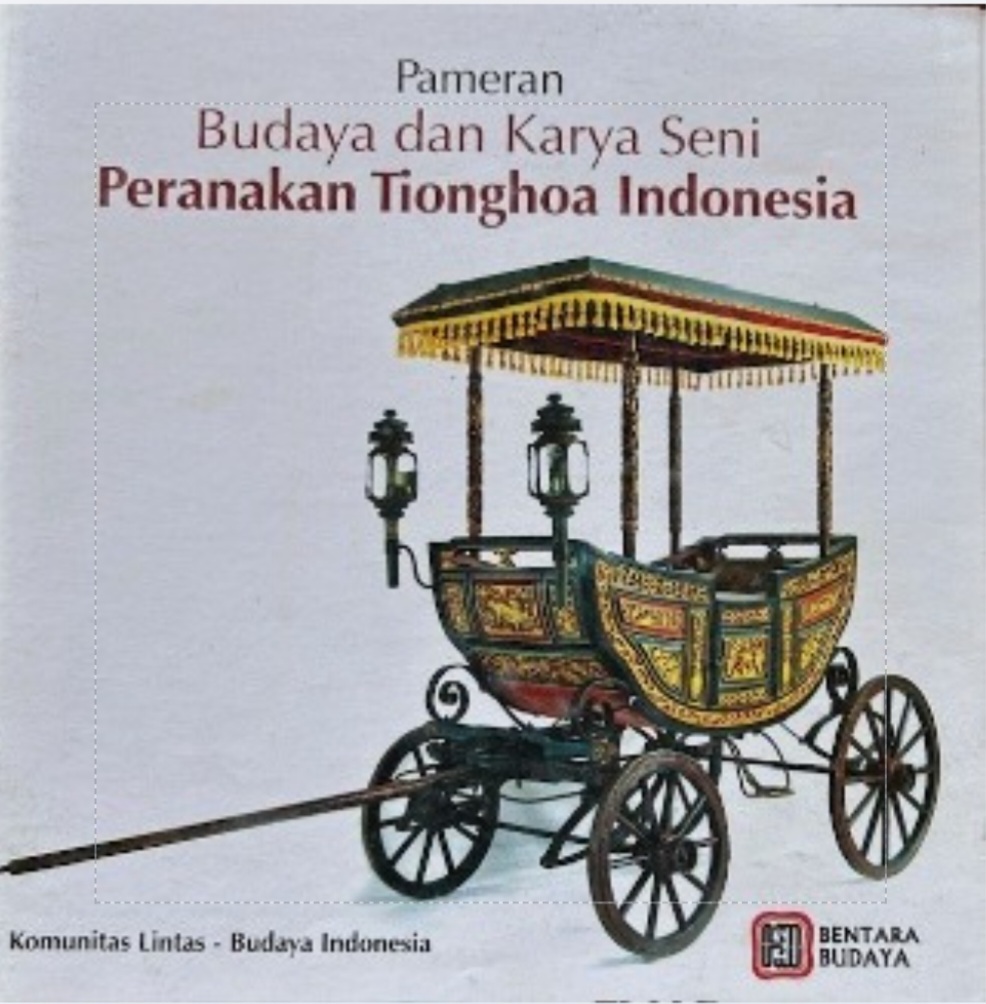
Author: Unknown, Komunitas Lintas-Budaya Indonesia 2012, 44pg. (Indonesian & English). Softcover
Publisher: Gramedia, Jakarta
This concise catalog was produced to accompany the exhibition Culture and Crafts of the Indo-Chinese/Peranakan, held at Bentara Budaya in Jakarta. The exhibition showcased a diverse array of Peranakan material culture, including intricately crafted ceramics, finely carved furniture, elaborately woven textiles, traditional hats, elegant kebaya tops, and a selection of quotidian household objects.
Page 20 of 108