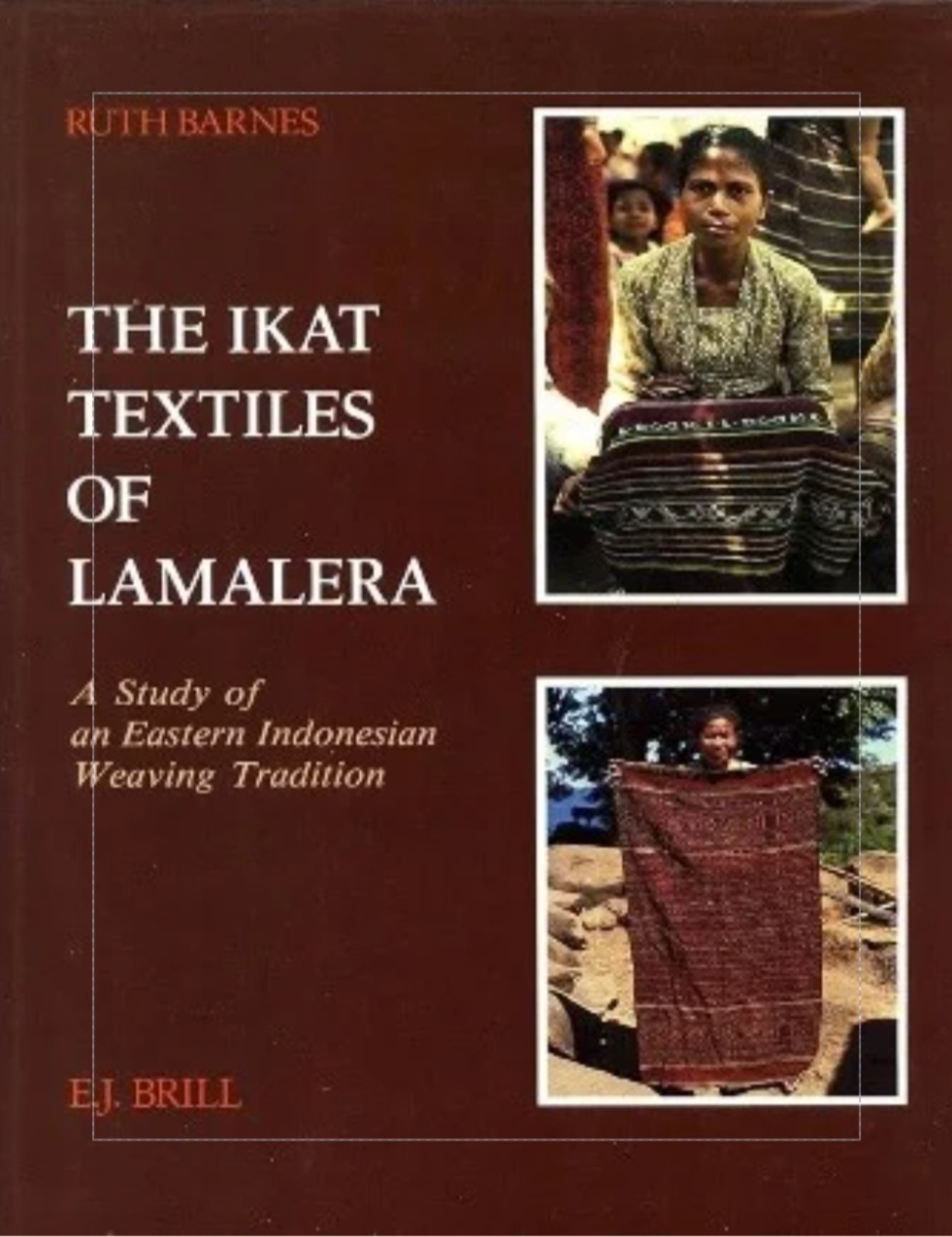
Author: Ruth Barnes, 1988. 159pg. (English). Hard Cover. Photocopied version.
Publisher: E.J. Brill, Leiden, Netherlands
The work of Dr. Ruth Barnes is considered a foundational study in the field of Eastern Indonesian textiles, noted for its in-depth analysis based on fieldwork. Barnes provides detailed information on the textiles and their cultural significance, including an accurate understanding of the value placed on the precision of the Lamaholot weavings. This book is one of the first reference books on textiles of eastern islands in the Archipelago. It presents Ikat as textile decoration, preparation of cotton and dyeing, the loom, the Ikat process, and Ikat as costume. A book not to be missed by ethnographers, weavers, and collectors of Indonesian ikat weavings.
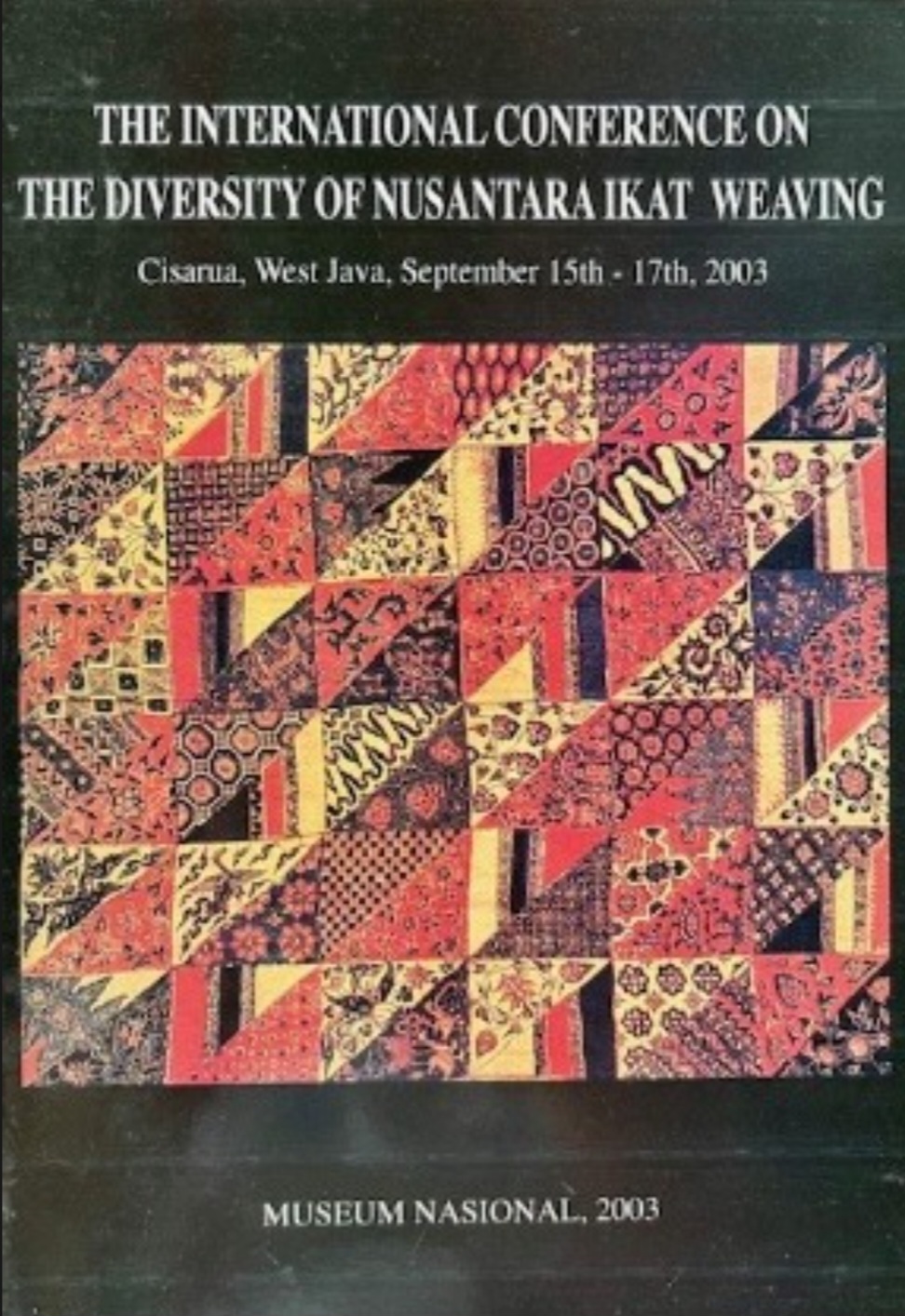
Author: Unknown, 2003. Photocopied version
Publisher: Museum Nasional Indonesia, Jakarta
Papers included in the Proceedings: Harry Darsono. (Fashion Artistry) Toeti Kakiailatu. (Outward Appearances as Symbol and Function.) Geneviève Duggan.(Sacred Weavings of the Island of Savu) Suwati Kartiwa. (Tradition of Nusantara Ikat Weaving.) Itie van Hout. (Time of the Weave of Life.) Hertini Adiwoso. (Symbols on some Indonesian textiles.) Herwig Zahorka. (The “Palang” design on ceremonial Indonesian Textiles and its cultural Historic Background), represented with archeological monuments – and the purpose to use those penis inserts until today. Bayu Niti Permana. )Textile Collection in Museum Conservation aspects, in storage & display.) Filomena Reiss. (Rare and New Textiles of the orang Baduy.) Marianne Hulsbosch. (The Influences and meaning of traditional Christian dress in Religious context.) Krista Knirck Bumke. (Languages of Patterns.)
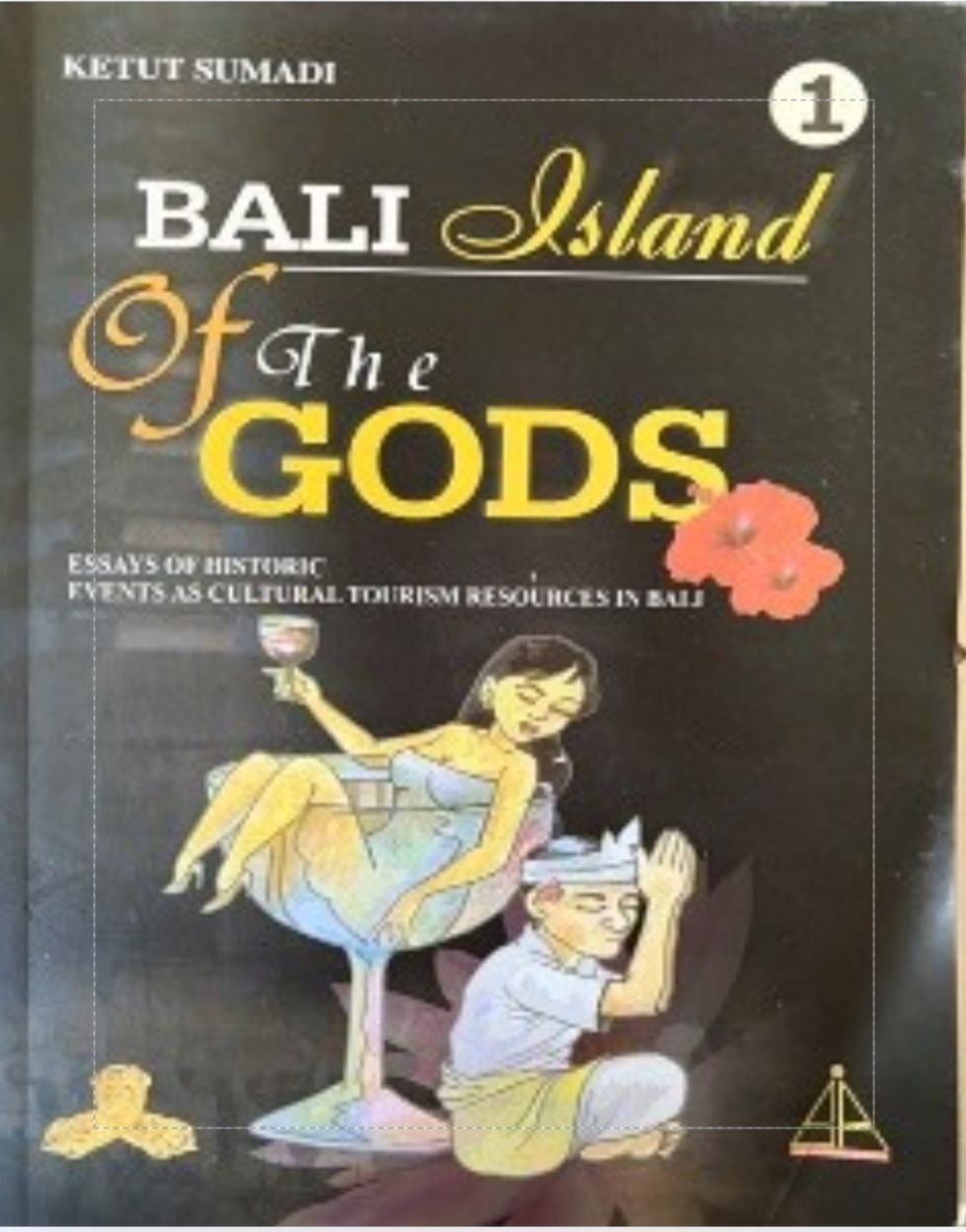
Author: Ketut Sumadi, 2011. 138pgs. (English). Softcover
Publisher: Tri Hita Karana, Denpasar, Bali
The volume presents a series of essays addressing a wide spectrum of cultural and ecological subjects, including the iconography of Balinese statues, the symbolic role of animals, and the natural landscapes of beaches, mountains, and the sea. Subsequent sections examine ritual observances such as Rambut Sedana, Tumpek Landep, Tumpek Bubuh, Tumpek Wayang, Piodalan, and Tumpek Krulut. Further essays explore material and symbolic practices, including the art of gebogan (ritual offerings), the calendrical system of wuku wayang, veneration of the goddess Saraswati, the celebration of Galungan, and the cultural significance of teba, the Balinese family garden. Collectively, these contributions illuminate the intricate interplay between ritual, environment, and spirituality, offering a holistic perspective on Balinese cosmology and cultural identity. This book is valuable not only for younger generations seeking to understand their heritage, but also for visitors who wish to experience Bali more meaningfully.
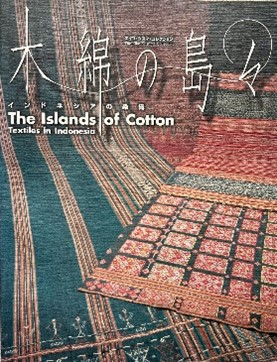
Author: Unknown. 2003. 120pg. (Japanese and English)
Publisher: Fukuoka Art Museum, the Shoto Museum of Art, Tokyo
This is a catalog of Indonesian Textiles from the Eiko Kusuma Collection held in the Fukuoka Art Museum and the Shoto Museum of Art in 2002.
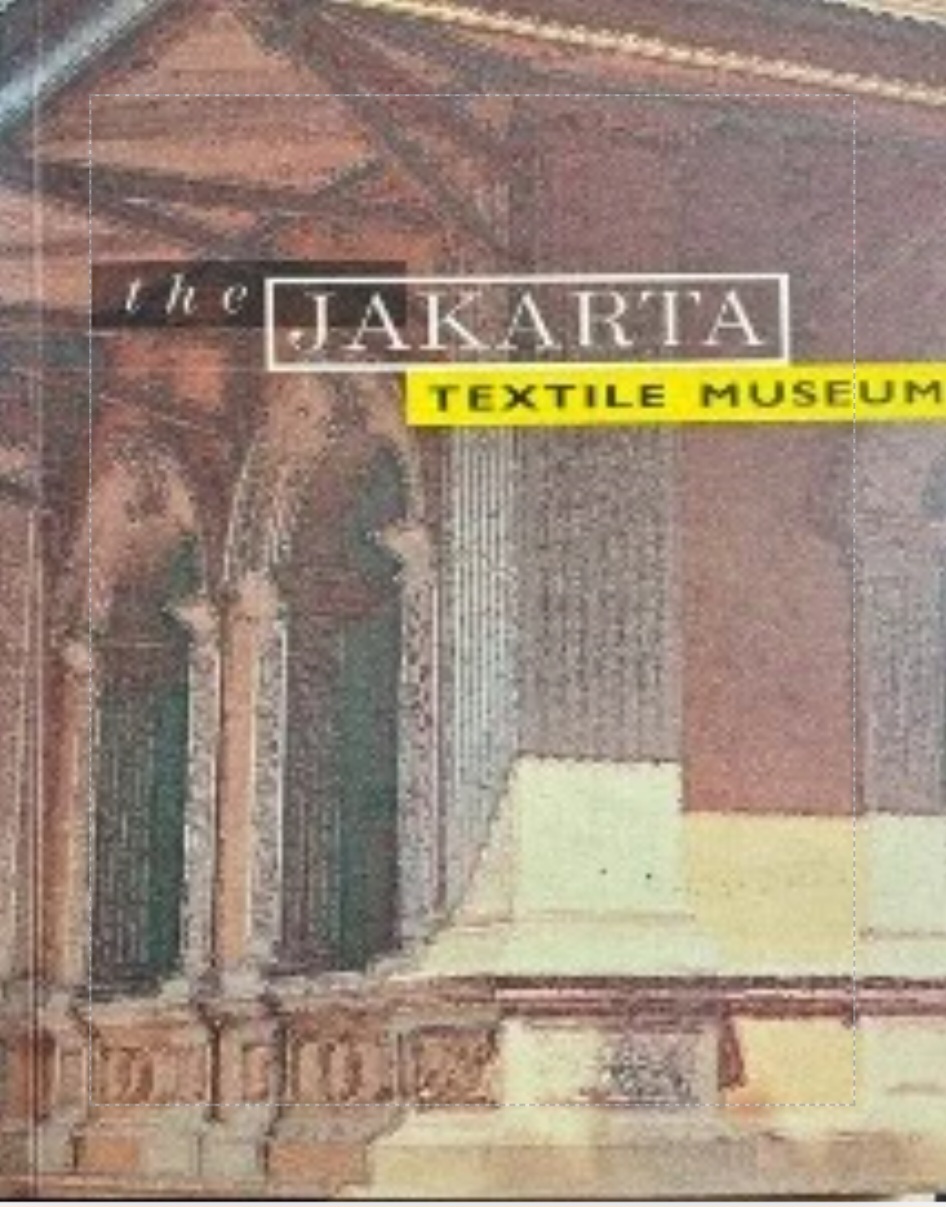
Author: Judi Achjadi, 1998. 120pgs, (English). Softcover
Publisher: Government of the Capital City of Jakarta.
This comprehensive guidebook, presented in English and enriched with full-color illustrations, offers an in-depth exploration of the Jakarta Textile Museum. It encompasses the historical narrative of the building itself, the foundation responsible for initiating the collection, and a scholarly introduction to the interrelationship between textiles and cultural identity. The museum’s collection showcases a diverse array of decorative techniques, including woven ornamentation, ikat patterning, supplementary-thread embellishment, and non-woven methods of adornment. Visitors are further introduced to the intricate processes of batik production, tie-dye techniques, embroidery, and the artistry of ready-made garments. Collectively, these exhibits illuminate the profound aesthetic, technical, and cultural dimensions of textile traditions across Indonesia and beyond.
Page 93 of 108