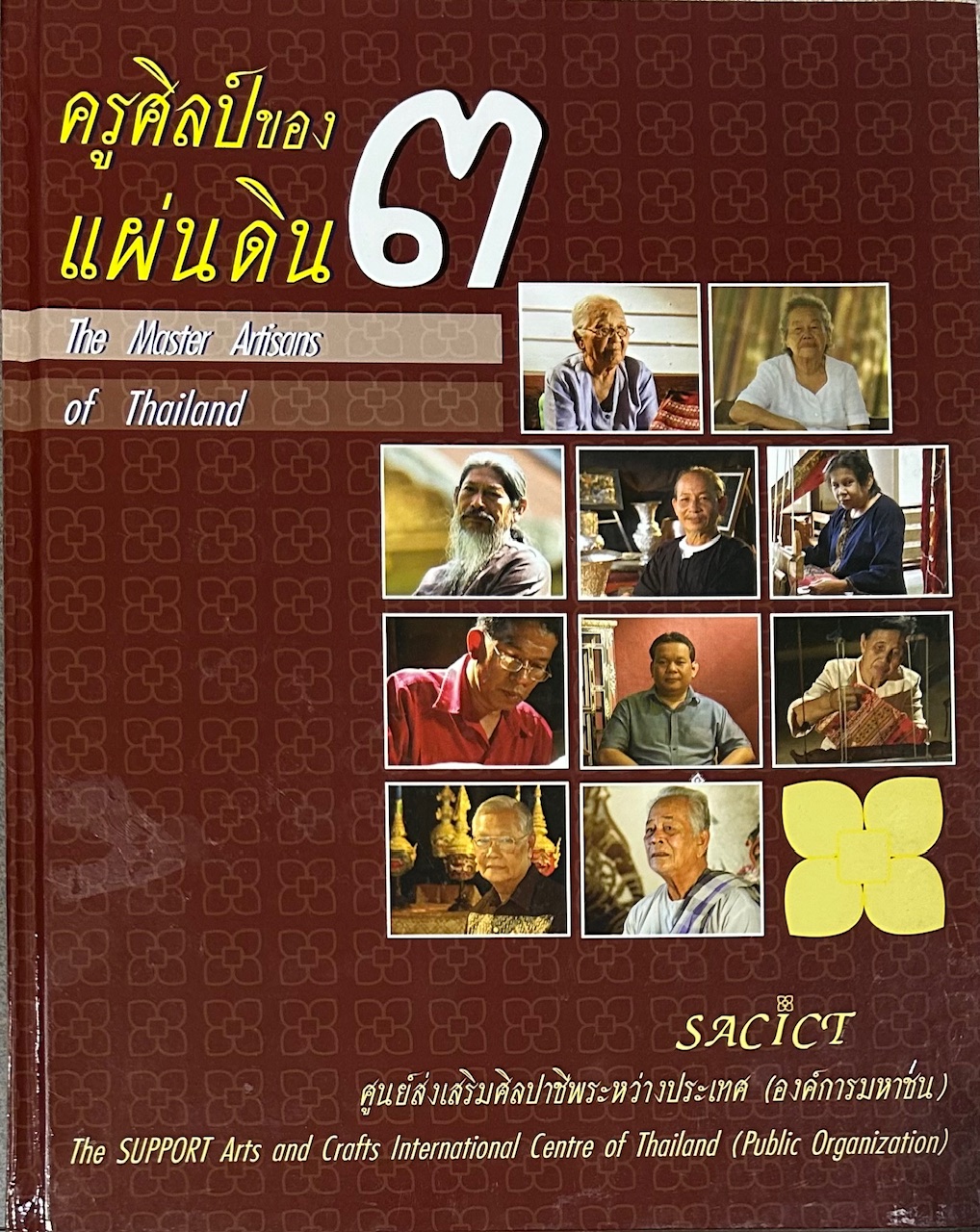
Author: Unknown, 2010. 200pg. (Thai & English)
Publisher: The Supports Arts and Crafts International Centre of Thailand (SACICT), Bangkok
This volume showcases ten remarkable Thai artisans, each a master in their field. Their areas of expertise include lacquerware, cement stucco, embossed silverware, sarong weaving, needlework, golden brocade from Sun Province, wisdom weavings, Khoo mask making, and shadow puppet carving. These artisans represent the pinnacle of craftsmanship and creativity in Thailand.
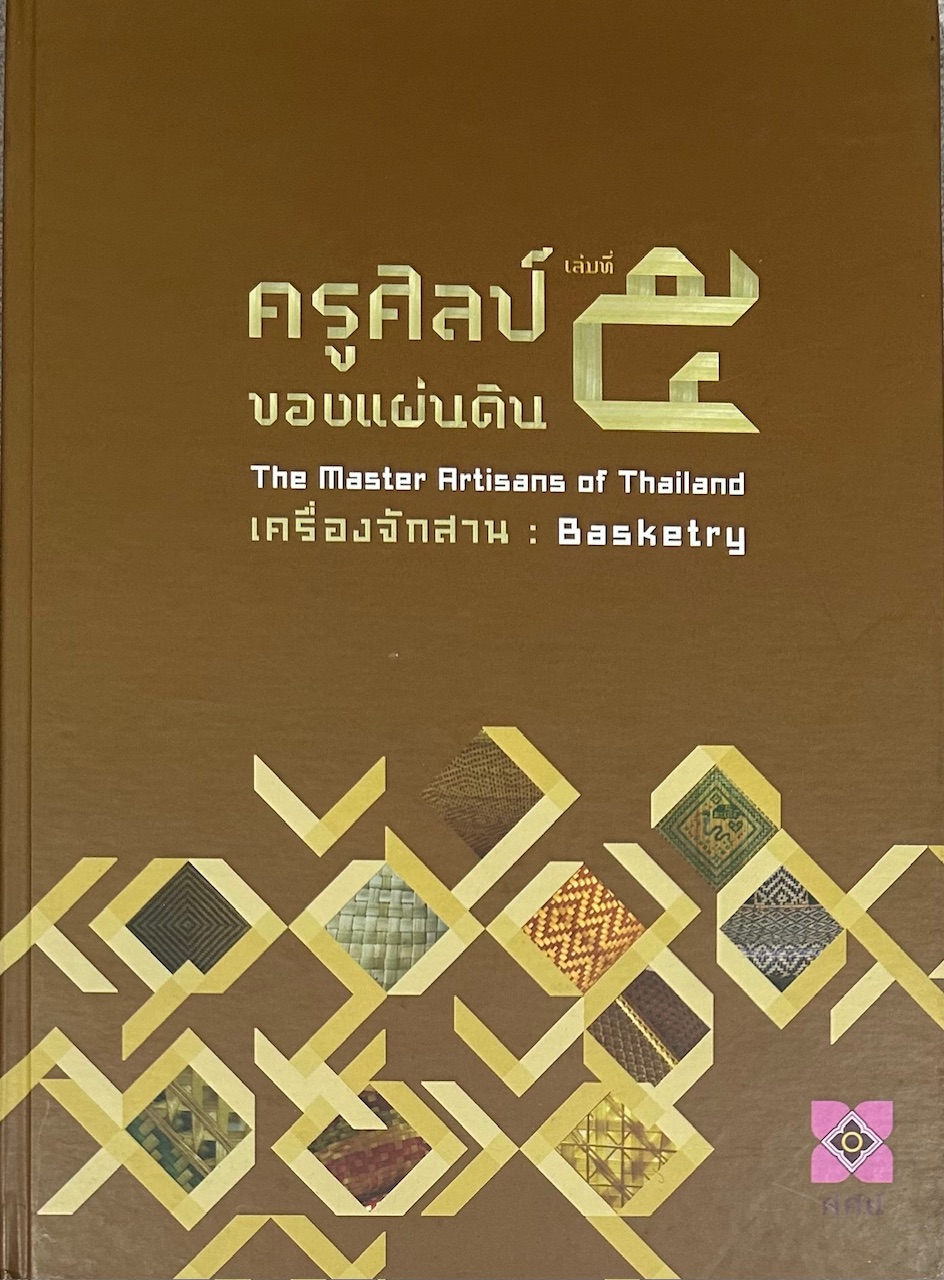
Author: Unknown, 2014. 150pg. (Thai and English)
Publisher: The Supports Arts and Crafts International Centre of Thailand (SACICT), Bangkok
This volume showcases the exceptional craftsmanship of ten master basket-weavers from Thailand.
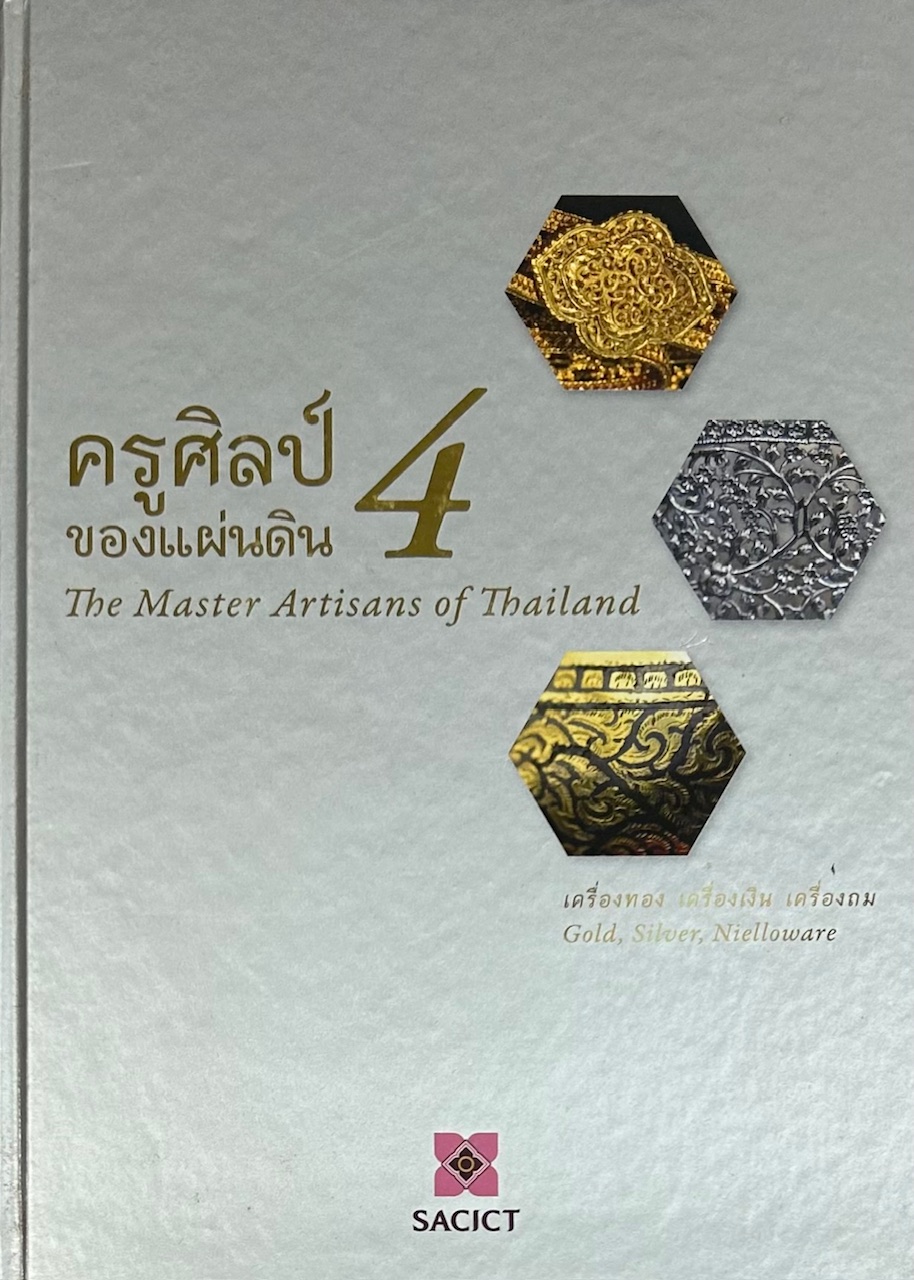
Author: Unknown, 2014. 168pg. (Thai and English)
Publisher: The Supports Arts and Crafts International Centre of Thailand (SACICT), Bangkok
This fifth volume of Master Artisans of Thailand showcases ten exceptional master goldsmiths.
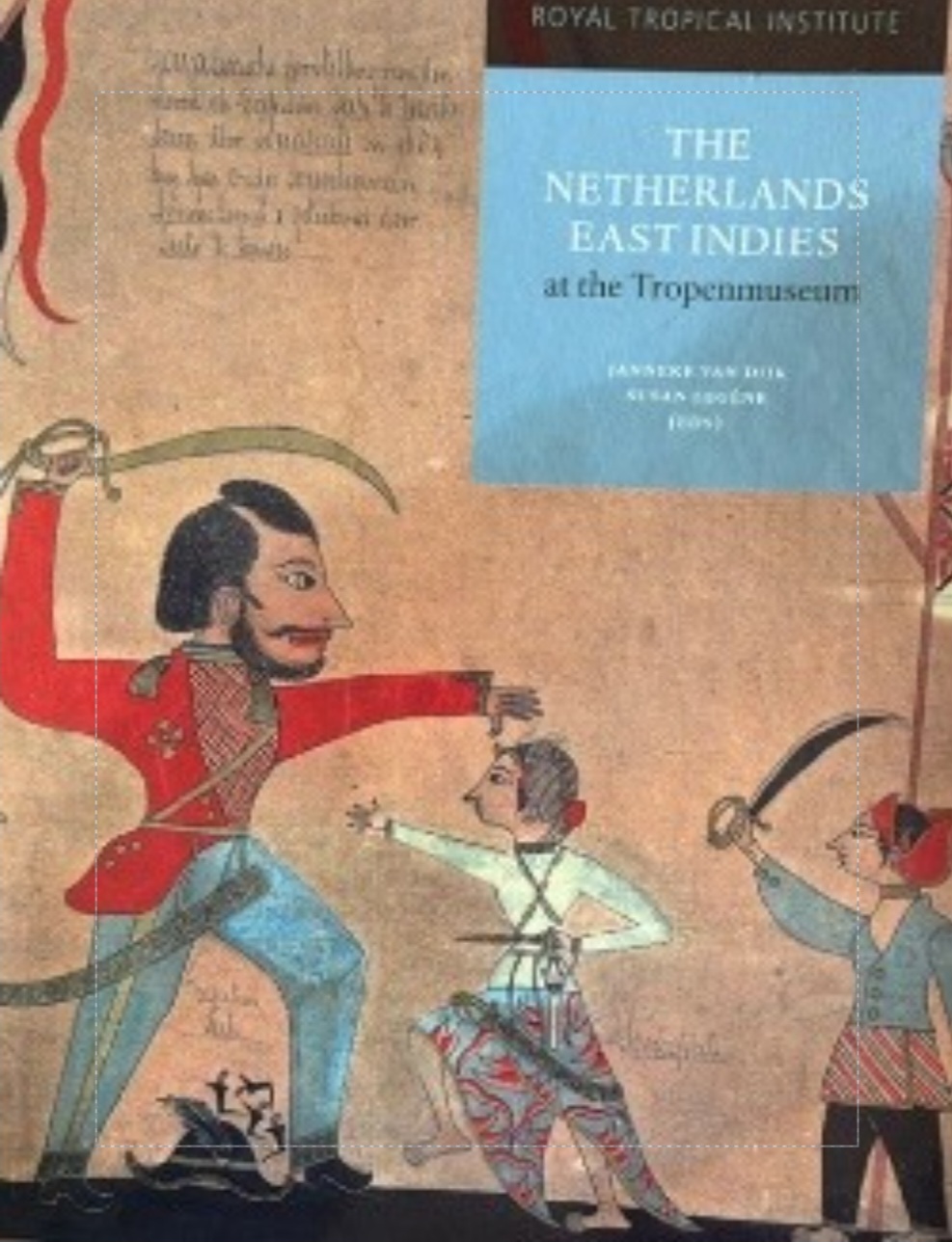
Author: Susan Legêne & Janneke van Dijk (Eds). 2011. 200pgs. (English) Hardcover
Publisher: KIT, Publishers, Amsterdam, Netherlands & Tropen Museum, Amsterdam
This volume constitutes the inaugural installment in a ten-part series published by the Tropenmuseum. It offers a curated glimpse into the institution’s vast holdings, which encompass approximately 180,000 ethnographic objects and 270,000 historical photographs. The book opens with an introduction that traces the genesis of the collection, situating its formation within broader historical processes. The narrative foregrounds the entanglement of the museum’s archives with structures of violence, systems of education, and the politics of empire. It highlights the economic enterprises of tobacco, sugar, and other colonial commodities, the domestic sphere of colonial households, and the exploratory expeditions into the Papua territories. The contributors further underscore the role of colonial intermediaries—civil servants who collected materials on behalf of the government—as well as missionaries, entrepreneurs, photographers, artists, scientists, soldiers, and musicians. These individuals functioned simultaneously as agents of empire and as cultural brokers, shaping the contours of the museum’s assemblage. In doing so, the volume not only documents the provenance of the collection but also interrogates the epistemological frameworks through which colonial knowledge was produced, circulated, and preserved.
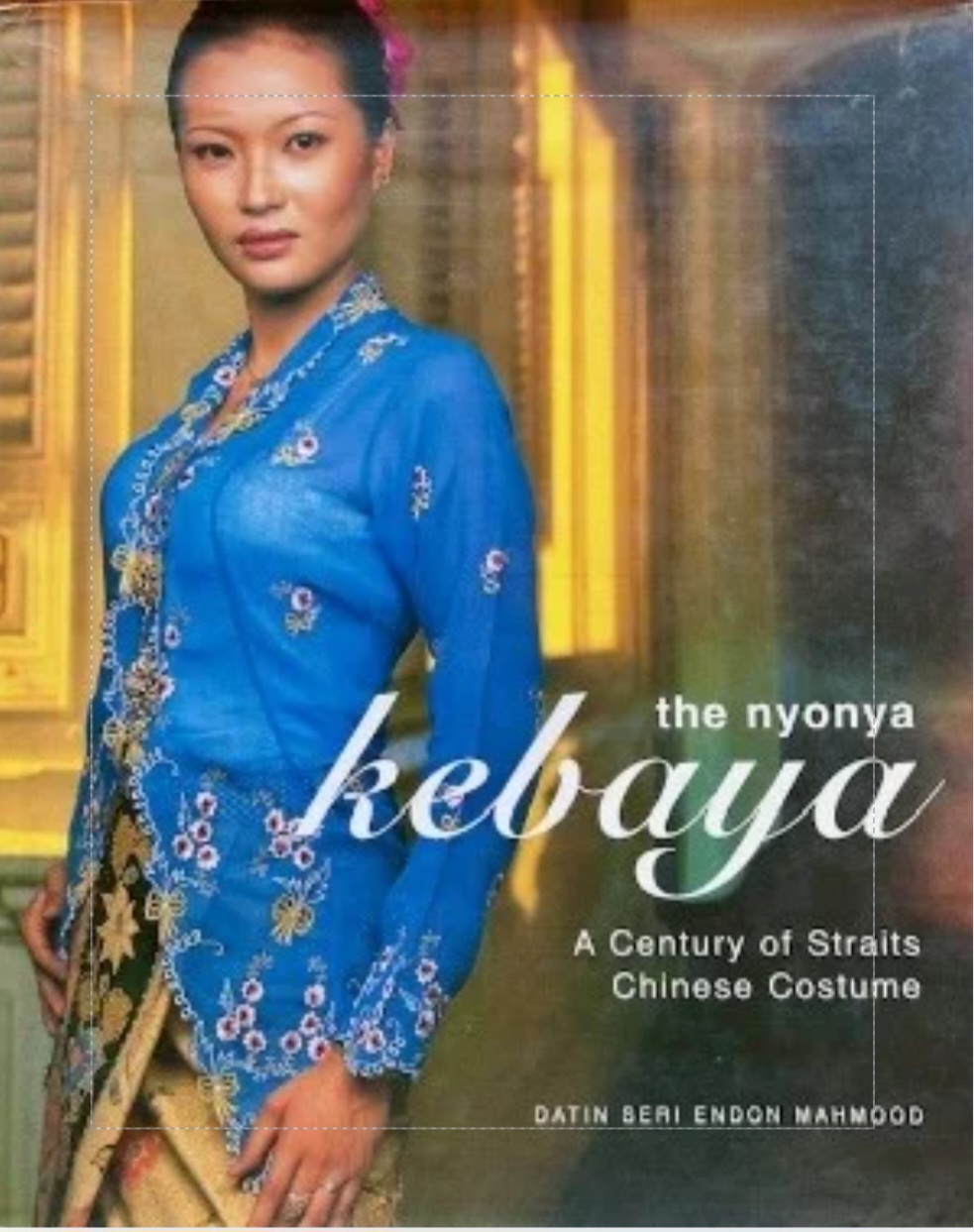
Author: Datin Seri Endon Mahmood, 2004, 176pg. (Englsih)
Publisher: Periplus, Singapore
In Malaysia, the Nyonya Kebaya has emerged as a distinctive and enduring symbol of national fashion identity. Its origins can be traced to a long, straight tunic of Arab inspiration, traditionally fashioned from plain cotton. This garment was subsequently adopted by the Nyonyas—women of the early Peranakan community, a culturally hybrid subgroup of the Chinese diaspora. Over time, they transformed the simple tunic into a more sophisticated and aesthetically refined blouse: translucent, delicately embroidered, and tailored to accentuate the female form. The ensemble was typically fastened with a set of ornate chained brooches and paired with a hand-drawn batik sarong, complemented by intricately beaded slippers. This evolution not only reflects the ingenuity of the Peranakan women but also illustrates the dynamic interplay of cross-cultural influences in shaping Malaysia’s sartorial heritage.
Page 95 of 108