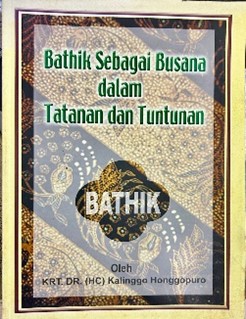
Author: KRT Kalinggo Honggopuro, 2002. 180pg, (Indonesian)
Publisher: Yayasan Peduli Keraton Surakarta-Hadiningrat
This book, written at the beginning of the millennium, underscores an urgent issue: the younger generation risks losing touch with Javanese culture and court arts unless immediate action is taken. The author has proactively documented the culture of the Surakarta Hadiningrat court, including the vital art of batik. We firmly recognize KRT Kalinggo's significant contributions that resulted in UNESCO's acknowledgment of batik as Indonesia's Intangible World Heritage in 2009.
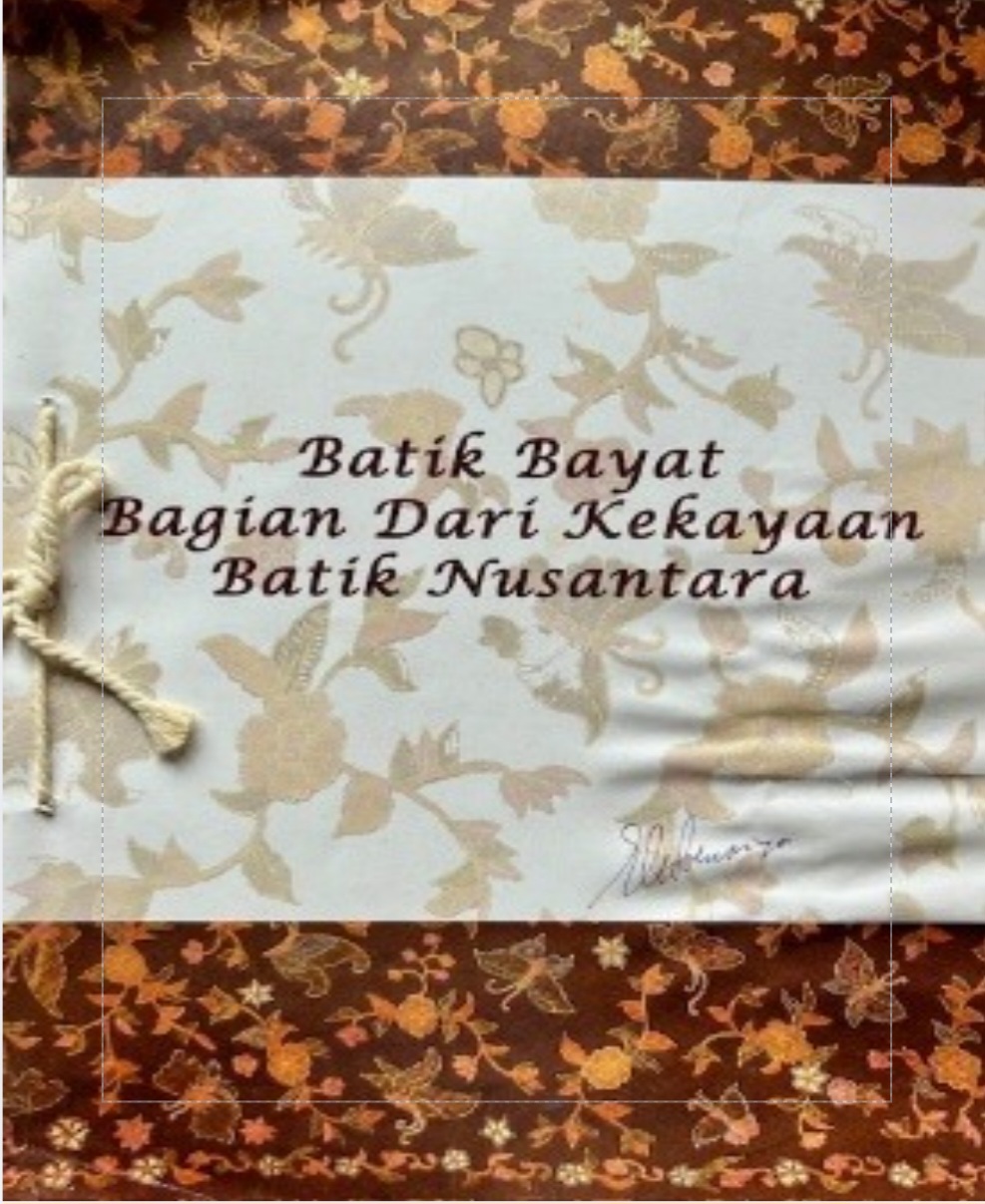
Author: Gina Sutono, 2011, 7 pg. (Insonesian). Hand-out
Publisher: Gina Sutono
Bayat Batik, rooted in the Bayat district of Klaten, Central Java, is a distinguished textile tradition that embodies both artistic refinement and cultural resilience. Historically linked to Ki Ageng Pandanaran, or Sunan Bayat, the practice emerged as part of the spiritual and social fabric of Javanese society during the spread of Islam. Its emphasis on batik tulis (hand-drawn batik) reflects a commitment to artisanal precision, setting it apart from mass-produced alternatives. Characterized by earthy tones such as sogan brown and motifs like ukel and grinsing, Bayat Batik conveys philosophical values of harmony, resilience, and interconnectedness. Beyond its aesthetic qualities, it has served as a medium of communal identity and economic sustenance, flourishing in the mid-20th century through cooperative networks before experiencing decline and subsequent revitalization. Today, Bayat Batik through the works of Gina Sutono continues to adapt to global markets while preserving its cultural authenticity, standing as a testament to the enduring vitality of Javanese heritage.
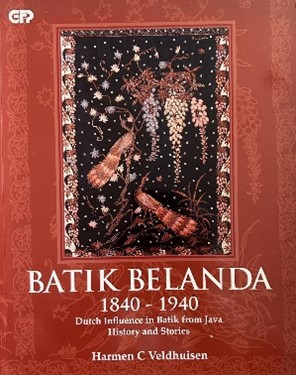
Author: Harmen C. Veldhuisen, 2007. Second edition. 156pg. (English)
Publisher: Gaya Favorit Press, Jakarta
This volume decisively examines the kain panjang and sarong, focusing on the significant rise of the commercial batik industry. It elucidates the contributions of early Indo-European manufacturers from 1840 to 1860, prominently featuring Carolina van Franquemont and van Oosterom. The text highlights a robust revival of the industry from 1860 to 1880, culminating in a peak period of prosperity from 1890 to 1910. The book rigorously analyzes Chinese batik producers in Pekalongan, European manufactories in Yogyakarta and Solo, as well as Dutch influences on principality batiks and solutions provided by Indo-European producers. It ultimately addresses the decline of the batik industry. This work stands as an essential reference for scholars, providing an authoritative perspective on the art from the mid-19th to early 20th century.
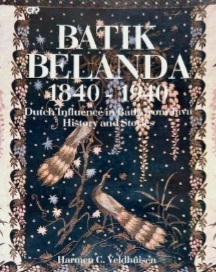
Author: Harmen Veldhuisen, 1993,156pg. (English). Softcover.
Publisher: Gaya Favorit Press, Jakarta
The book commences with an introduction to the sarong and the kain panjang, highlighting the circulation of Indian textiles in seventeenth-century Javanese society. The second chapter examines the emergence of the commercial textile trade, while the third chapter focuses on Indo-European batik manufacturers—predominantly women—who played a pivotal role in shaping the industry. Chapter four explores the revival of batik production between 1860 and 1880, followed by chapter six, which documents the flourishing period from 1890 to 1910. The concluding chapter addresses the decline of the batik canting industry between 1910 and 1940. For decades, this volume has served as a seminal reference for the study of historical batiks.
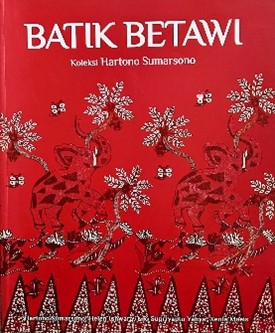
Author: Hartono Sumarsono et al. 2017. 252pg. (Indonesian)
Publisher: Kepustakaan Populer Gramedia, Jakarta
Batik Betawi explores the history of Batavia, now Jakarta, and the Betawi people's creation of stamped batik from lower-quality white cotton, which lacks distinct characteristics. In Jakarta, batik is seen as a commodity, leading to quick shifts in production based on sales. Initially, batikers from Pekalongan and Cirebon influenced the motifs, resulting in similarities with northern Central Java batiks. The book offers new insights for batik enthusiasts, highlighting lesser-known aspects of this unique style.
Page 10 of 108