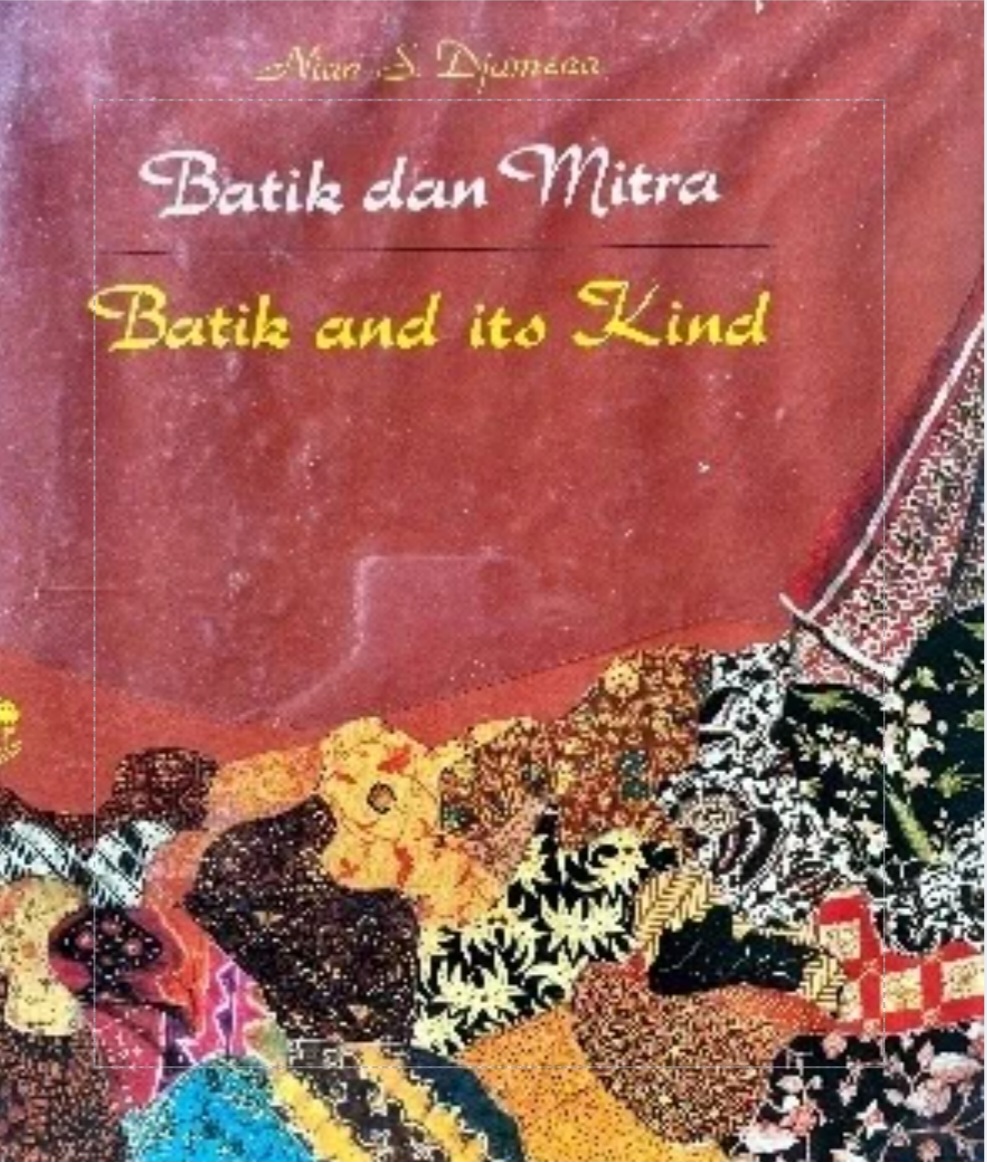
Author: Nian S. Djumena, 1990. 130pgs. (Indonesian & English). Hardcover
Publisher: Penerbit Djambatan, Jakarta
This volume represents one of the earliest comprehensive studies on Batik. Its author, Nian, holds the distinction of being the first woman in Indonesia to earn a formal degree in Textiles from the Hogere Textiel School in Enschede, Netherlands. She descends from a lineage deeply rooted in textile production; her family operated factories in the early twentieth century. Her father successfully advanced the enterprise under the brand name Ratatex during the 1960s, establishing a prominent reputation in the Indonesian textile industry. The book approaches batik through a regional lens, systematically examining the distinctive traditions of East, Central, and West Java. Beyond regional variation, Nian provides a meticulous analysis of batik’s structural components, including the head and end decorations.. She further explores specific forms such as the Terang Bulan, the Pagi-Sore rectangular cloth, and the Pradan cloth. Traditional garments are also given careful attention: the kain panjang, the sarong, and ceremonial headgear. In addition, she contextualizes these textiles within the cultural practices and codified rules that govern the wearing of traditional batik, thereby situating the art form within its broader socio-cultural framework.
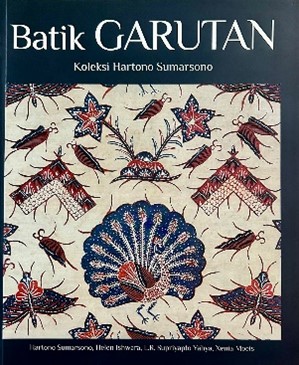
Author: Hartono Sumarsono, 2016. 262pg. (Indonesian)
Publisher: Kepustakaan Populer Gramedia, Jakarta
Garut is a town located in the highlands of West Java. This book showcases the observations of a passionate collector and entrepreneur, featuring intriguing old images from West Java. The collection consists of 300 hand-drawn pieces spanning from the 1930s to the 1970s. The author presents the contents of the book from the perspective of a collector, rather than an academic viewpoint. His primary concern is to preserve these beautiful pieces before they are lost to time.
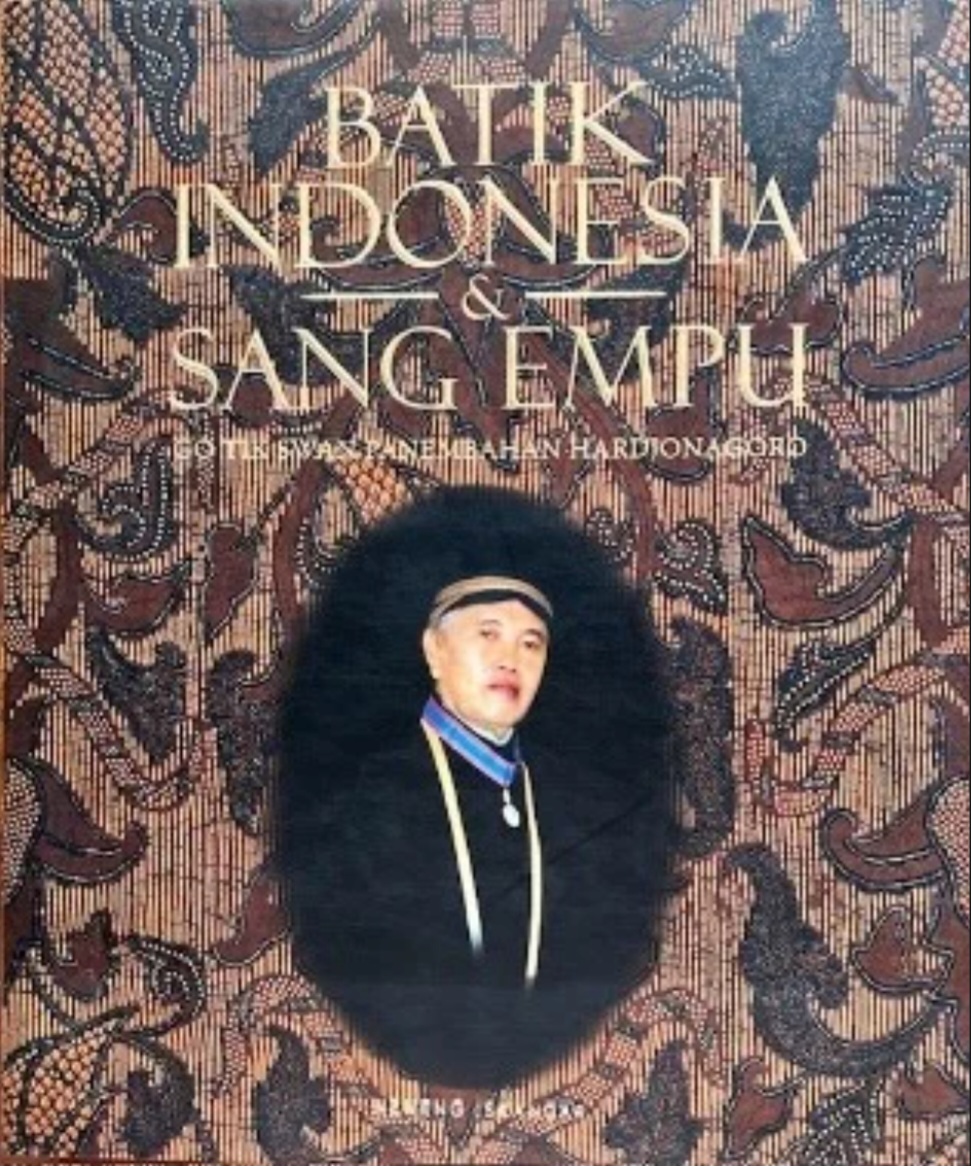
Author: Sri Sintasari (Neneng) Iskandar, 2008, 216pg. (Indonesian & English). Hardcover
Publisher: Srihana, Jakarta
This volume offers a distinguished introduction to the Batik master Go Tik Swan Panembahan Hardjonagoro, while simultaneously presenting the breadth of his artistic oeuvre. The book commences with the section Batik Indonesia (1955–1970), which narrates the historical circumstances surrounding the inauguration of a national batik tradition intended to be worn by all Indonesian women. At the behest of President Soekarno, Hardjonagoro was entrusted with the mandate to design a batik that could serve as a unifying national symbol. From this commission emerged the vibrant and emblematic Batik Indonesia. The second part, Nungak Semi (1970–1990), derives its title from the Javanese expression meaning “a wooden stump from which new leaves or branches sprout.” This metaphor encapsulates the renewal and creative flourishing of Hardjonagoro’s work during this period. The final section, Panembahan Hardjonagoro (1990–2008), illuminates the maestro’s profound devotion to batik, his consummate skill as a cultural artisan, and his enduring affection for Java. Together, these chapters trace not only the evolution of his artistry but also his lifelong commitment to preserving and advancing the cultural heritage of Indonesia.
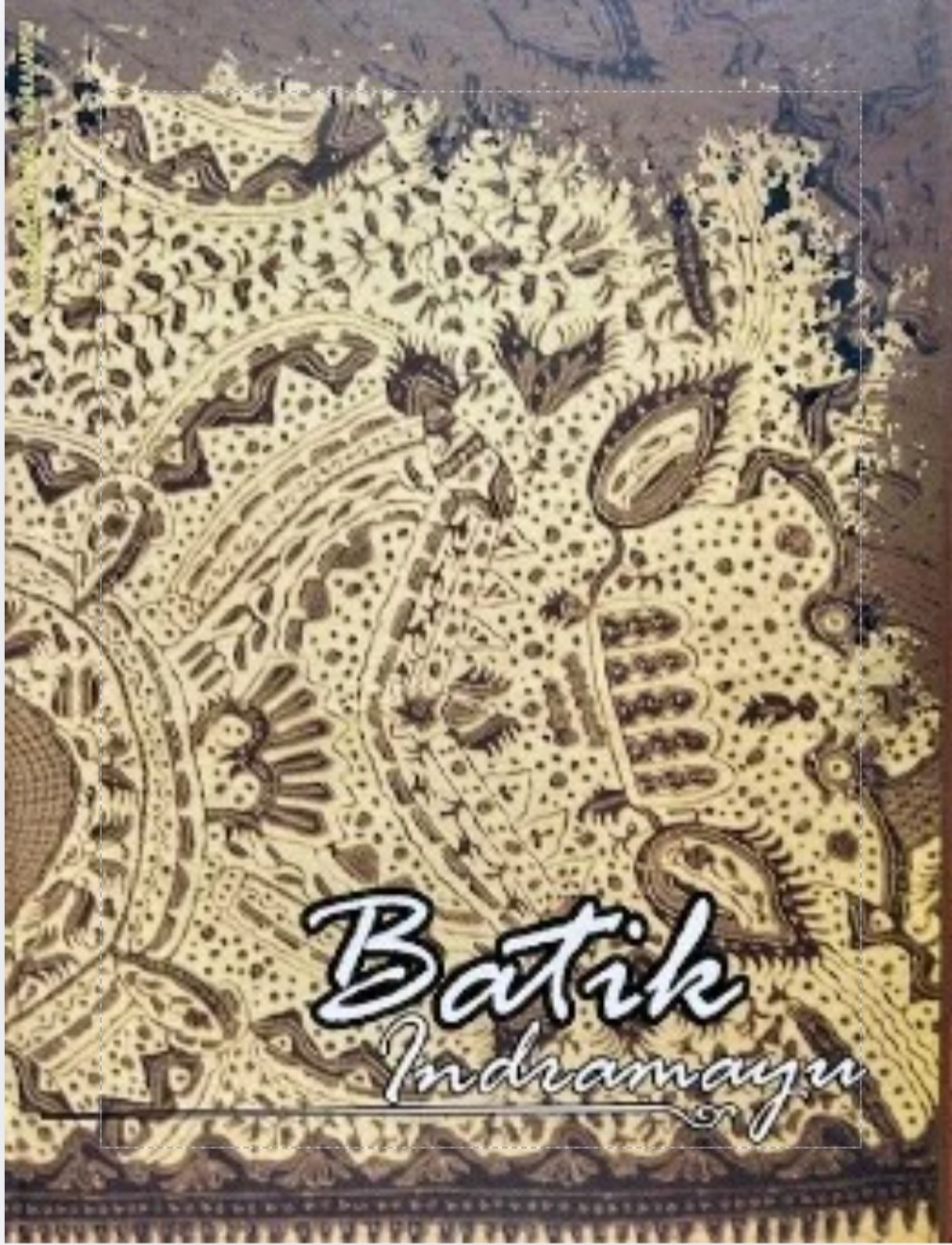
Author: Unknown, 2007, 98pg. (Indonesian), Hardcover
Publisher: DEKRANASDA, The Regional Handicraft Council, Indramayu
The volume published by the Regional Handicraft Council Indramayu offers a comprehensive exploration of the distinctive batik tradition originating from Indramayu on the north coast of Central Java. Unlike the batik styles of Yogyakarta, Surakarta (Solo), Pekalongan, or Cirebon, Indramayu’s batik demonstrates a unique aesthetic identity, relatively uninfluenced by external regional conventions. This scholarly work meticulously documents the diverse repertoire of motifs, providing not only their nomenclature but also the historical narratives embedded within each design. Furthermore, the book elucidates the intricate processes of batik production, including the characteristic of cocohan or complongan technique, which is a signature process that creates a dense background of tiny neat dots on the fabric, thereby situating the craft within its broader cultural and artisanal context. Richly illustrated with vivid, full-color photographs, the publication serves as both a visual archive and an academic resource, preserving and celebrating the artistry of Indramayu batik.
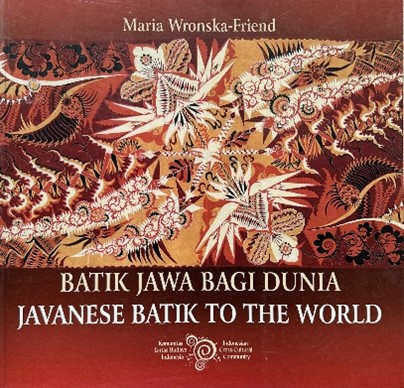
Author: Maria Wronska-Friend, 2016. 235pg. (Indonesian and English)
Publisher: Komunitas Lintas Budaya Indonesia (Indonesian Cross-Cultural Community)
The book showcases the global influence of Javanese batik. It features discussions and images of batik in Europe, Africa, India, and Australia, highlighting fascinating cross-cultural connections among various countries and societies.
Page 11 of 108