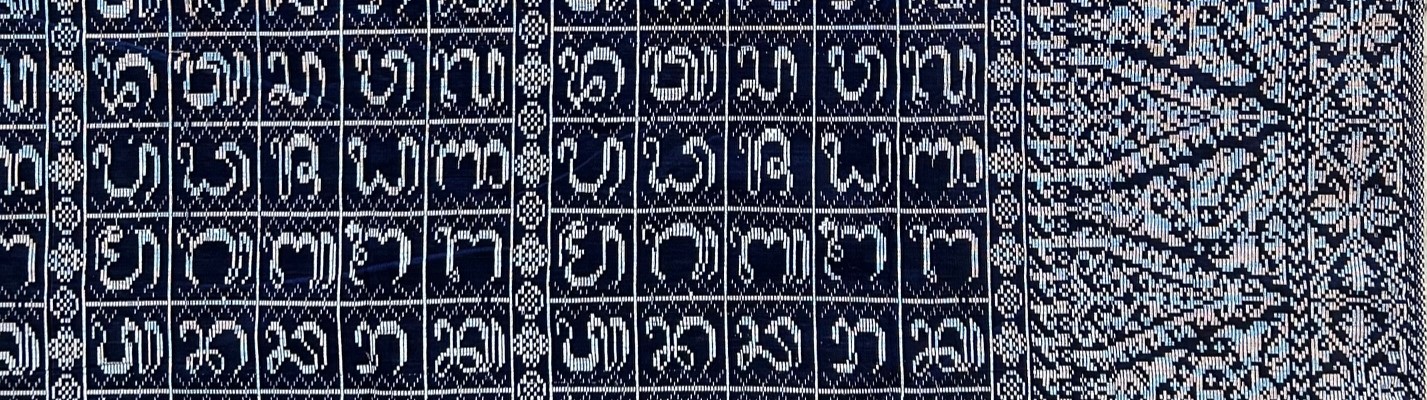
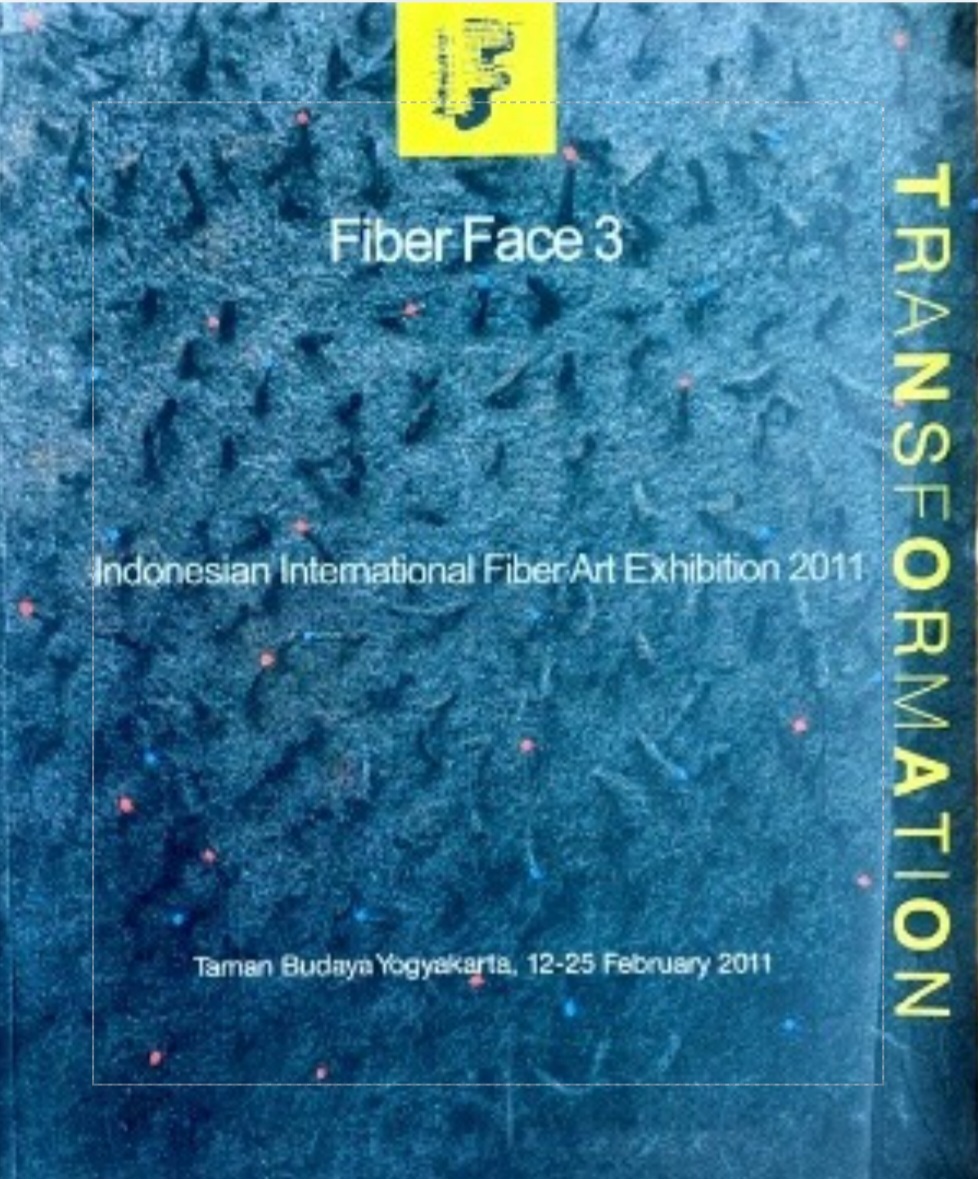
Author: Joanna Barrkman, Maradita Sutanto, MJA Bashir, Sandra Niessen, 2011, (Indonesian & English). Softcover
Publisher: Babaran Segaragunung, Yogyakarta
Fiber Face constitutes an ongoing curatorial series dedicated to the exploration of Indonesian fiber arts, foregrounding both contemporary innovation and the preservation of traditional practices. The project situates textile artistry as a vital conduit for cultural memory, honoring heritage while simultaneously interrogating its transformations in the present. The third iteration, Fiber Face 3, adopts the thematic axis of Transformation, examining the dynamic interplay between materiality and technology in fiber-based practices today. Through a constellation of artworks, technical demonstrations, and contextual documentation—including interviews, informative displays, and documentary films—the exhibition articulates how fiber arts negotiate continuity and change within shifting cultural and technological landscapes. The accompanying catalog assembles scholarly contributions that deepen this discourse. Joanna Barrkman offers critical reflections, while Maradita Sutanto’s Notes on a Forgetful Society interrogates cultural amnesia. MJA Nashir contributes Rangsa ni Tonun, a documentary illuminating the ritual and aesthetic dimensions of Ulos weaving, and Sandra Niessen provides a penetrating analysis in Tension in the Batak Warp, situating Batak textiles within broader socio-cultural frameworks. The exhibition itself presents a transnational dialogue: 21 international artists from Australia, Germany, Austria, Belgium, the United States, and Japan exhibit alongside 39 Indonesian contemporary artists and master ulos weavers from Sumatra. This juxtaposition underscores both the global resonance of fiber arts and the specificity of Indonesian textile traditions, situating them within a comparative yet culturally grounded context.
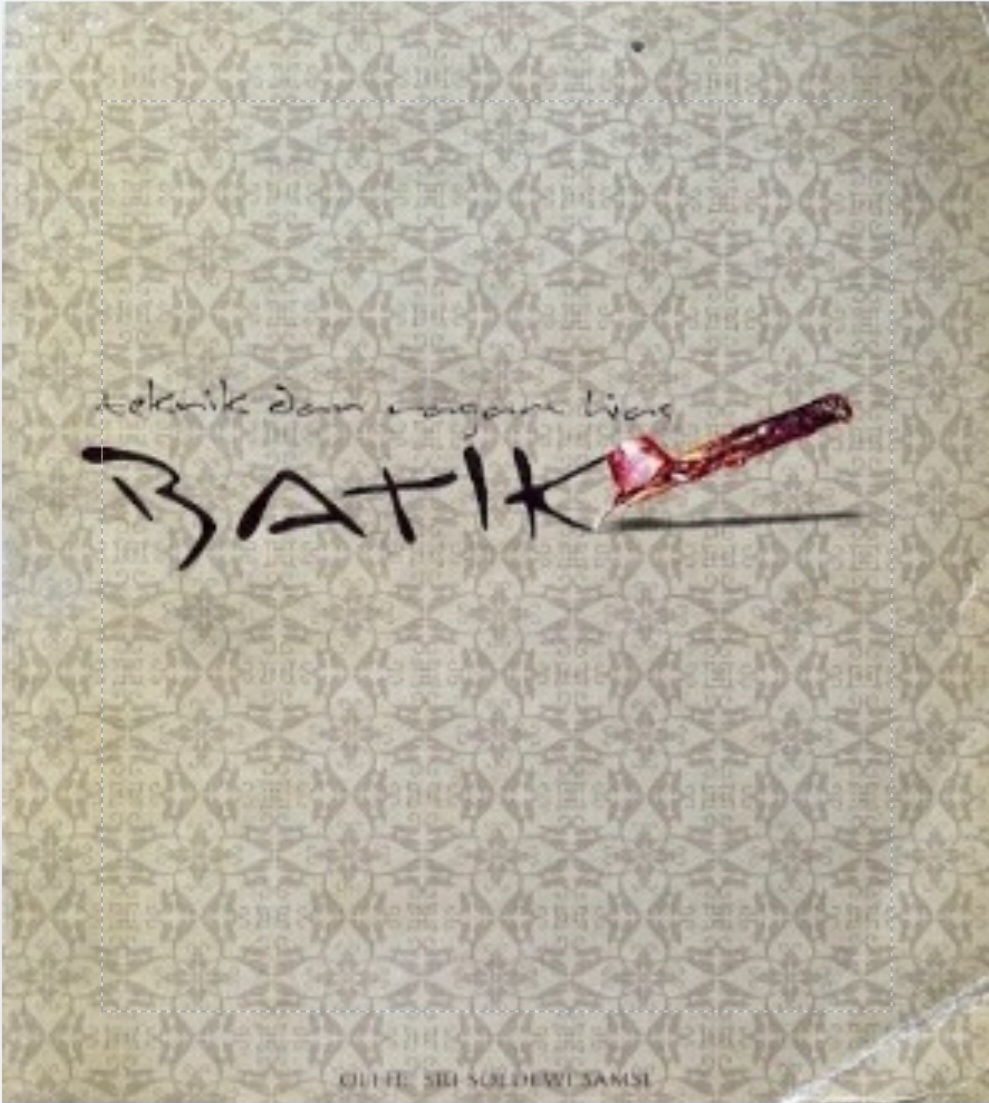
Author: Sri Soedewi Samsi, 2007, 504pg. (Indonesian), Softcover
Publisher: Sekar Jagad, Yogyakarta
This volume offers a comprehensive exploration of the diverse techniques employed in the art of Batik making, alongside an extensive survey of its rich and varied motifs. The material has been meticulously assembled by the author over the course of her distinguished career within the Batik industry. As one of the founding members of Sekar Jagad—an esteemed organization of Batik connoisseurs based in Yogyakarta—she brings both professional expertise and cultural insight to this work, situating Batik not merely as a craft but as a vital expression of Indonesian artistic heritage.
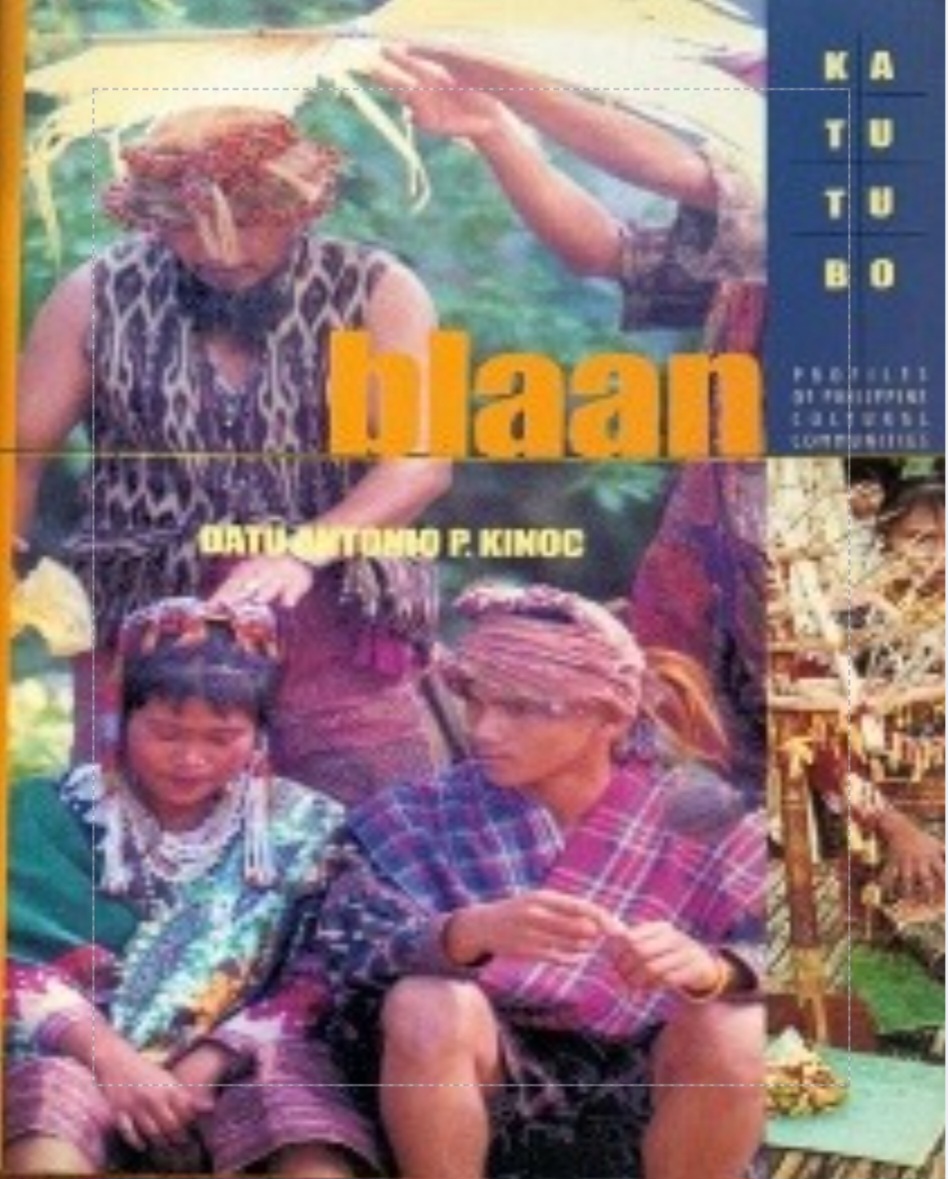
Author: Datu Antonio, P. Kinoc, 2002. 31Pgs. (English). Soft Cover. KATUTUBO - Profiles of Philippe Cultural Comunities Series
Publisher: National Commission for the Culture and the Arts
The author introduces the Blaan, an indigenous community of Southern Mindanao who were not originally highland dwellers. Their relocation to upland territories occurred in the early twentieth century, following socio-political disruptions that compelled them to abandon their coastal settlements. Today, the Blaan domain constitutes the most extensive territorial expanse among the region’s ethnic groups. The discussion encompasses the intricacies of their family structure and social organization, as well as their distinctive cultural practices. These include burial traditions, artistic expressions in arts and crafts, the preservation of folklore, and the role of sports in community life. Collectively, these elements provide a holistic view of the Blaan’s adaptive strategies, cultural resilience, and contributions to the ethnographic landscape of Southern Mindanao.
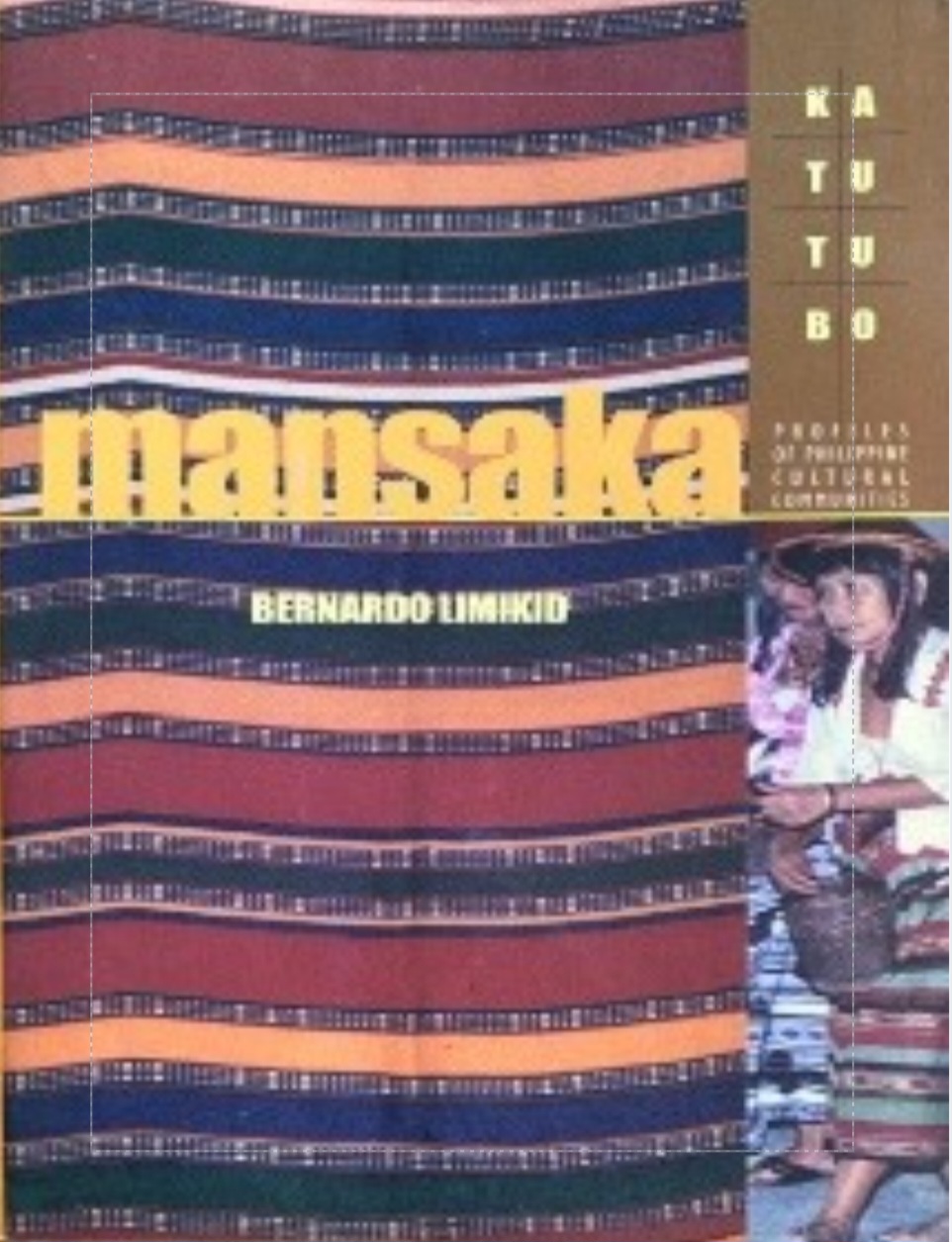
Author: Bernardo Limikit, 2002. 46Pgs. (English). Soft Cover. KATUTUBO - Profiles of Philippe Cultural Comunities Series
Publisher: National Commission for the Culture and the Arts
The author introduces one of the seventy-seven recognized indigenous groups inhabiting the Philippine archipelago. Specifically, attention is directed toward the Mansaka, an ethnolinguistic community whose cultural practices and social structures reflect a deep connection to their ancestral heritage. The discussion encompasses a comprehensive examination of various dimensions of Mansaka life, including traditional attire, kinship systems, and patterns of inter-relationship within the community. Equally significant is the group’s profound respect for the environment, which informs their economic activities and sustains their way of life. The author also explores the Mansaka’s spiritual worldview, highlighting their religious beliefs, rituals, and ceremonial practices that reinforce communal identity and continuity. Furthermore, the narrative considers the expressive dimensions of Mansaka culture, such as their musical instruments, dances, and culinary traditions, all of which serve as vital markers of cultural distinctiveness.
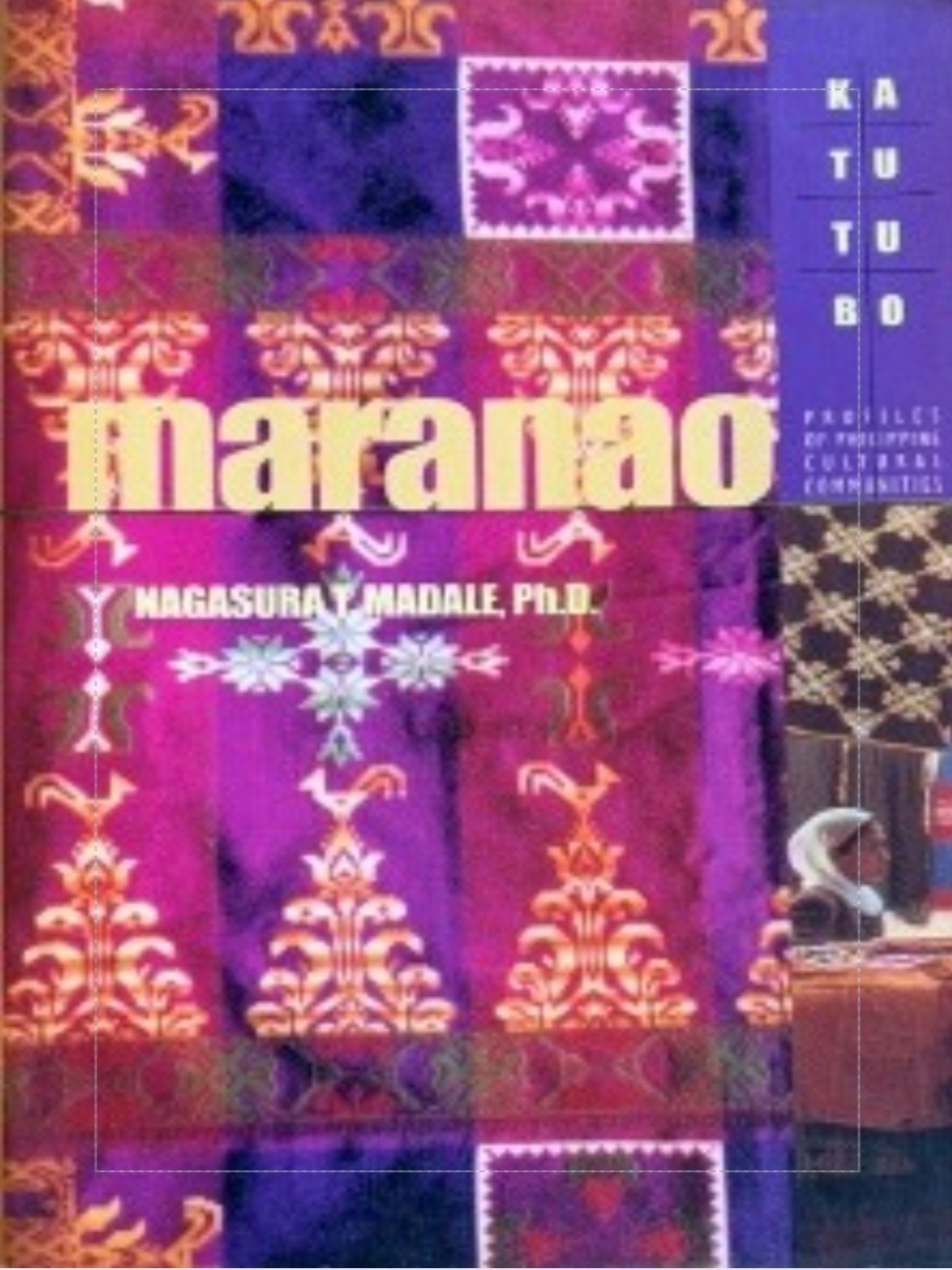
Author: Nagasura T. Madale, 2002. 41Pgs. (English). Soft Cover. KATUTUBO - Profiles of Philippe Cultural Comunities Series
Publisher: National Commission for the Culture and the Arts
The booklet provides a concise introduction to the Marano, one of the 185 ethnolinguistic groups inhabiting the Philippine Islands. It discusses the etymology of the term, offers a genealogical account, and situates the group within its geographical and cultural setting. Furthermore, it examines the units of social organization, material culture, music, weaponry, household implements, recreational activities, belief systems, and other aspects of Marano life.
Page 101 of 108