
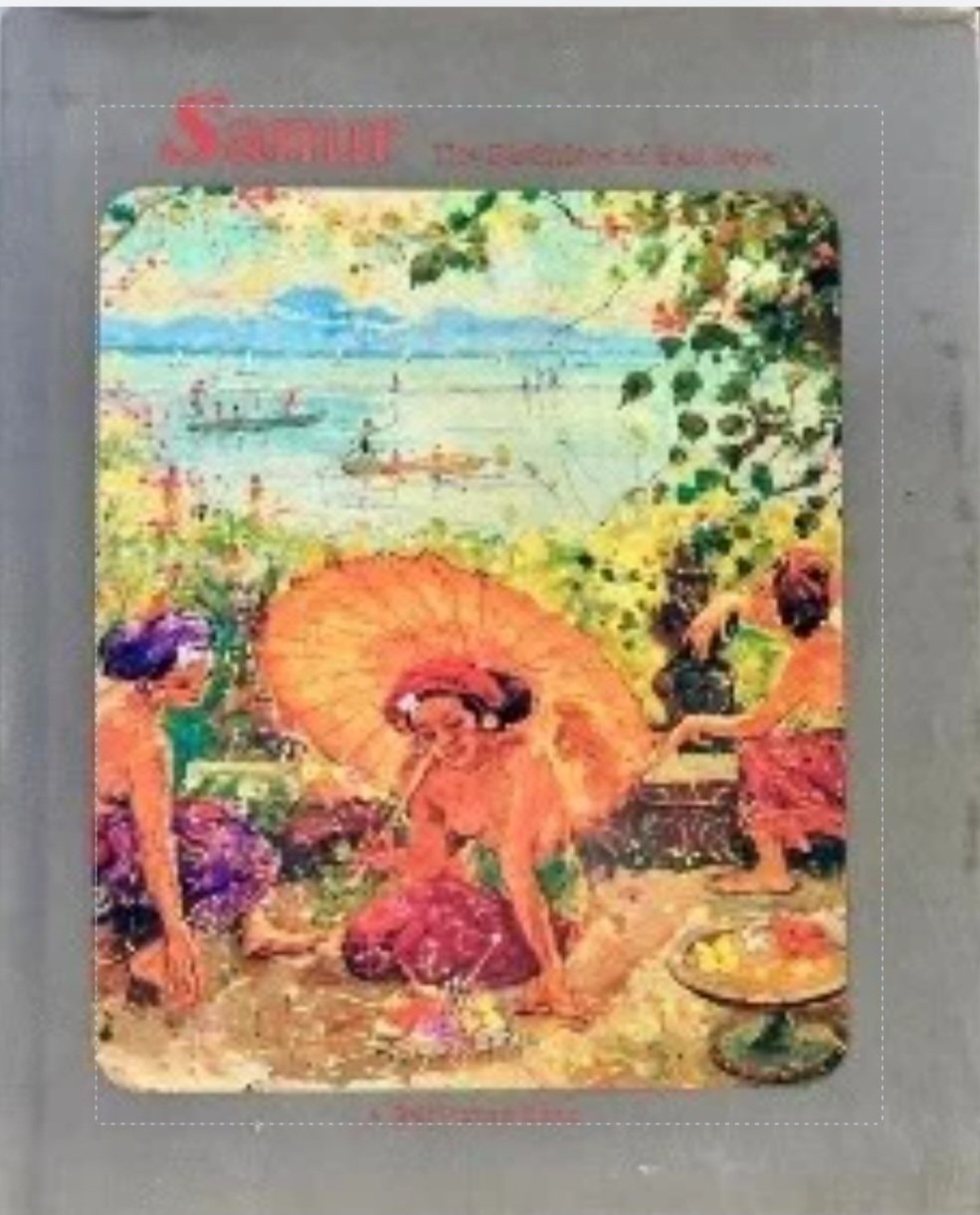
Author: various, directed and designed by Leonard Lueras, 2005. 175pgs. (English), Hardcover
Publisher: Bali Purnati Center of the Arts, Batuan, Sukawati, Gianyar, Bali
Conceived, directed, and photographed by Leonard Lueras, with essays contributed by six distinguished authors, this volume presents a visually arresting and historically rare portrait of Sanur as the cultural cradle of modern Balinese aesthetics. Structured into evocative thematic chapters, it surveys the region’s distinctive identity through a synthesis of narrative and image. The book traces more than a century of historical currents, from the 1906 Dutch military landings to the formative stages of early tourism. It further examines local artistic traditions, including painting, music, and dance, while foregrounding the unique “Sanur Style” of domestic architecture and coastal living. Everyday neighborhood voices, communal rituals, and leisure practices such as surfing are interwoven to evoke the lived texture of the enclave. As the first comprehensive monograph devoted exclusively to Sanur, the volume excels in its visual dimension. Lueras’s artistic direction, complemented by collaborative photography, captures an intimate and nostalgic vision of the coastal community prior to the onset of rapid modern development. Functioning less as a rigorous academic treatise than as an oversized celebratory coffee‑table art book, it nonetheless serves as a cultural homage—an aesthetic and historical testament to Sanur’s enduring role in shaping Balinese modernity.
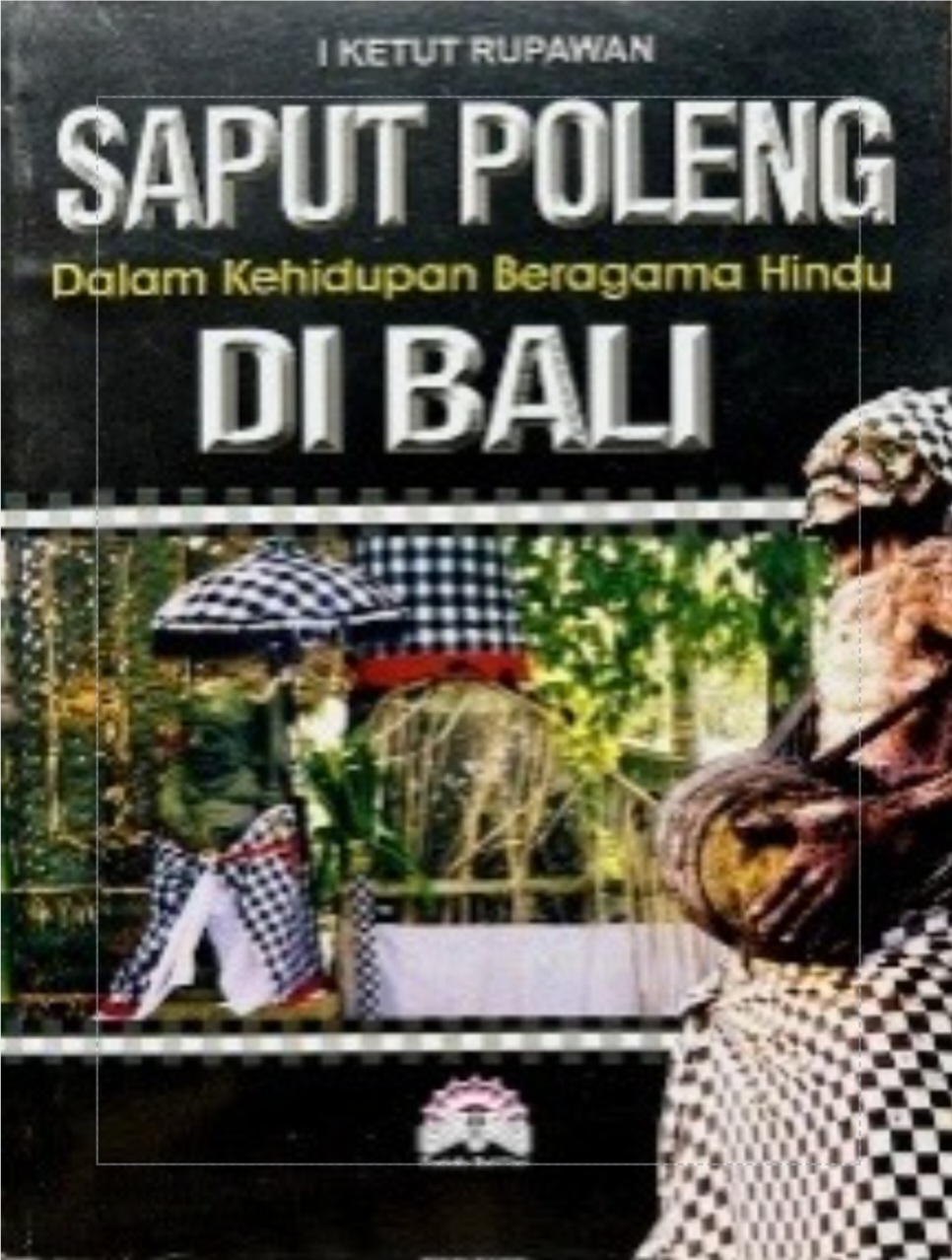
Author: I Ketut Rupawan, 2008, 132 pgs. (In Indonesian). Softcover
Publisher: Pustaka Bali Post, Denpasar
The saput poleng is a sacred black-and-white checkered textile ubiquitous across the Balinese cultural landscape. Traditionally, the textile is produced in three principal forms, distinguished by their coloration, decorative motifs, and material composition. The arrangement of squares is significant: white squares are intentionally more numerous than black, symbolizing the cultural preference for purity, auspiciousness, and balance. In addition to the canonical ritual forms, contemporary adaptations known as poleng anyar have emerged. These newer models are employed exclusively for decorative purposes and lack the sacral potency of their ritual counterparts.
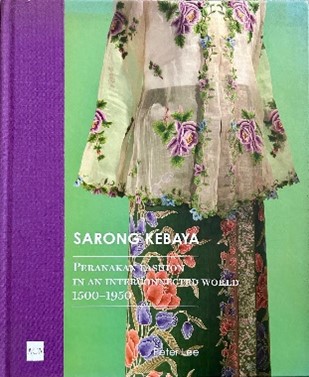
Author: Peter Lee, 2014. 352pg. (English)
Publisher: Asian Civilization Museum, Singapore
This book definitively examines the history of Peranakan women's costumes, highlighting the sarong, kebaya, and baju panjang. It assertively transcends these garments to investigate crucial themes such as language, women's roles, trade, slavery, community, and education. With an impressive array of historical photographs and stunning images from a significant donation to the Peranakan Museum, as well as a private collection, this striking work by independent scholar Peter Lee is an essential reference, backed by thoroughly documented sources.
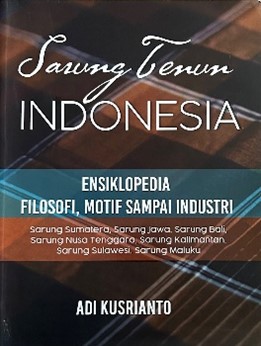
Author: Adi Kusrianto, 2020. 203pg. (Indonesian)
Publisher: Andi Yogyakarta
This book highlights the excellence of traditional hand-woven sarongs crafted on backstrap looms, alongside those expertly produced using standing looms, known as ATBM (Alat Tenun Bukan Mesin). The concluding section emphasizes the impressive range of industrially woven sarongs created by small, medium, and large enterprises throughout the archipelago.
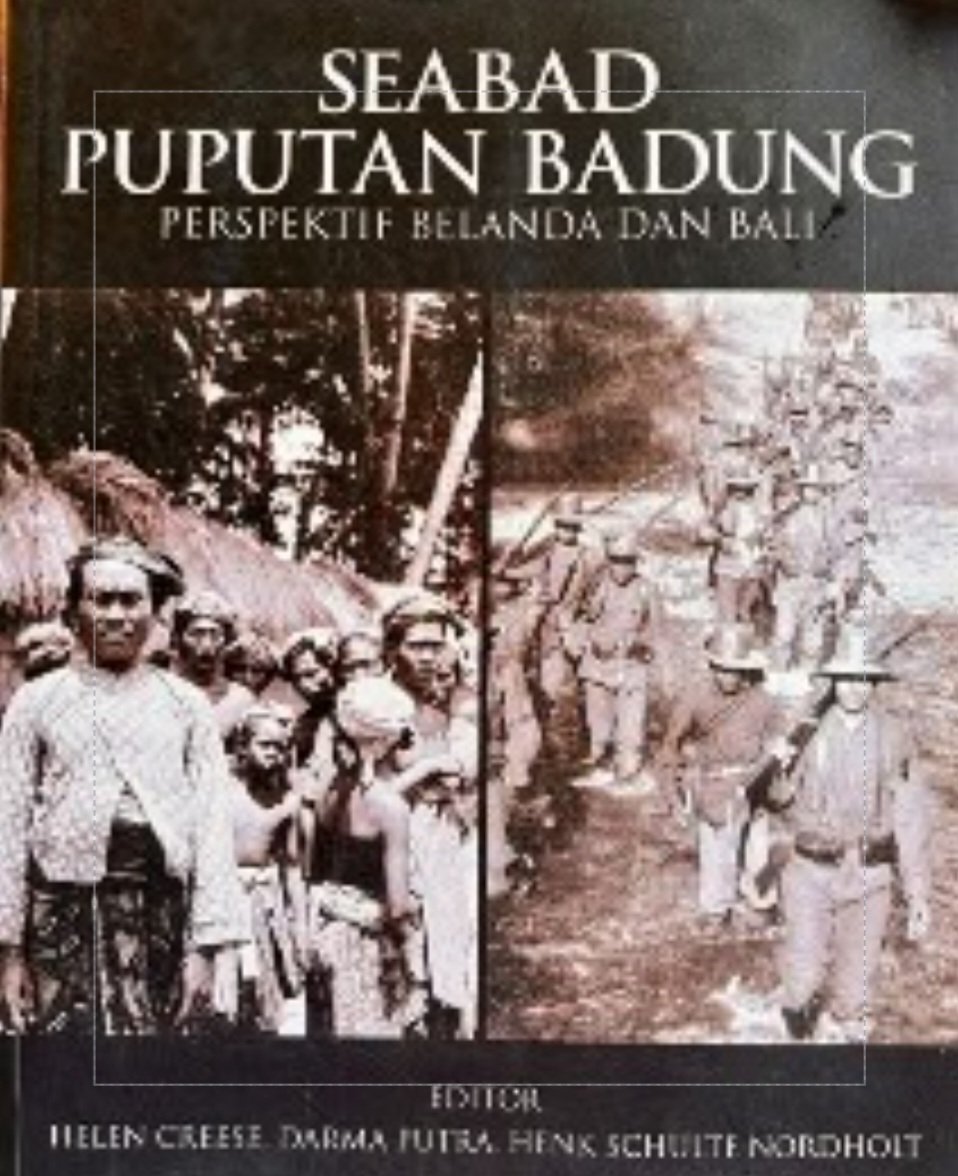
Author: Helen Creese, Nyoman Darma Putra, & Henk Schulte Nordholt (Eds), 2006. 196pgs. (Indonesian). Softcover
Publisher: KITLV, Leiden, Universitas Udayana, Bali & Pustaka Larasan, Denpasar, Bali
Seabad Puputan Badung constitutes a landmark historical anthology, compiled to commemorate the centennial of the 1906 Puputan Badung War. Edited by eminent scholars Helen Creese, Nyoman Darma Putra, and Henk Schulte Nordholt, the volume adopts a dual socio-political lens, juxtaposing essays by Balinese and Dutch historians to interrogate the ritual mass-suicide (puputan) that marked the collapse of the Badung kingdom under Dutch colonial assault. Functioning as a critical bridge between colonial archives and local memory, the anthology re-evaluates one of the most tragic and defining episodes of Balinese resistance to imperial domination. The collection’s greatest strength lies in its explicit dual framing. Rather than presenting a homogenized or sanitized narrative, it places conflicting colonial and indigenous sources side by side. Dutch records, for instance, construed the invasion as a punitive expedition provoked by the alleged “looting” of the stranded Chinese vessel Sri Kumala. Colonial observers often described the final puputan with horror, dismissing it as irrational collective madness. In contrast, Balinese perspectives—particularly those articulated in the indigenous text Kidung Bhuwana Winasa (“The Song of the Destruction of the Earth”)—interpret the puputan as a deliberate, calculated spiritual act. It is framed as Rana Yadnya (sacrificial offering on the battlefield), undertaken to preserve the kingdom’s honor (wirang) rather than capitulate to foreign subjugation. A central theme explored by contributors is whether the puputan represented an act of despair or a structured response. The research demonstrates that King I Gusti Ngurah Made Agung acted with Samajñāna (complete knowledge) and adherence to traditional ethics. Prior to leading his people into gunfire—clad in white ceremonial attire and armed only with ritual krises—the king and his council systematically consulted priests, assessed political alliances, and consciously chose spiritual triumph over colonial defeat. Critics and readers alike note that the anthology resists imposing a singular conclusion. Instead, it functions as an objective instrument of cultural analysis, compelling audiences to confront the harrowing asymmetry between a heavily armed colonial military apparatus and an indigenous polity wielding literature, spirituality, and ultimate sacrifice as defensive weapons. Ultimately, Seabad Puputan Badung is indispensable for historians, anthropologists, and scholars of Balinese culture. Through the translation and critical evaluation of Kidung Bhuwana Winasa, the editors succeed in rescuing the memory of the 1906 war from being reduced to a “tragedy” inscribed solely by victors. In doing so, they restore agency, dignity, and profound philosophical depth to the Balinese actors who chose resistance through ritual sacrifice.
Page 102 of 151