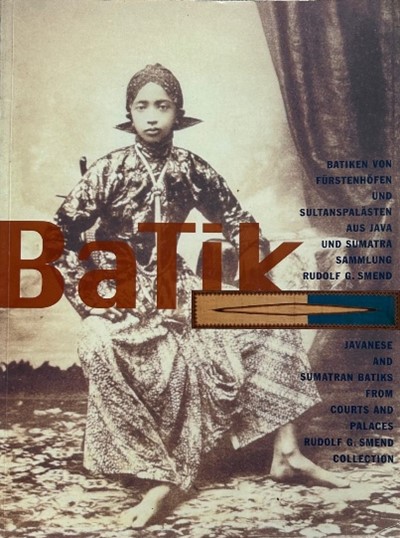
Author: Rudolf G. Smend, 2000. 211pg. (German and English)
Publisher: Galeri Smend, Cologne, Germany
A book featuring images of batik pieces from the Javanese and Sumatran courts, with an introduction by Brigitte Khan Majlis discussing Javanese batiks. This is followed by a catalog showcasing batik pieces from the collections of Rudolf Smend and Don Harper.
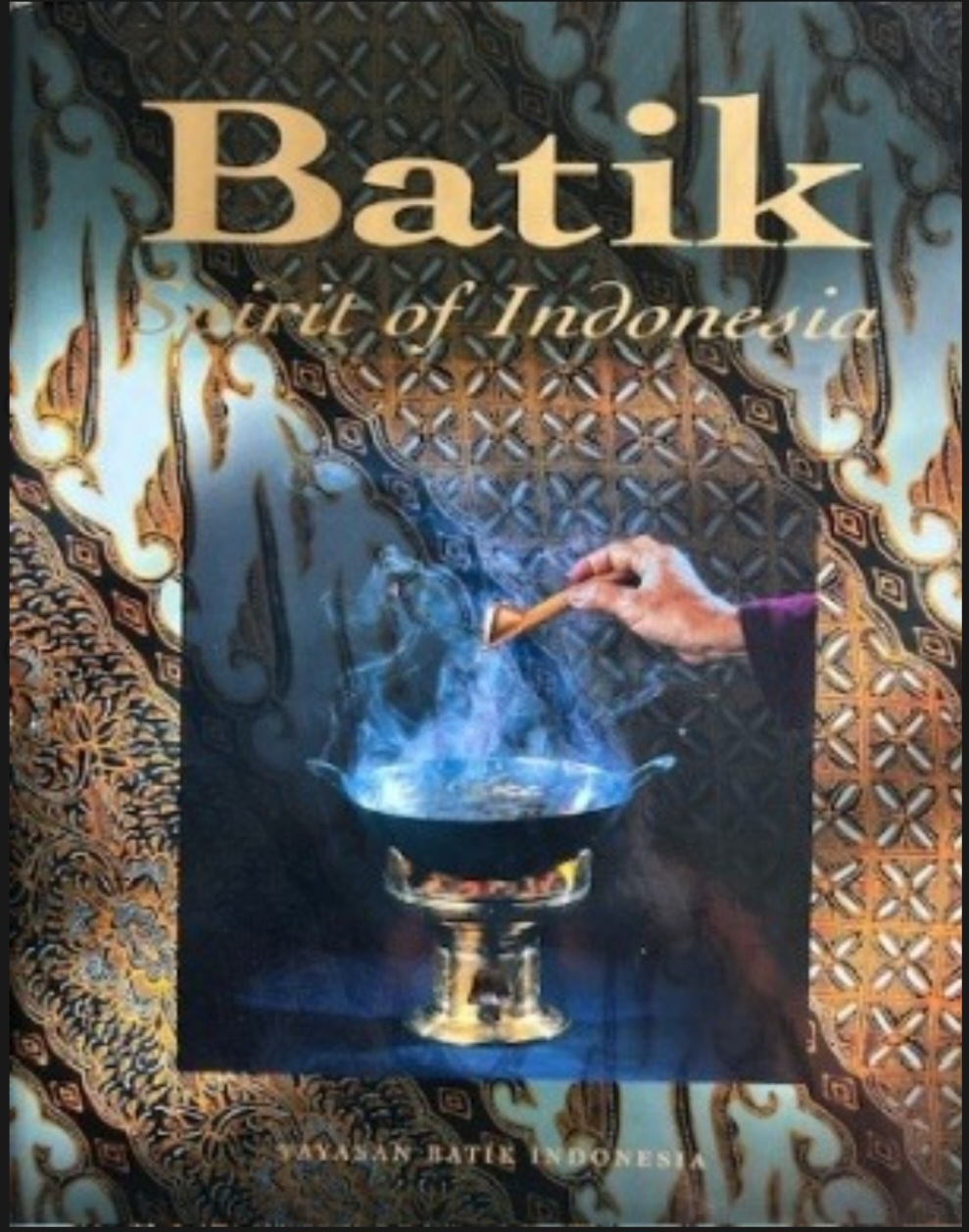
Author: Judi Achjadi (editor), 1999, 232pg. (English). Hardcover
Publisher: Yayasan Batik Indonesia, Jakarta
This huge volume is publihed by the Indonesian Batik Foundation, with contributions from Rony Siswandi (Roots of Tradition), Nian S, Djoemena (Regional Variations), KRHT Hardjonagoro (Motifs and Meanings), Judi Achjadi (Batik in the 20th century), Asmoro Damais (Batik in the House), Suwarno Wisetrotomo (Batik in Art), and Iwan Tirta (Batik in Fashion). The book has become a reference book for many who want to learn more about this wax resist cloth and is considered now a work of art.

Author: Kyungwoon Museum. 2015. 119 pg. (Korean and English)
Publisher: -
This is an exhibition catalogue of Indonesian batik textiles and art objects.

Author: Afif Syakur. 2020. 310pg. (in Indonesian)
Publisher: PPBI Sekar Jagad, Yogyakarta
This book follows Afif's journey as a batik artisan, entrepreneur, and fashion designer, showcasing his diverse collection of ancient Javanese court batiks and vibrant batiks from Pekalongan on the north coast.

Author: Ani Bambang Yudhoyono, 2010. 224pgs. (Indonesian) Softcover
Publisher: Kompas Gramedia, Jakarta
Ani Yudhoyono’s My Batik is both a cultural memoir and a literary homage to Indonesia’s textile heritage, blending personal reflection with philosophical meditation on batik as a living tradition. It elevates batik beyond craft, presenting it as a moral compass, a repository of local wisdom, and a symbol of national identity. The text emphasizes batik as a collective art form, produced through gotong royong (mutual cooperation). Ani portrays each piece of batik as a silent witness to centuries of communal creativity. Batik is described as a local wisdom, inseparable from Indonesia’s soil and roots, Ani frames batik as more than attire—it embodies manners, ethics, and worldview, shaping both personal and collective identity. Her narrative intertwines autobiography with cultural commentary, revealing how batik influenced her life, family traditions, and even her final choices of garment. Ani employs lyrical prose, often personifying batik as a living entity with a “soul”. And interpretes Batik motifs as metaphors for continuity, harmony, and moral order.While deeply personal, the text resonates with ethnographic qualities, documenting artisanship and cultural practices. As a cultural significance, the book reinforces batik’s designation by UNESCO as an Intangible Cultural Heritage of Humanity (2009). The book is richly personal, yet culturally expansive, as it elevates batik from material culture to philosophical discours.
Page 25 of 151