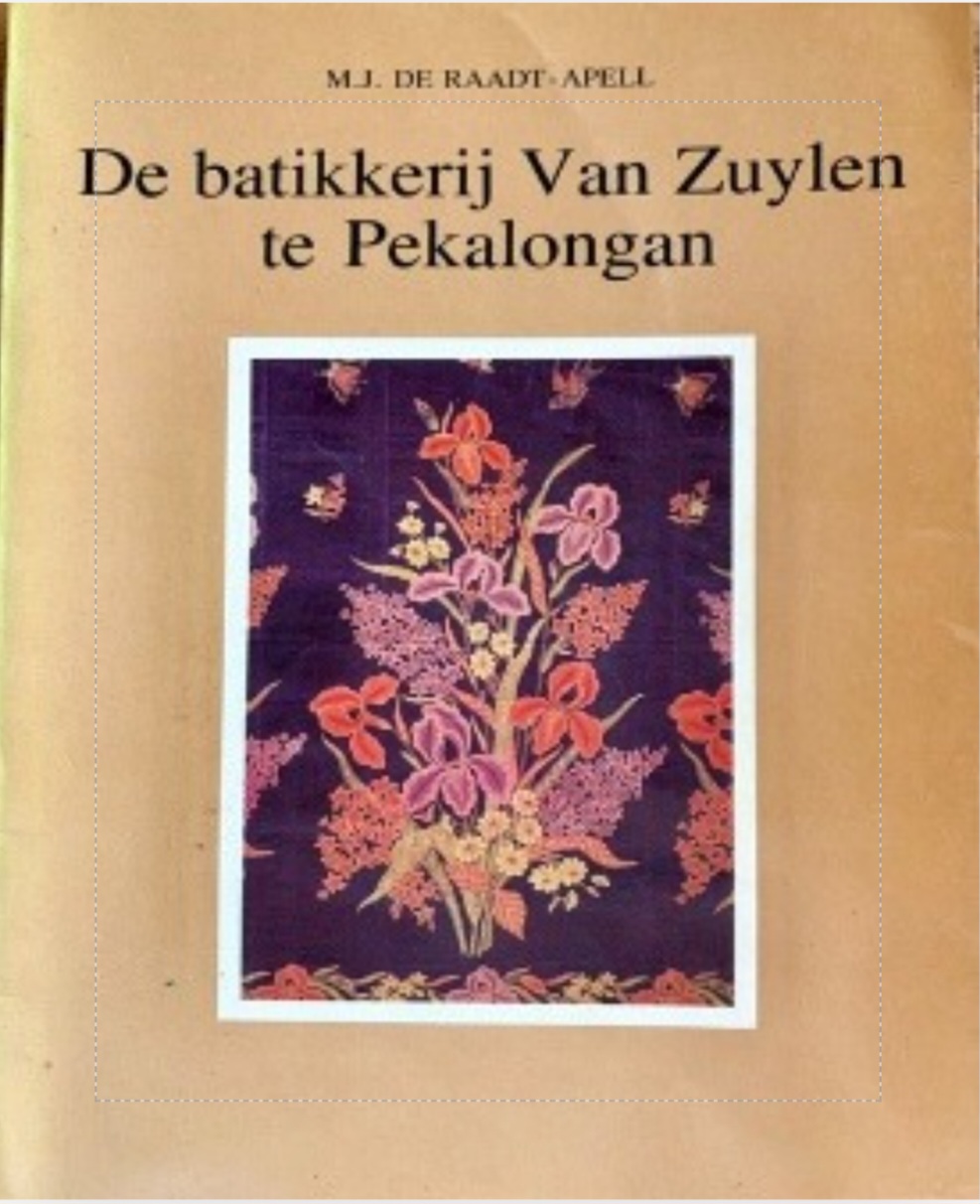
Author: de Raadt-Apell, 1980. 64pgs, (Dutch). Softcover.
Publisher: Terra, Zuthphen, Netherlands
De Batikkerij Van Zuylen in Pekalongan refers to the renowned Indo-European batik atelier founded in 1890 by Eliza van Zuylen. The workshop is celebrated for pioneering the iconic buketan motif—elaborate, vividly colored bouquets of European flowers rendered with remarkable precision. It is distinguished by several notable historical markers. Eliza van Zuylen established what became the largest Indo-European batik enterprise in Java, employing more than one hundred artisans at its zenith. Remarkably, her workshop was the sole European-owned batik establishment in Java to withstand the global economic depression of the 1930s. Van Zuylen’s batiks are instantly recognizable by their signature style: expansive, hand-drawn floral compositions accompanied by the artist’s autograph inscribed directly onto the cloth.
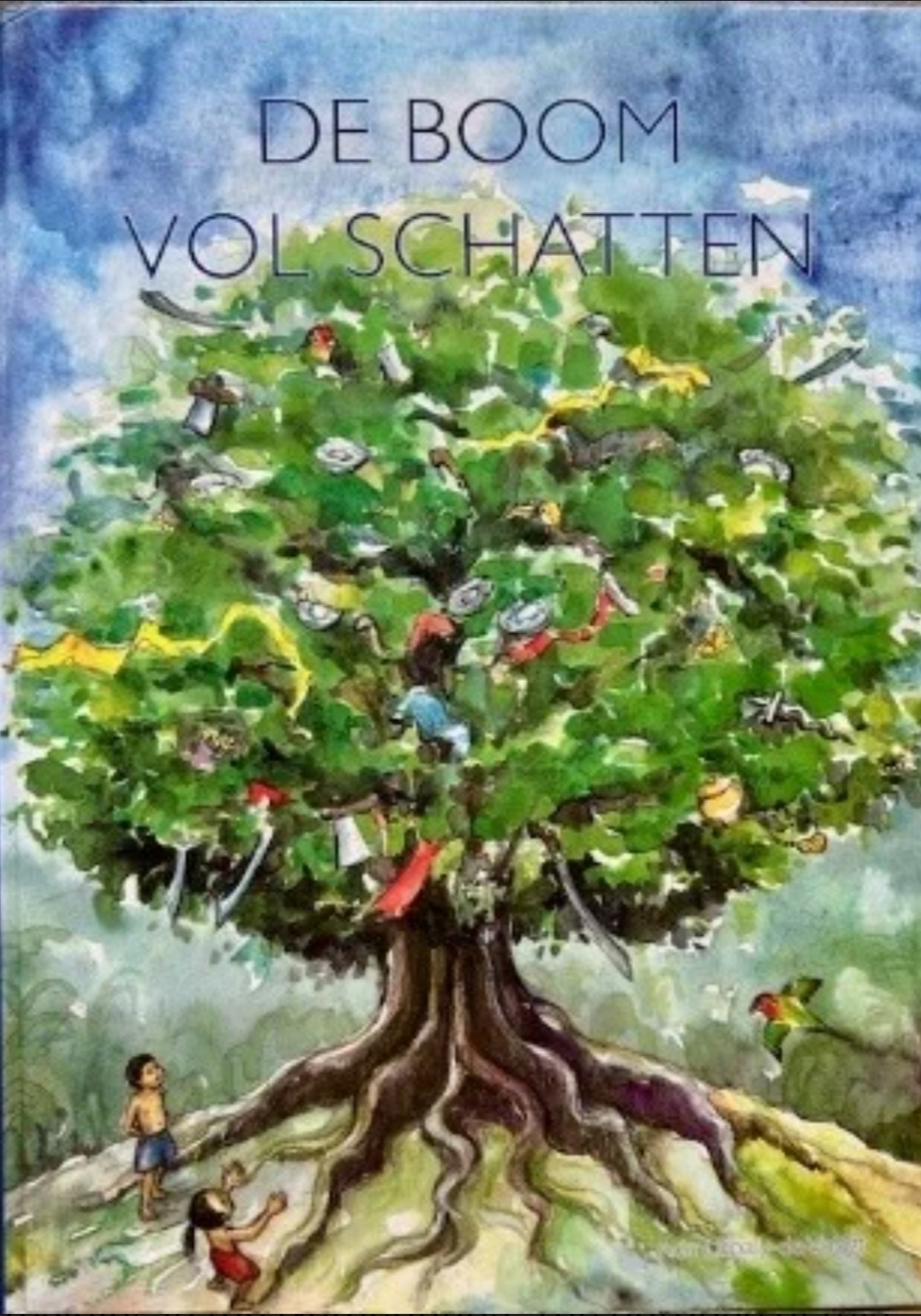
Author: Ada Lilipaly-de Voogt, 1993, 344pg. (Dutch language). Hardcover
Publisher: Steunpunt Edukatie Molukkers/Het Drentse Boek, Utrecht/ Zuidwolde, Netherlands
This book seeks to preserve and document narratives from the Moluccas for the benefit of the Moluccan diaspora and their descendants residing in the Netherlands. The purpose of this publication is to foster a deeper connection with their ancestral heritage and homeland, ensuring that their cultural roots are remembered and sustained across generations.
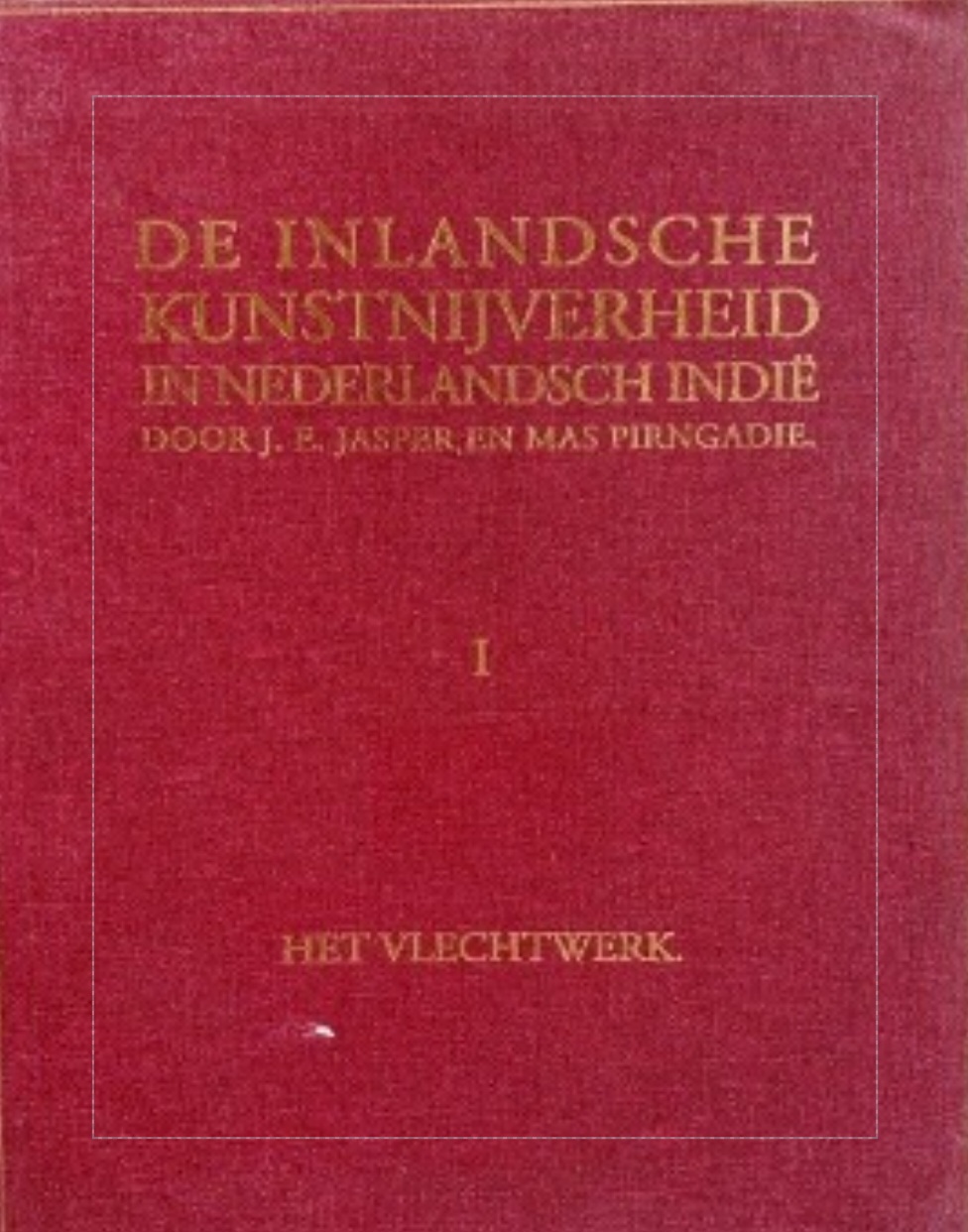
Author: J.E. Jasper & Mas Pirngadie, 1912. 240pgs. (Dutch language). Hardcover
Publisher: van het Mouton & Co, Den Haag, Nederland
This monumental first volume of a five-part documentary corpus remains an indispensable, richly illustrated Dutch resource for scholars investigating the traditional material culture of Indonesia. The work effectively bridges early twentieth-century colonial administration with indigenous craft traditions. Jasper undertook extensive travels across the archipelago to document these practices, while Pirngadie contributed detailed sketches and meticulous visual records. The volume offers an encyclopedic survey of Indonesian fiber arts, transforming quotidian utilitarian objects into artifacts of significant artistic and anthropological value. It encompasses virtually every conceivable dimension of three-dimensional fiber manipulation across the Dutch East Indies. The authors delineate how local artisans harvested and processed organic materials such as bamboo, rattan, pandanus leaves, and diverse palms or grasses. They further classify complex geometric weaving structures—including twill, hexagonal, and openwork plaiting—into systematic categories. The study ranges from domestic items such as mats, baskets, and food covers to specialized implements including traps, agricultural winnowing trays, and ceremonial headgear. Pirngadie’s highly detailed line drawings elucidate the precise mechanics of fiber strands crossing over and under to generate distinctive regional motifs. No modern field guide rivals the geographical breadth of this text, which encompasses techniques from Sumatra to Papua. Nevertheless, the book is framed through a colonial lens of oversight. At times, its categorizations impose a Western dichotomy of “primitive utility” versus “fine art,” thereby marginalizing the spiritual dimensions and localized nomenclature embedded within indigenous weaving traditions.
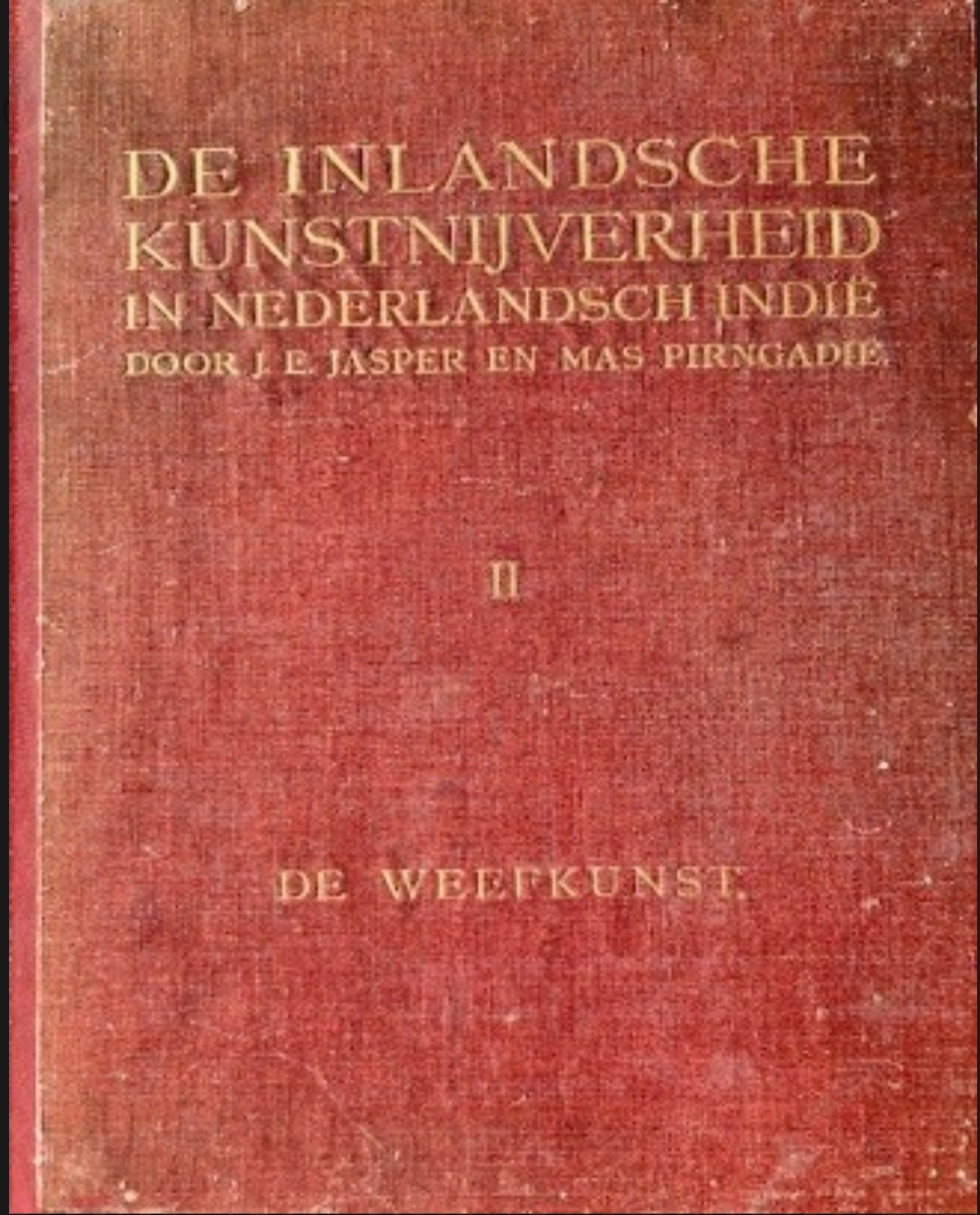
Author: J.E. Jasper & Mas Pirngadie, 1912, 373pg. (Dutch language).
Publisher: v/h MOUTON & Co., s’Gravenhage, Netherlands
This monumental book series constitutes a comprehensive exploration of Indonesian native arts and crafts. The present volume, the second in the series, is devoted to the intricate art of weaving. The inaugural volume examines the diverse traditions of basketry across the archipelago, while the third volume is dedicated to the art of Batik. The fourth volume investigates the craftsmanship of gold and silver smithing, and the fifth addresses the production of non-precious metal works. In this volume, which has become a reference book, the authors provide a systematic introduction to weaving practices. They begin with an exposition of the raw materials and the preparation of threads, followed by a discussion of natural and synthetic dyes. The text then elaborates on the structuring of warp and weft, the mechanics of the loom, and the sequential stages of the weaving process. Particular attention is given to specialized techniques such as thread-binding (ikat), band creation, and card-weaving. The volume further analyzes motifs and patterns, situating them within broader cultural and aesthetic frameworks, while also documenting additional weaving methodologies employed throughout Indonesia.
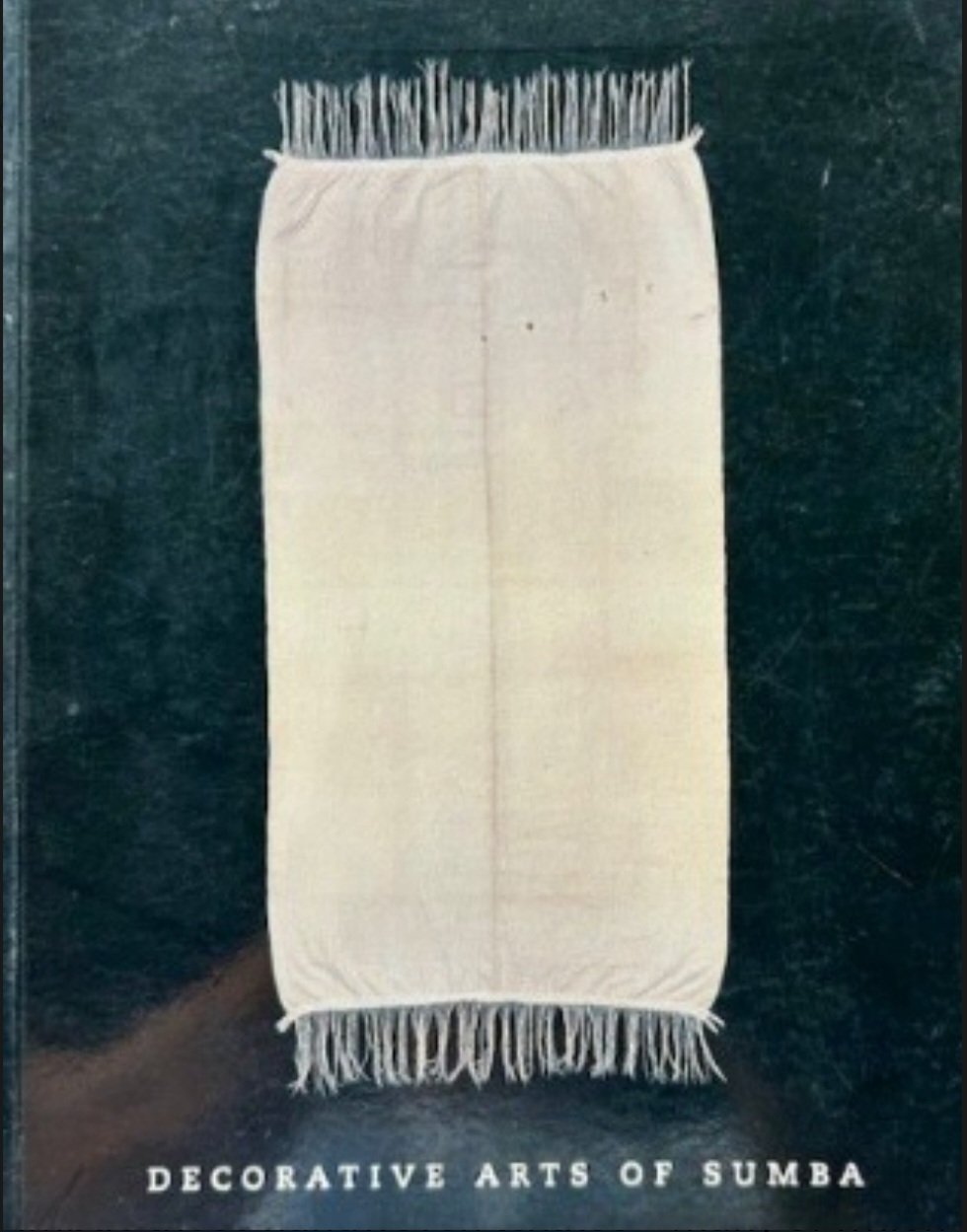
Author: Essays by Marie-Jeanne Adams, Jill Forshee, Alit Djajasoebrata, and Linda Hanssen, 1999, 160pg. (English). Softcover
Publisher: The Peppin Press, Amsterdam
The volume provides a profound examination of the distinguished Sumba collection housed within the Rotterdam Museum of Ethnology. Through a series of scholarly essays, readers are guided to appreciate the centrality of life and death in the cultural fabric of Sumba Island, the historical trajectory of weaving traditions in East Sumba across the centuries, and a comprehensive overview of Sumbanese textile artistry. The contributions of expert researchers imbue these handwoven textiles—many of which have never before been exhibited—with new interpretive significance, situating them within broader discourses of material culture and ethnographic study.
Page 26 of 108