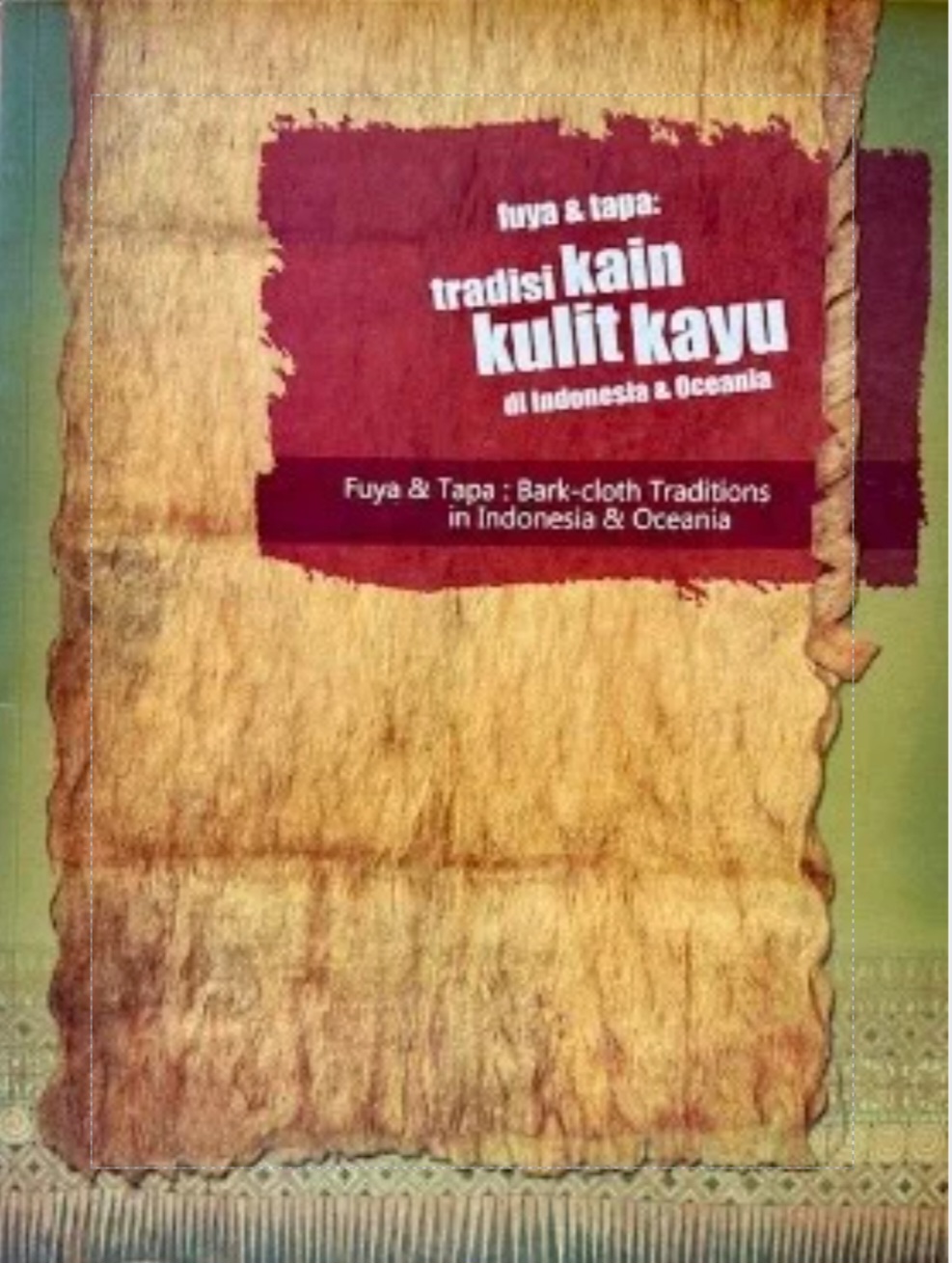
Author: Contributions by Harry Truman Simanjuntak, Shigeki Futumoto, Reimar Scheffold, Judi Achjadi and Benny Gratha, 2013, 96pg. (Indonesian & English). Softcover. Catalog
Publisher: Museum Tekstil Jakarta
The exhibition was convened at the Textile Museum in Jakarta from 3rd to 14th September 2013. This scholarly event foregrounded the cultural and historical significance of barkcloth, a textile tradition deeply embedded in diverse societies. The accompanying essays were authored by distinguished experts from the Netherlands, Japan, and Indonesia, each contributing nuanced perspectives on the production, symbolism, and continuity of barkcloth practices. Collectively, these writings illuminate the multifaceted role of barkcloth within ritual, artistic, and everyday contexts, while simultaneously underscoring its relevance to broader discourses on material culture and heritage preservation.
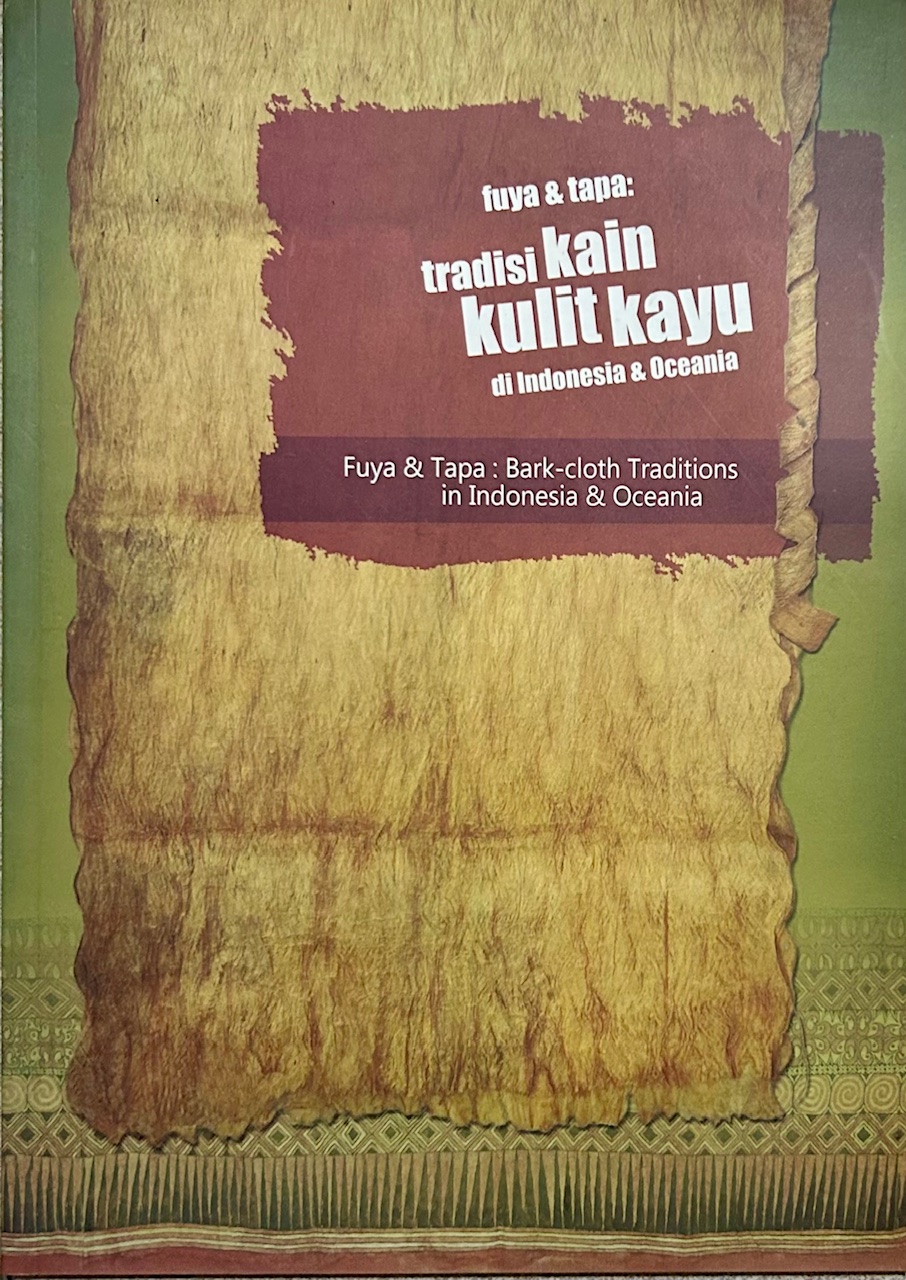
Author: Harry Truman Simanjuntak et all, 2013. 96pg. (English & Indonesian)
Publisher: Bentara Budaya Jakarta & Musium Tekstil Jakarta
His extensive and striking catalog firmly establishes the origins of human clothing in Indonesia and Oceania. The exhibition, presented simultaneously at the Textile Museum and Bentara Budaya—a prominent cultural center—was expertly curated by a talented team that includes Mr. Simanjuntak, an archaeologist; Dr. Sakamoto, a leading conservator and authority on beaten bark paper; Reimar Sheffold, a renowned Mentawai researcher from Leiden; and Jakarta Textile Museum curators Judi Achjadi and Benny Gratha. This book is an essential resource, thoroughly exploring Fuya from Indonesia and Tapa bark cloth from Oceania. It is enriched with vibrant images of bark cloth, clothing, and the tools utilized for crafting cloth from tree bark.
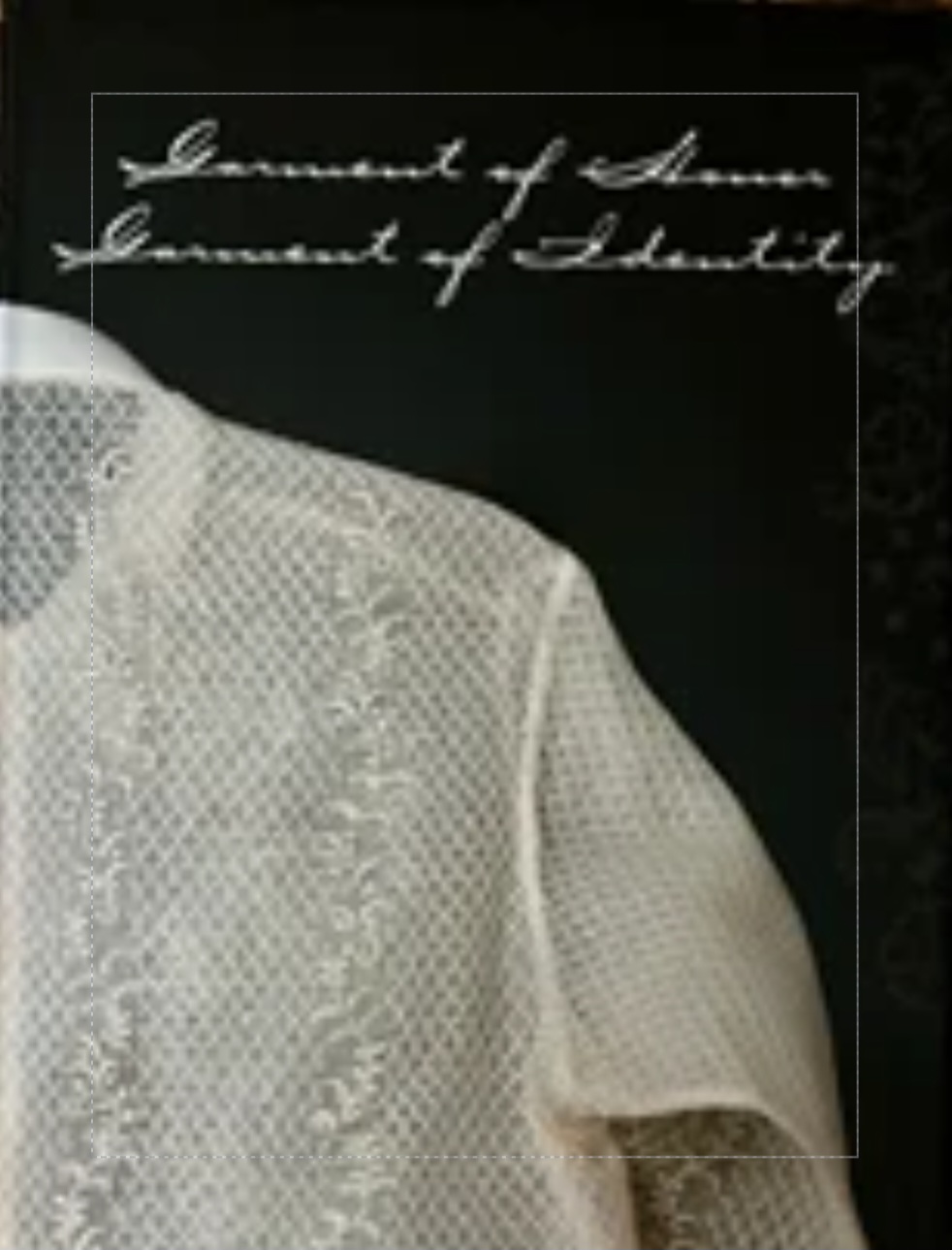
Author: M.A. Corazon Alejo-Hila, Mitzi Marie Aguilar Reyes & Anita Felio, 2008, 279pg. (English). Hardcover
Publisher: En Barong Philipino Inc., Manila, Philippines
The book presents a rich compendium of compelling insights. The term barong tagalog—the traditional formal shirt for men in the Philippines—signifies far more than mere attire; it embodies a cultural garment that accompanies Filipinos through pivotal stages of life, from birth to death. Although widely perceived as timeless, the designation barong tagalog was only formally coined in the early twentieth century, around 1920, evolving from the baro, a pre-colonial garment deeply rooted in indigenous sartorial traditions. A barong meticulously crafted from piña fabric and adorned with intricate hand embroidery exemplifies the pinnacle of artisanal skill, requiring no less than 462 days to complete. Such garments thus stand not only as markers of identity and heritage but also as enduring testaments to patience, craftsmanship, and cultural continuity.
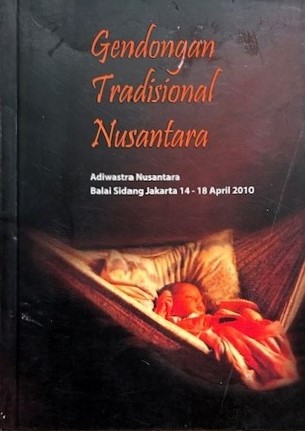
Author: Himpunan Wastraprema 2010. 100pg. (Indonesian)
Publisher: UP Musium Seni, & Himpunan Wastraprema, Jakarta
This catalog is a companion to the exhibition “Baby Slings and Carriers of the Archipelago,” which was prominently featured in the Adiwastra Nusantara Exhibition held in 2010 at the Jakarta Convention Center. It emphasizes the essential role of carriers for both babies and market produce while also showcasing bags specifically designed for carrying betelnut. These items are crafted from an array of materials, including cotton, leaves, various fibers, and wood, reflecting the rich cultural heritage of the Archipelago.

Author: Chizuko Morita. 2005, 95pg. (English and Japanese). Softcover
Publisher: Kodansha International, Tokyo, Japan
The author’s ideas have their roots in the Japanese furoshiki, an elegant cloth traditionally used for wrapping and carrying bundles. Wishing to adapt the centuries-old practice to today’s lifestyle, she devised a number of ingenious wrapping ideas, each illustrated with step-by-step photographs – and each simple, fascinating and fun.
Page 32 of 108