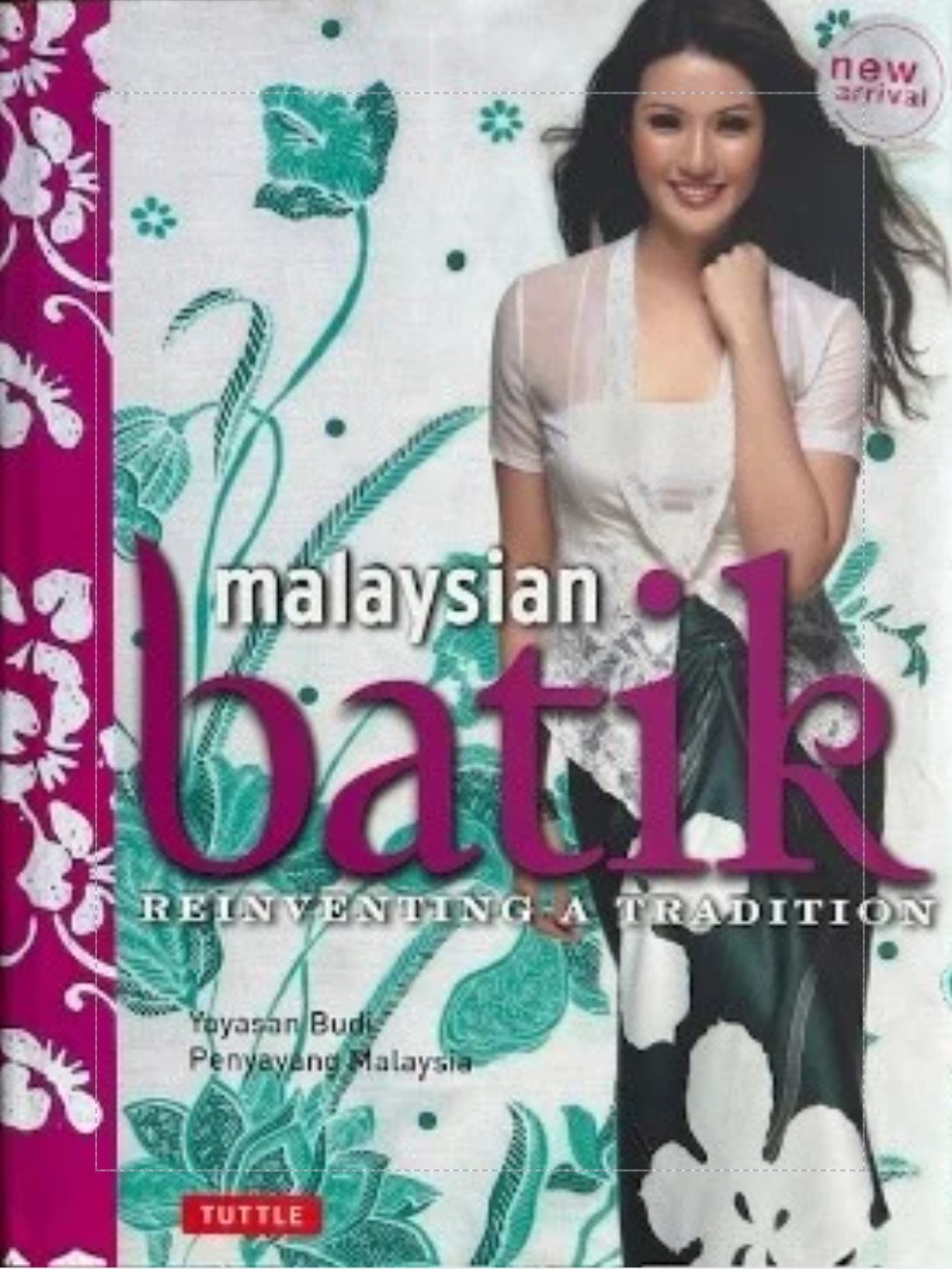
Author: Noor Azlina Yunus, 2011, 176pg. (English). Hardcover
Publisher: Yayasan Budi Penyayang Malaysia & Tuttle, Singapore
With its bold, liberated designs, striking abstractions, and dynamic floral motifs, coupled with a luminous palette and inventive chromatic juxtapositions, Malaysian batik has introduced a vibrant new dimension to an ancient textile art. This tradition of embellishing undyed fabric through the application of molten wax, metal stamps, and stylus techniques has evolved beyond its artisanal roots into a recognized form of fine art. In Malaysia, batik production has transcended craft, diversifying into soft furnishings, lifestyle products, modern art, and contemporary fashion. The book meticulously traces the historical origins of batik, examining the materials, methods, and motifs employed in both block-stamped and hand-drawn techniques, while also illuminating the transformation of Malaysian batik into a cultural product of international resonance and appeal.
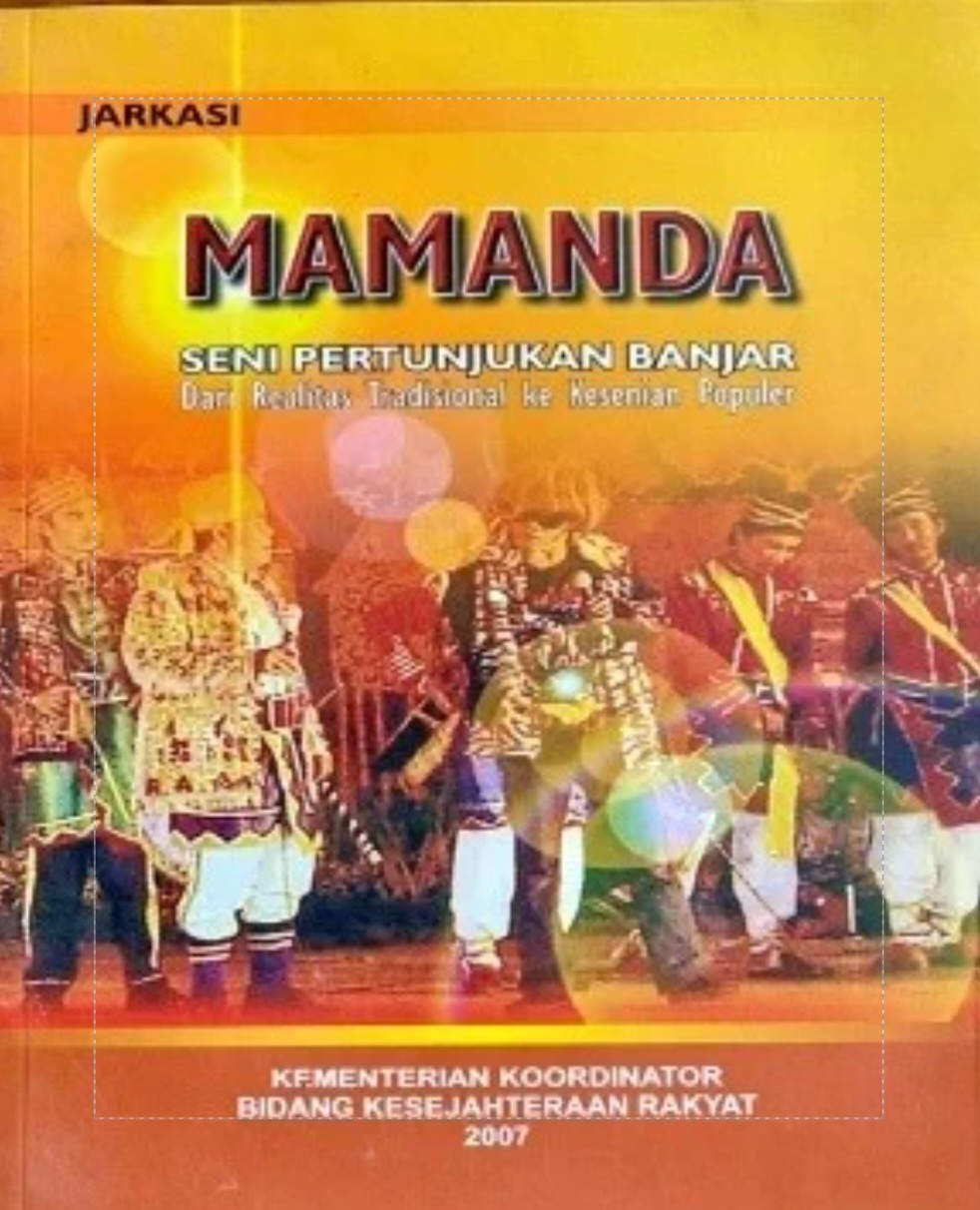
Author: Jarkasi, 2007. 266pgs. (Indonesian). Softcover
Publisher: Coordinating Ministry for Social Welfare, jakarta
Mamanda is the traditional folk theatre of the Banjar community in South Kalimantan. More than mere entertainment, it functions as a cultural institution that preserves communal ethics, offers incisive social commentary, and serves as a profound sociological mirror reflecting the historical consciousness of the Banjarese people. A Mamanda performance typically unfolds as a localized adaptation of classical Malay epics, most notably Syair Abdul Muluk. The narrative often centers on the royal court, its enduring appeal sustained by a structured archetypal cast. At its core stands the Raja, embodying ultimate authority, supported by the sagacious Mangkubumi (Prime Minister) and the Wazir (Advisor). The Khadam, a clownish royal servant, provides comic relief through witty banter and by breaking the fourth wall to engage directly with the audience. Yet Mamanda transcends theatrical convention. It operates as a subtle mechanism of critique, dramatizing inequality and the struggles of ordinary people under the guise of historical storytelling. The comic characters, in particular, function as pragmatic tools of non-violent resistance: their banter voices the grievances of the lower classes and satirizes the follies of those in power, all while evading censorship or reprisal. Scholars and educators commend Mamanda for its pedagogical value. Beyond entertainment, it instills moral and spiritual virtues—faith, humility, and courtesy—embedding these values into younger generations and ensuring the continuity of Banjar cultural identity.
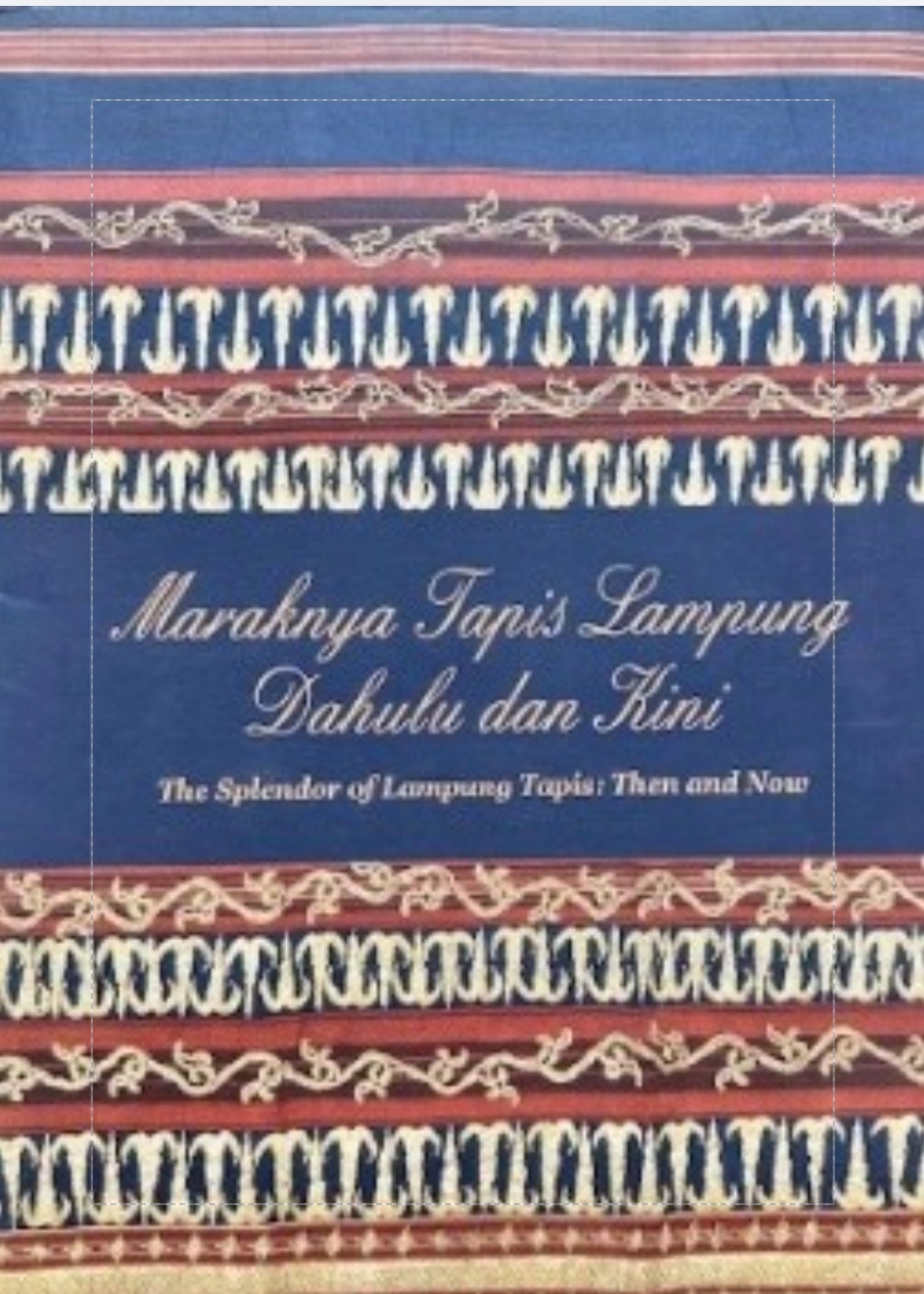
Author: Unknown, 2013, 44pg. (Indonesian & English). Softcover. Catalog
Publisher: Museum Tekstil Jakarta
The catalog was issued to commemorate the exhibition of Lampung textiles, held from 13 March to 7 April 2013. This scholarly endeavor was made possible through the generous support of the Association of Lampung Craftspeople, whose commitment to preserving and promoting regional artistry underscores the cultural significance of the event. The publication not only documents the aesthetic and technical achievements of Lampung textile traditions but also situates them within broader discourses of heritage preservation and artisanal identity.
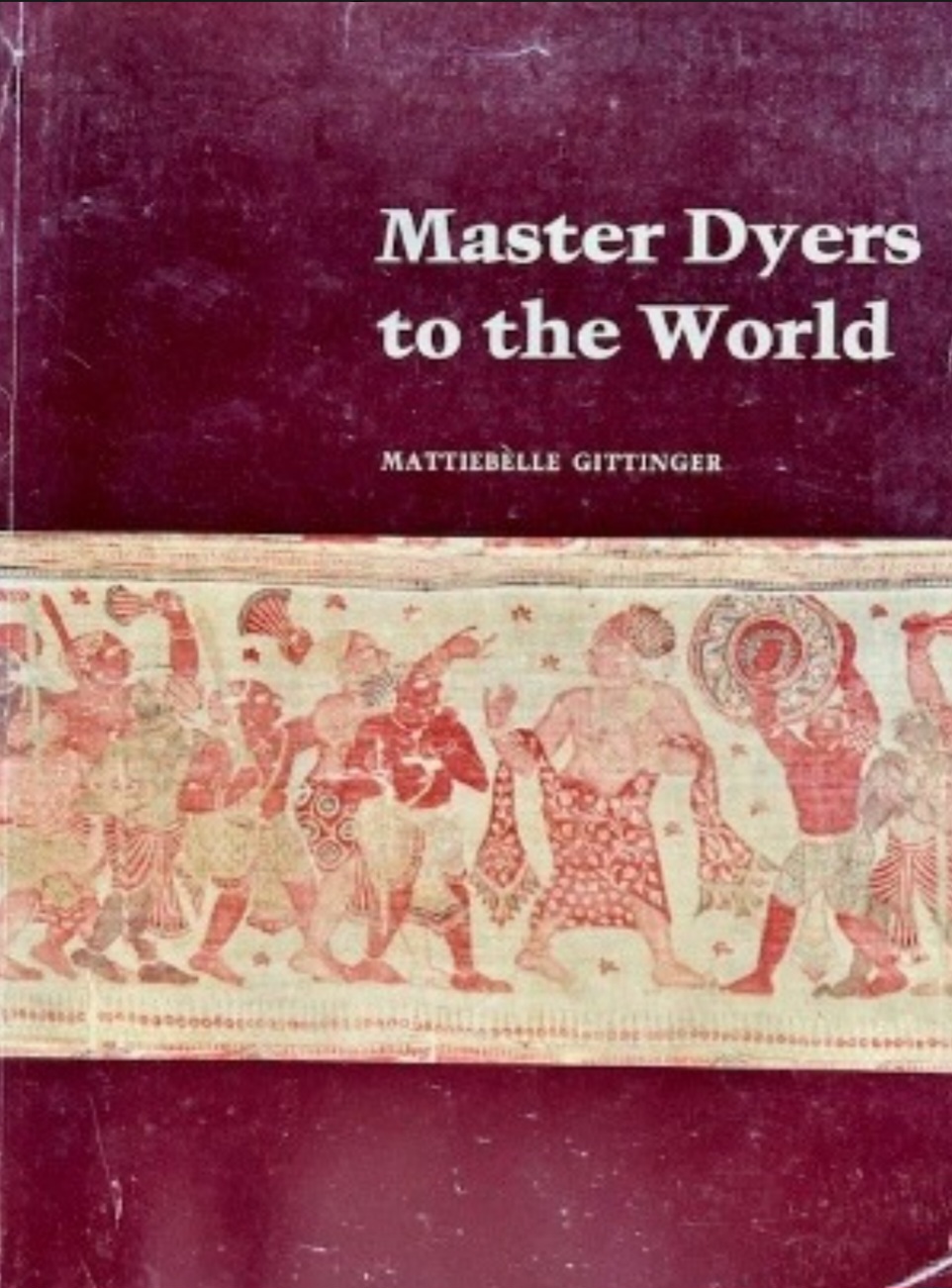
Author: Mattiebelle Gittinger, 1982, 207pg. (English). Softcover. Catalog
Publisher: The Textile Museum, Washington DC, USA
This seminal work on the master dyers of India has attained the status of a classic and continues to serve as a foundational reference for textile scholars worldwide. Published in conjunction with an exhibition at the Textile Museum in Washington, D.C. in 1982, the volume bears the same title as the exhibition itself. The artifacts presented originated from India’s historic trade textile corpus, dating from the fifteenth to the eighteenth centuries, and were recovered through both surface finds and archaeological excavations at al-Fustat, the site of Egypt’s ancient capital. Thirty-five exemplary textiles from the Fustat Collection were selected for display. Beyond its documentation of the dyers’ artistry at Fustat, the book expands its scope to encompass chapters on master dyers situated both east and west of India, thereby situating Indian textile traditions within a broader global context. The volume concludes with extensive pictorial supplements, which visually reinforce the scholarly analyses and provide readers with a vivid appreciation of the technical and aesthetic achievements of these artisans.
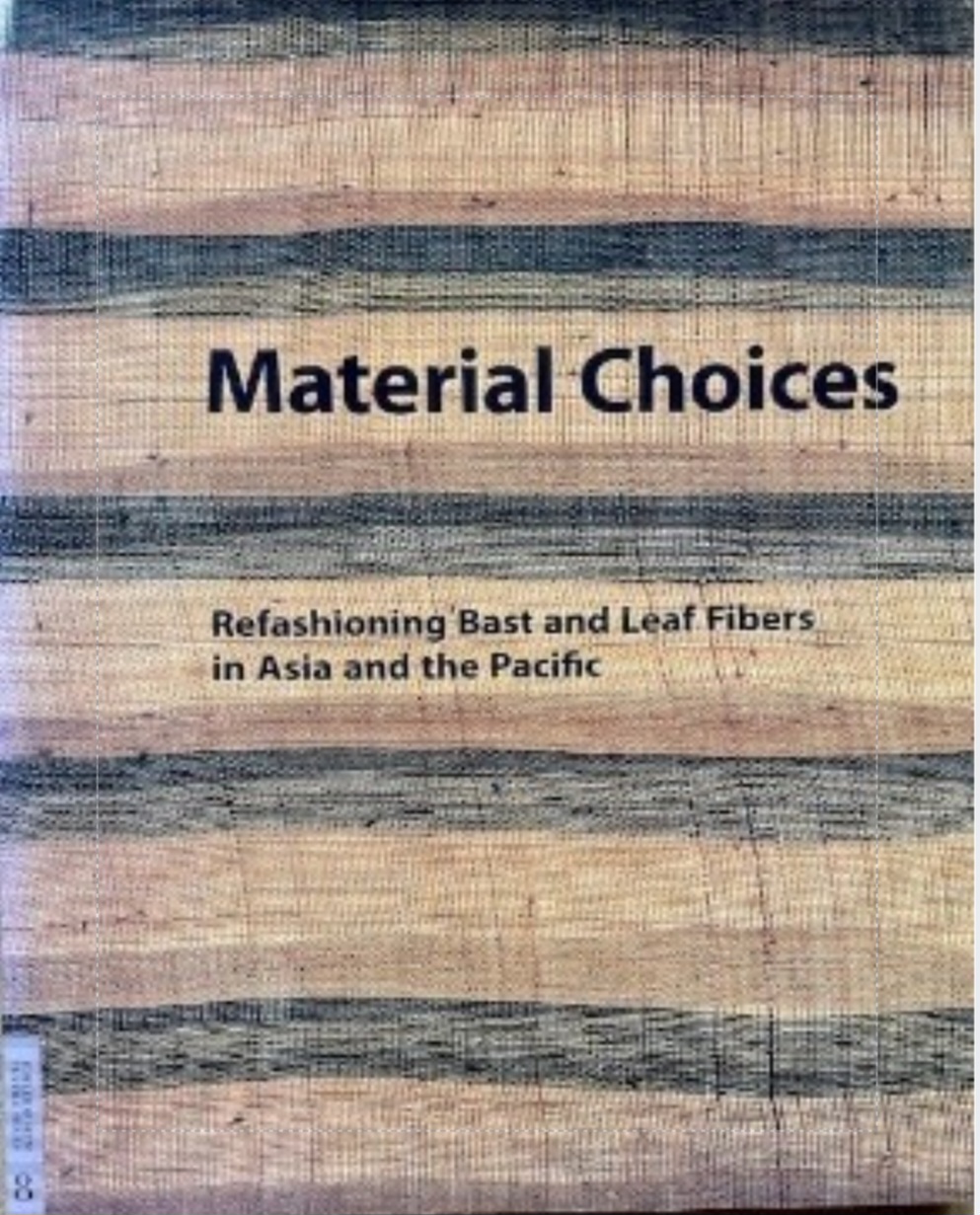
Author: Roy Hamilton & B. Lynne Milgram (editors), 2007, 187pg. (English), Softcover. T The Fowler Museum, Textiles Series no.7
Publisher: Fowler Museum at UCLA, Berkeley, California
The volume accompanies an exhibition of the same title, presented in the Fowler Museum’s gallery from August 26 through December 30, 2007. It comprises eight scholarly essays that investigate the preservation, revitalization, and creative reinvention of weaving traditions employing plant-based fibers such as ramie, hemp, and abaca across diverse Asian and Pacific regions. The essays examine, among others, the hemp textiles of the Hmong in Vietnam; Ulap Doyo weaving in Kalimantan; Sambe, the hemp fabrics of Korea; lotus fibers used in the attire of Buddhist monks; Bashofu, the fiber tradition of Okinawa, Japan; bast-fiber textiles of the Upland Philippines; Japan’s Echigo Jōfu and Nara Sarashi; and the revival of the sacred Machi weaving from Fais Island in Micronesia.
Page 52 of 108