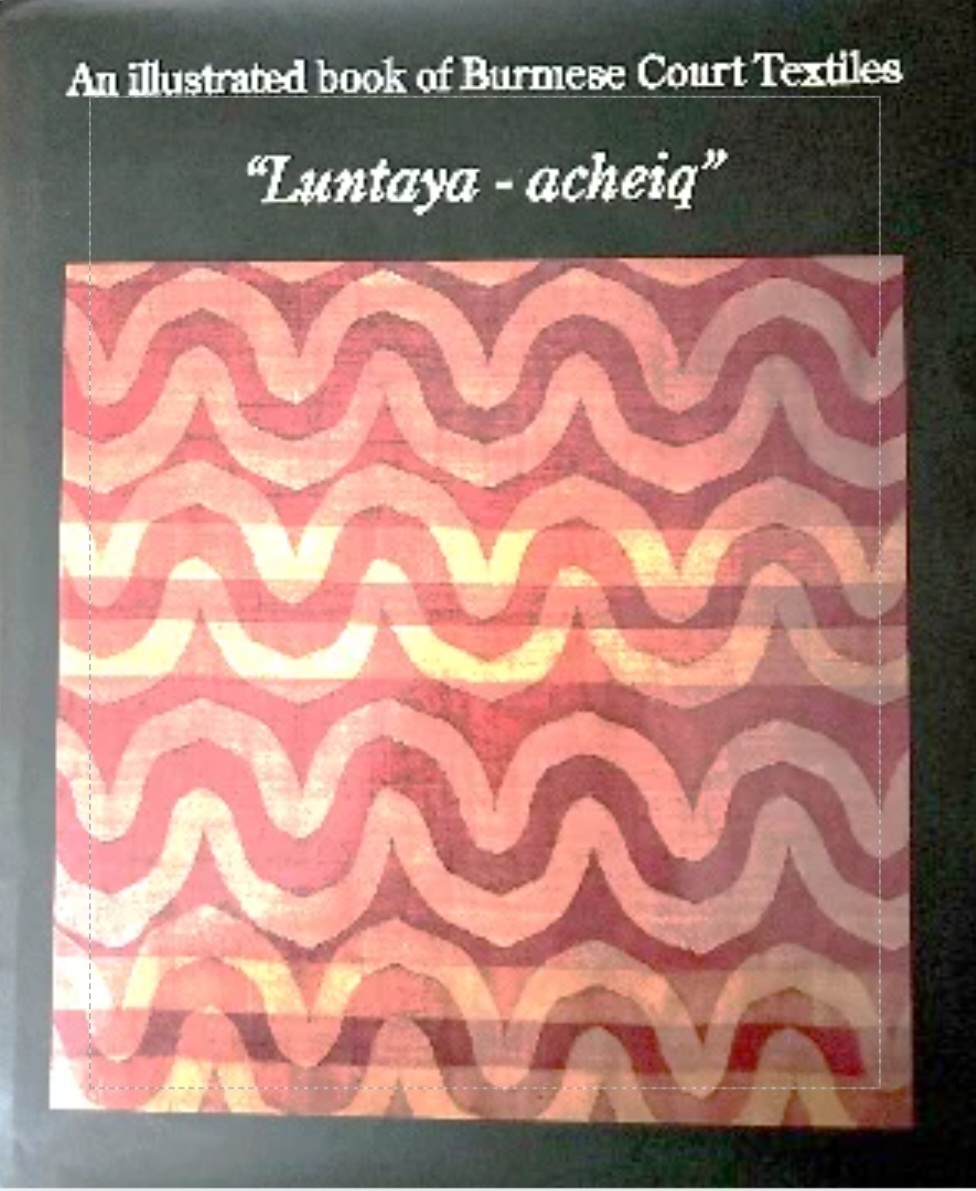
Author: Hans Peter Ahrends & Punvasa Kunlabutr, 2004, 302pg. (English & Burmese). Hardcover
Publisher: Amann Printing and Publishing, Bangkok, Thailand
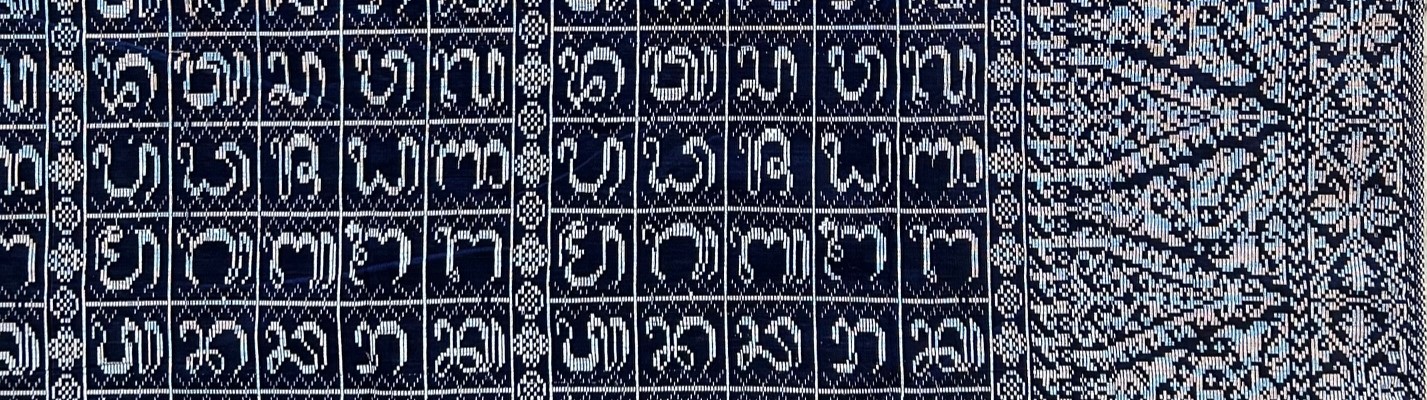
Burmese textiles are no less charming than textiles found in other countries in the region. Besides the ancient Burmese textiles woven in the luntaya technique, we also find the acheiq motif adorning textiles which have been woven using other techniques, such as discontinuous supplementary weft (leq khaunq), continuous supplementary weft (phid lun), damask embroidery (pan htoe), as well as being printed (poung hnaik) or painted (pan chi swe) onto cloth. Over a period of twenty years, the “Lampion” a Curios and Antiques shop in Bangkok’s river city Shopping complex has become the home of a fine and spectacular collection of silk textiles from Burma, Cambodia, Laos and Thailand. For the first time a book presents and describes the most beautiful and rarest Burmese luntaya-acheiq court silk textiles from the Lampion collection.
Author: Jadin C. Jamaludin, 2019. (Indonesian and English)
Publisher: TTASSEA, Yogyakarta
This booklet was disseminated during the Seventh ASEAN Traditional Textile Symposium, convened in Yogyakarta in November 2019. It provides a comprehensive exposition on the origins, historical development, symbolic meanings, and sociocultural functions of Lurik, the traditional Javanese striped textile.
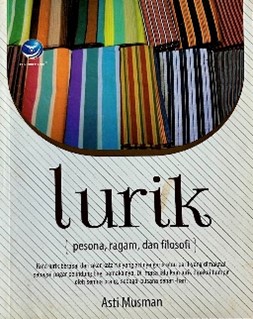
Author: Asti Musman, 2016. 184 pg. (Indonesian)
Publisher: Andi, Yogyakarta.
The book explores the history, various designs, and the philosophy behind lurik, a type of textile used in everyday live of common Javanese people. It also covers the process of lurik making, its development over time, and the different locations where lurik is produced.
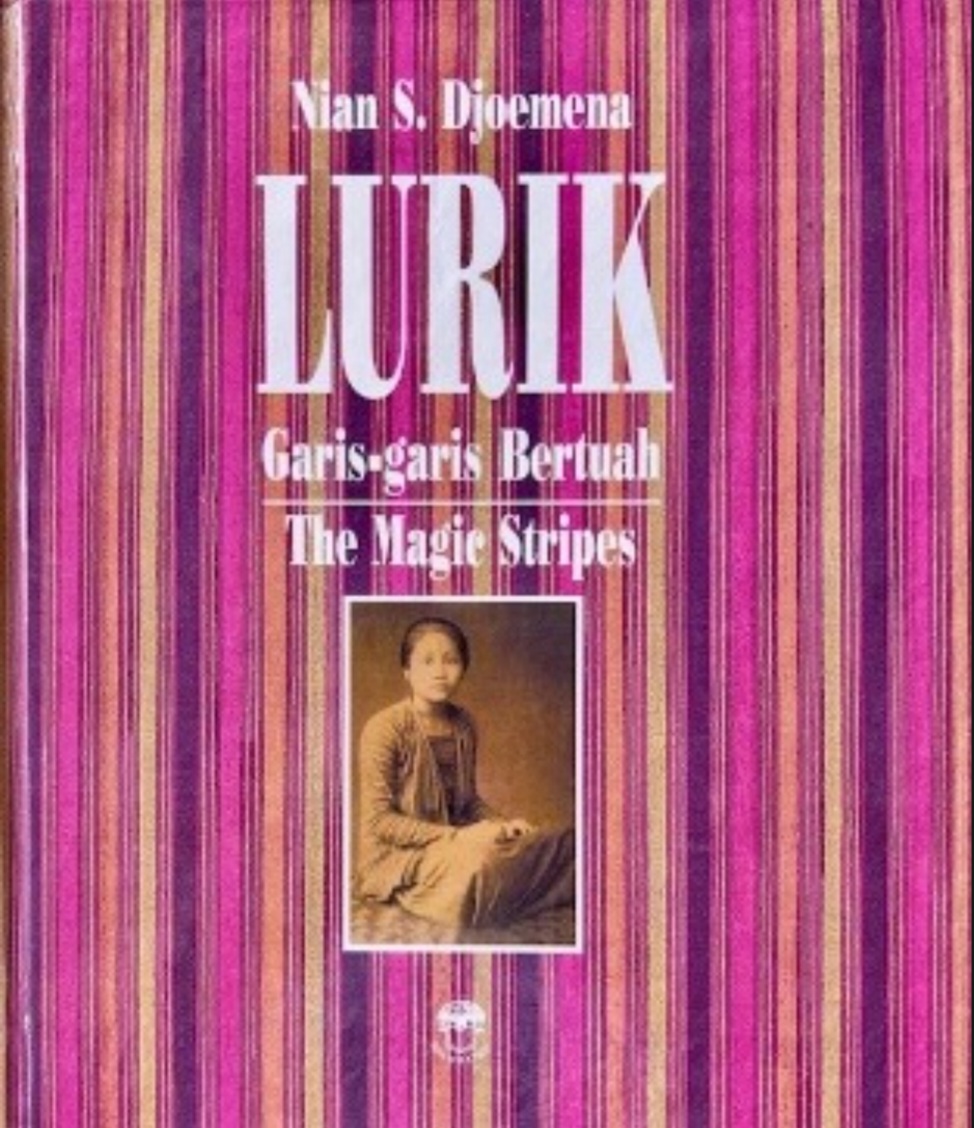
Author: Nian S. Djoemena. 2000. 158pg. (Indonesian & English). Hardcover
Publisher: Djambatan, Jakarta
The book examines the traditional textile known as Lurik, a fabric distinguished by its apparent simplicity in both aesthetic form and weaving technique, yet imbued with profound cultural and symbolic significance. The author elucidates the sacred dimensions of Lurik, highlighting its associations with magical potency, spiritual protection, and aspirational meaning encoded within the nomenclature of its diverse patterns. Furthermore, she delineates the distinctions between Lurik produced in Yogyakarta and Surakarta, while also situating the variations originating from Tuban on Java’s northern coast within a broader regional framework. The discussion extends to textiles that share affinities with Lurik, thereby situating the cloth within a comparative tradition of weaving practices. Notably, the book was composed during a period devoid of published references or digital resources, a circumstance that rendered the author’s scholarly endeavor particularly arduous and underscored the originality of her contribution.
Author: S.J.H. Damais 1981, 36pg. (Indonesian). Softcover.
Publisher: Himpunan Wastraprema, Jakarta
The exhibition was held from 26 February to 26 March 1981 at the Jakarta Textile Museum. Lurik, a traditional Indonesian textile originating from Java, is distinguished by its austere linear stripe patterns. Historically, lurik has been associated with modesty and humility, serving as attire for the working class. In contemporary contexts, however, it has been reimagined and incorporated into high fashion as well as diverse modern applications. Certain motifs are believed to embody symbolic significance, functioning in ritual offerings or as emblems of protection, guidance, and good fortune.
Page 50 of 108