
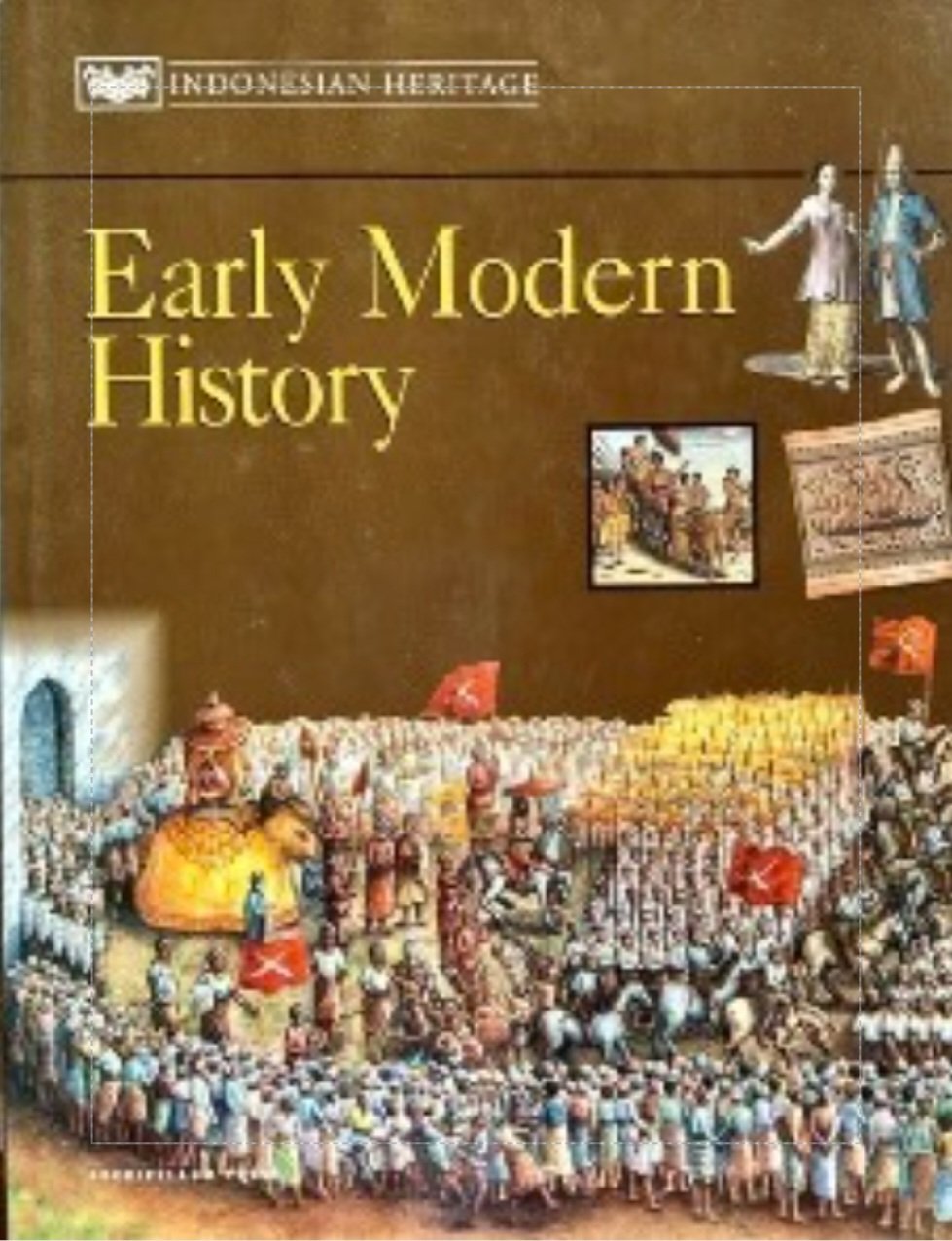
Author: various, 1996-1998, (English). Hardcover
Publisher: Archipelago Press, Didier Millet Editions, Singapore
Indonesian Heritage Series 3. Early Modern History (Volume editor: Anthony Reid, 148pgs). This volume offers a comprehensive survey of the Indonesian archipelago spanning the fifteenth through the nineteenth centuries, a period marked by profound transformations in political authority, economic exchange, and cultural identity. It examines the dynamic interplay between indigenous polities, the rise of Islamic sultanates, and successive waves of European expansion, situating local island states within the broader architecture of global trade networks. The editor’s command of Southeast Asian social and economic history is evident throughout, as the text deftly connects regional developments to international currents of commerce and power. By foregrounding the integration of maritime Southeast Asia into transoceanic circuits, the book underscores the archipelago’s pivotal role in shaping early modern globalization. Functioning primarily as an introductory overview rather than a specialized monograph, the volume succeeds in synthesizing complex historical processes into an accessible format. Its encyclopedic layout, while valuable for reference, occasionally disrupts narrative continuity for readers seeking a sequential historical account. Nevertheless, the work provides a solid foundation for understanding the longue durée of Southeast Asia’s transformation, balancing scholarly rigor with readability.
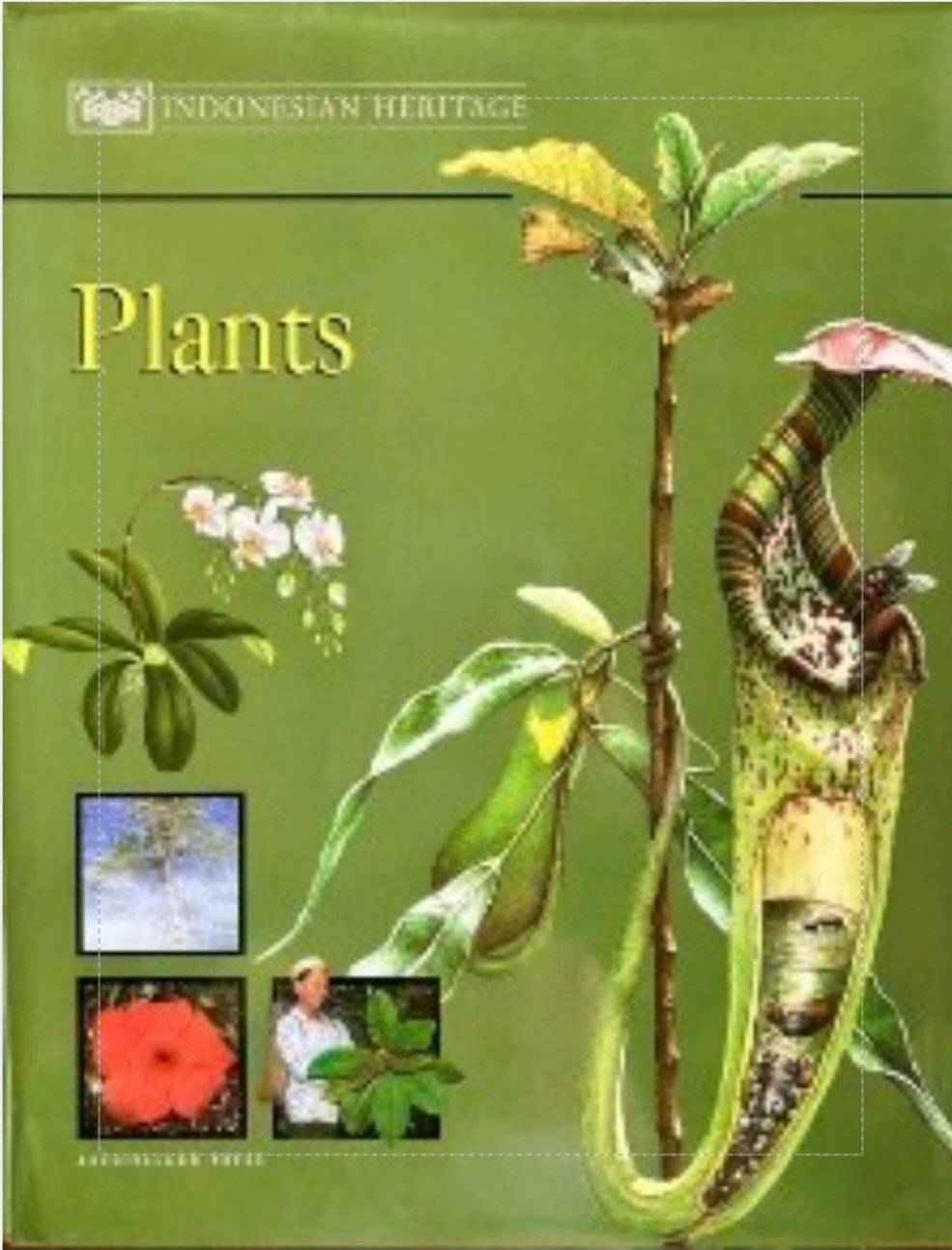
Author: various, 1996-1998, (English). Hardcover
Publisher: Archipelago Press, Didier Millet Editions, Singapore
Indonesian Heritage Series 4. Plants (Volume eds.Tony Whitten & Jane Whitten, 144pgs). This volume constitutes a richly illustrated exploration of Indonesia’s extraordinary botanical diversity, deftly balancing scientific exposition with accessible narrative. It situates flora not merely as biological specimens but as integral agents shaping local ecosystems, quotidian practices, and cultural traditions. The text employs a visually engaging format of double-page spreads, each devoted to particular habitats, plant categories, and utilitarian functions. Within this structure, botanical knowledge is interwoven with ethnographic insights into how communities employ plants for sustenance, healing, and ritual expression. While the spread-based design enhances readability and broad appeal, it necessarily constrains the possibility of sustained taxonomic or ecological analysis of individual species. The work thus functions less as a comprehensive scientific compendium than as a cultural and ecological panorama, foregrounding the symbiotic relationship between Indonesia’s flora and its people.
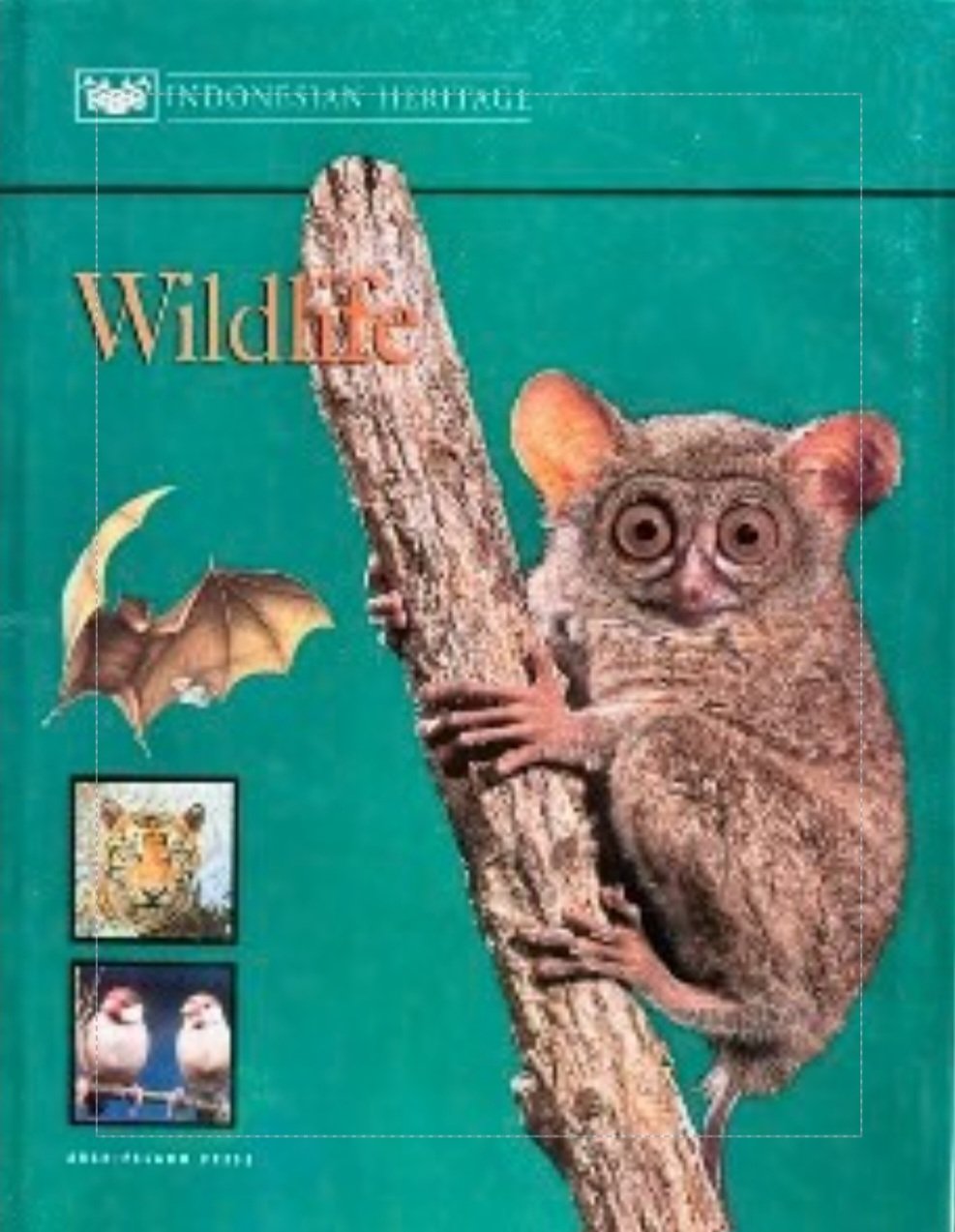
Author: various, 1996-1998, (English). Hardcover
Publisher: Archipelago Press, Didier Millet Editions, Singapore
Indonesian Heritage Series 5. Wildlife. (Volume eds. Tony Whitten & Jane Whitten, 144pgs). The volume delineates the distinctive ecological character of Indonesia, where a remarkable assemblage of wildlife reflects both the archipelago’s biogeographical diversity and the ongoing pressures of environmental transformation. Rather than presenting fauna as static entities, the text foregrounds the dynamic interplay between species and their habitats, emphasizing the adaptive strategies necessitated by deforestation, urban encroachment, and climatic variability. In doing so, the book offers not merely descriptive accounts but interpretive insights into the resilience and vulnerability of Indonesia’s ecosystems. By situating these adjustments within broader ecological and cultural contexts, it provides readers with a nuanced understanding of the archipelago’s wildlife as a living continuum—an evolving heritage shaped by both natural forces and human interventio
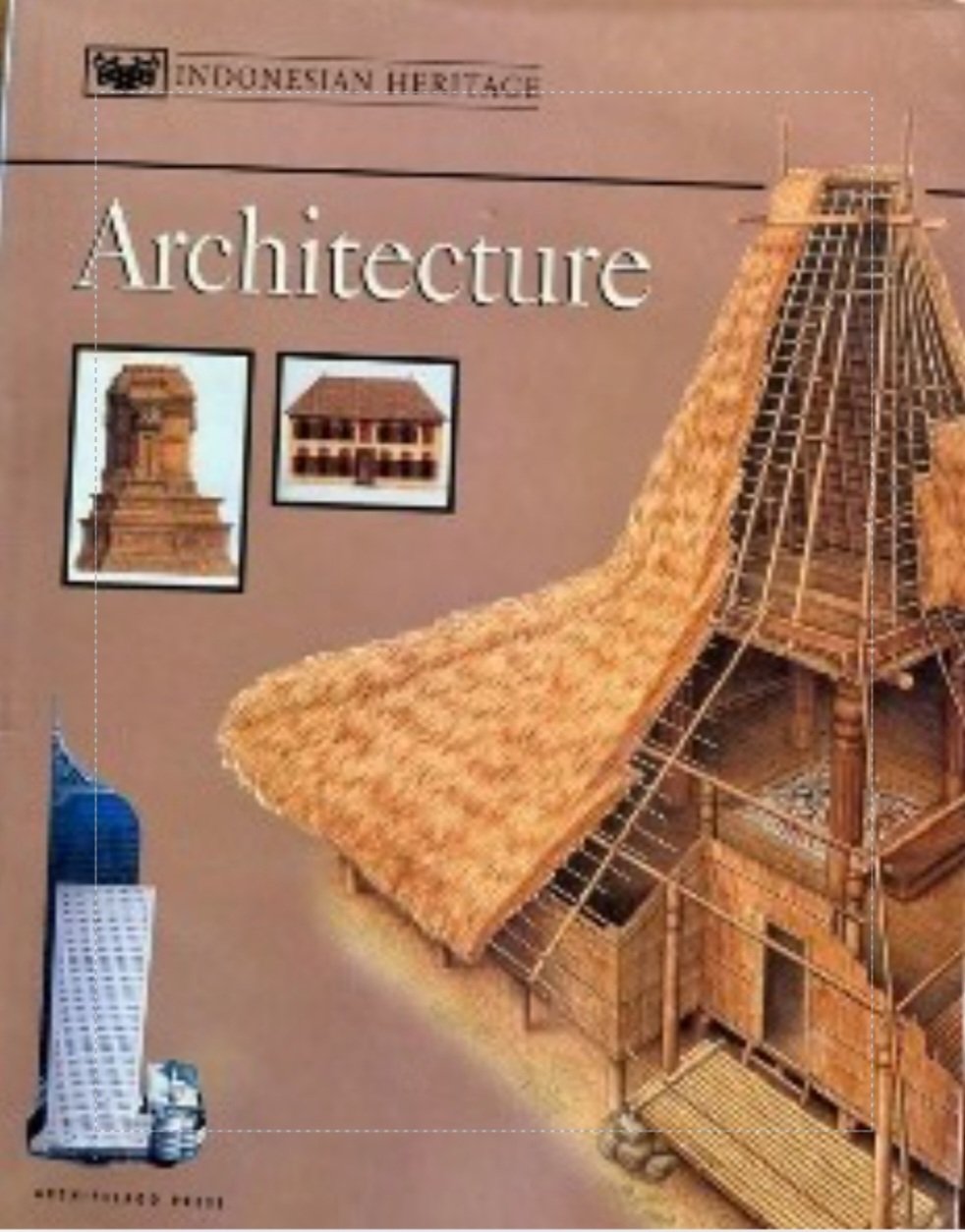
Author: various, 1996-1998, (English). Hardcover
Publisher: Archipelago Press, Didier Millet Editions, Singapore
Indonesian Heritage Series 6: Architecture (Volume editor: Gunawan Tjahjono, 142pgs.). This volume constitutes a richly illustrated and comprehensive survey of the built environment across the Indonesian archipelago. It establishes a compelling nexus between traditional vernacular designs and the spiritual cosmologies, social hierarchies, and external historical currents that have shaped them. The work systematically explores regional house forms, construction techniques, and spatial configurations from Sumatra, Java, Bali, Kalimantan, Sulawesi, and eastern Indonesia. It underscores how local architecture conceives the home and communal space not merely as functional shelter but as a ritually ordered cosmos, imbued with symbolic meaning. Equally significant is its examination of the longue durée of external influences—Hindu‑Buddhist, Islamic, colonial European, and modern global—that have intersected with and transformed indigenous building traditions over centuries. The volume is enriched by detailed photographs, architectural drawings, and diagrams that render complex regional structures accessible to readers. Beyond physical form, the text situates architecture within its cultural matrix, elucidating the social and religious principles that govern building orientations, material selections, and ritualized spatial practices. Authored by distinguished local and international scholars, the book distills intricate knowledge into lucid overviews, making it an invaluable resource for both general audiences and students of architecture, anthropology, and cultural history.
Author: various, 1996-1998, (English). Hardcover
Publisher: Archipelago Press, Didier Millet Editions, Singapore
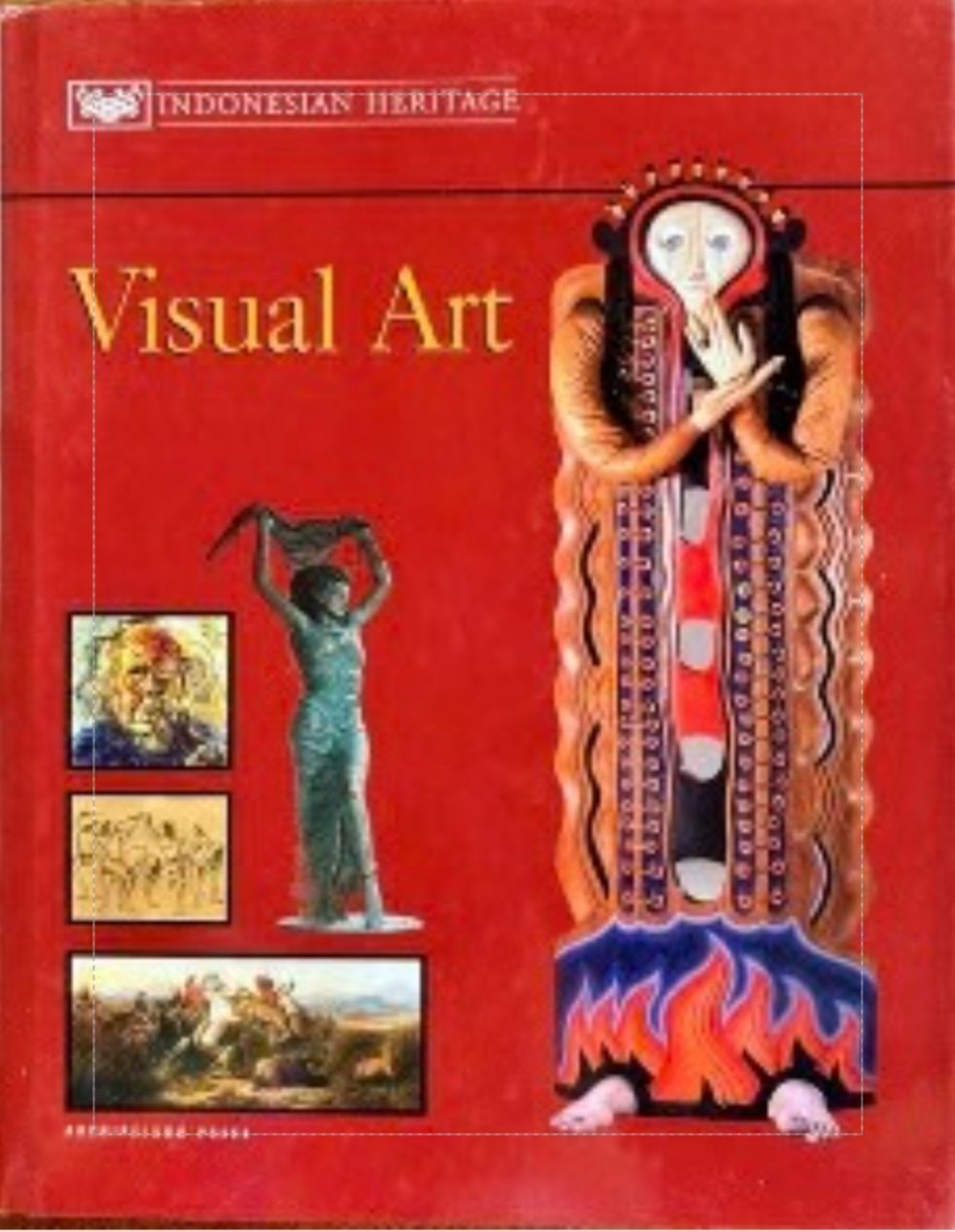
Indonesian Heritage Series 7: Visual Art. (Volume editor: Hilda Soemantri, 144pgs). This volume offers a sweeping survey of Indonesia’s artistic trajectory, spanning from prehistoric rock art and vernacular traditions to colonial‑era works and contemporary expressions. It opens with ancient artifacts and tribal visual culture before proceeding systematically through classical folk forms and traditional craft periods. The narrative examines how foreign encounters and the colonial experience reshaped local aesthetics, introducing new techniques and perspectives. It further highlights the evolution of modern Indonesian painters and artists who fused indigenous motifs with international art movements, thereby situating national creativity within global currents. Functioning as both accessible introduction and authoritative reference, the book is distinguished by its high‑quality photography, clear thematic organization, and contributions from regional experts, which render complex artistic transformations comprehensible to a wide readership. Its broad chronological scope, however, inevitably compresses individual movements and island‑specific traditions, offering breadth rather than deep analysis. Nevertheless, the volume stands as an essential and visually compelling point of departure for students, educators, and art enthusiasts seeking a structured overview of Indonesia’s rich artistic landscape.
Page 59 of 151