Author: Denys Lombard, 2000. 309pgs. (Indonesian). Softcover.
Publisher: Gramedia, Jakarta
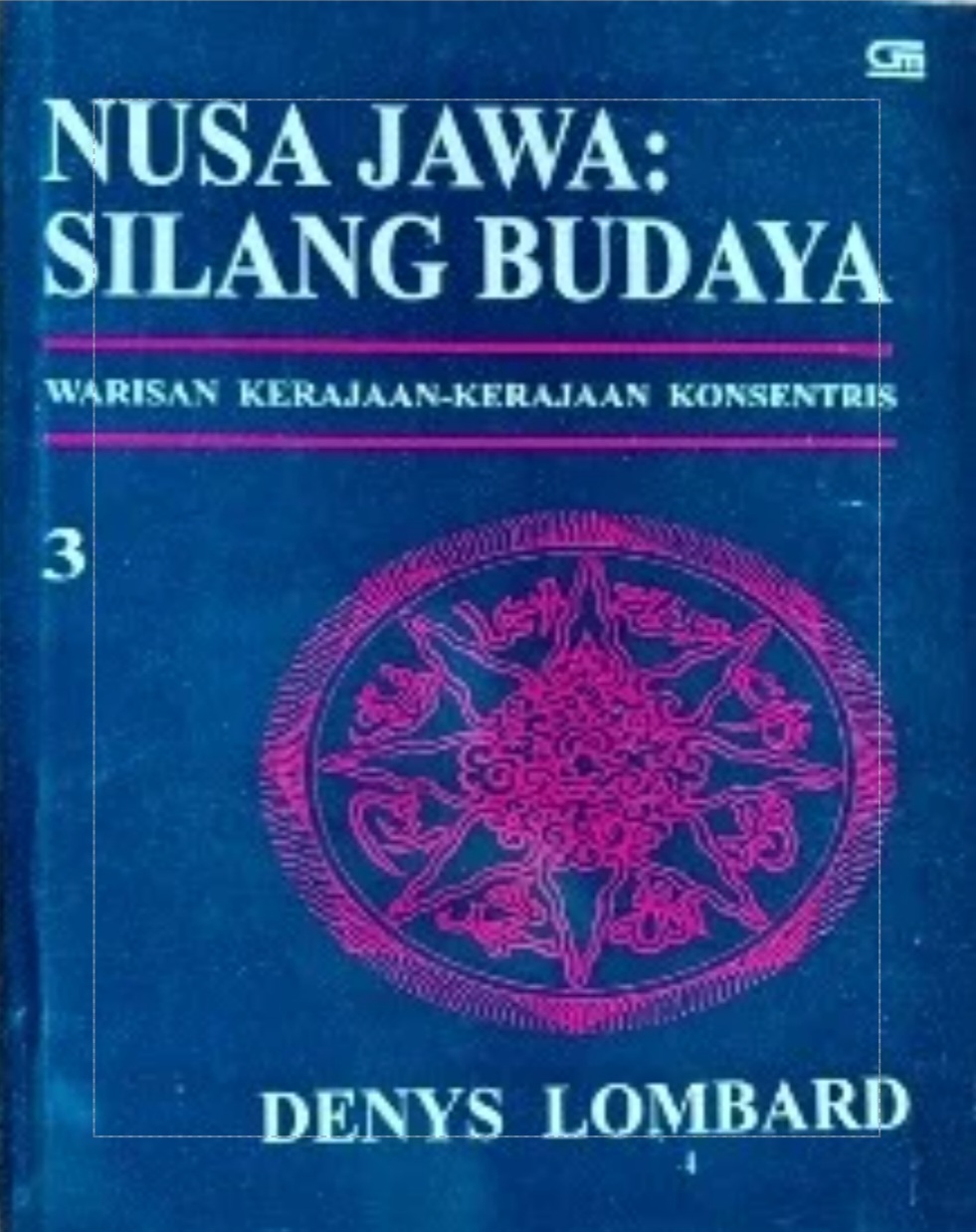
The third volume examines the enduring legacy of the Concentric Kingdoms and traces the civilizational foundations shaped by Indian cultural influence. It penetrates the deepest historical strata, concentrating on agrarian polities whose structures and worldviews were profoundly molded by Indic traditions. Agricentric society: The text elucidates the centrality of wet-rice cultivation (sawah) in sustaining Javanese society, underscoring agriculture as the axis of economic and social organization. Cosmological ruler: The monarch is depicted as the cosmic fulcrum, exercising authority through concentric circles of power that radiate outward from the palace, symbolizing both political and metaphysical centrality. Religious synthesis: The narrative reveals the syncretic blending of Hinduism, Buddhism, and indigenous animist traditions, producing a distinctive spiritual landscape that informed ritual and governance. Enduring mindset: Lombard demonstrates that this ancient cultural substratum continues to shape Javanese social hierarchy, embedding hierarchical consciousness within contemporary society.
Author: Denys Lombard, 2000. 309pgs. (Indonesian). Softcover.
Publisher: Gramedia, Jakarta
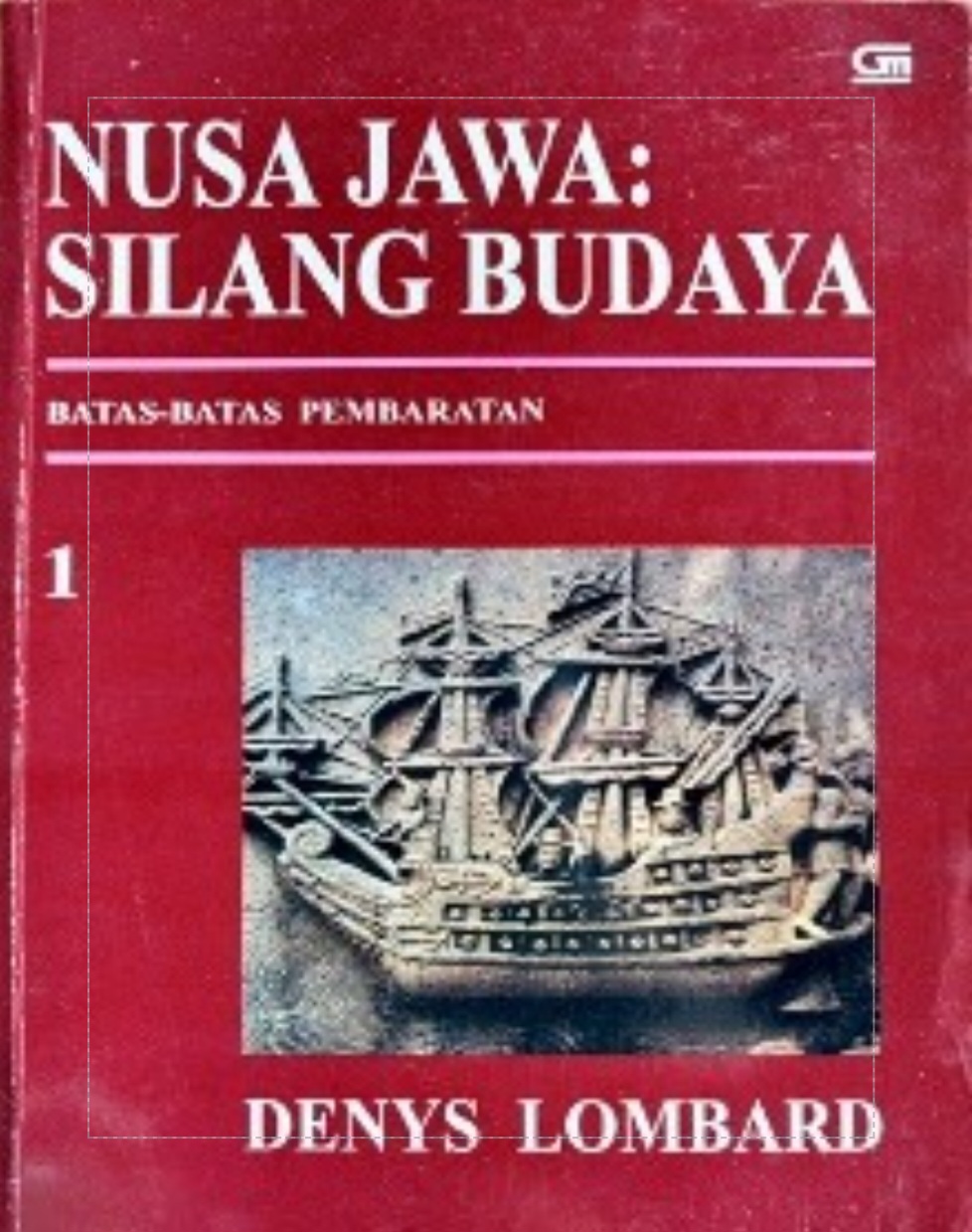
The volume represents a comprehensive historical study authored by the French historian Denys Lombard. This seminal work employs a distinctive “cultural geology” approach, dissecting the history of Java through stratified layers of civilization. Lombard traces the interplay of European, Islamic, and Chinese influences alongside the enduring legacy of Indian civilization. Particular attention is devoted to the emergence of modern cultural elements during the era of European colonial dominance. The study further interrogates the impact of Western modernization on Javanese society, beginning with the arrival of European colonial powers. Lombard’s analysis unfolds across several dimensions: Urban transformation: The text examines the metamorphosis of traditional Javanese towns into modern colonial cities, highlighting shifts in spatial organization and architectural form. Technological shift: It details the introduction of steamships, printing presses, railways, and telegraphs, underscoring their role in reshaping communication and mobility. Social classes: Lombard explores the rise of a new Javanese elite and the establishment of a modern bureaucratic apparatus, reflecting the social reconfigurations induced by colonial governance. Cultural limits: He argues that Westernization penetrated only superficially, leaving the deeper strata of Javanese identity largely intact.
Author: Christine Ong Kiat Neo, 2011, 208pg. (English). Softcover.
Publisher: Peranakan Museum, Singapore
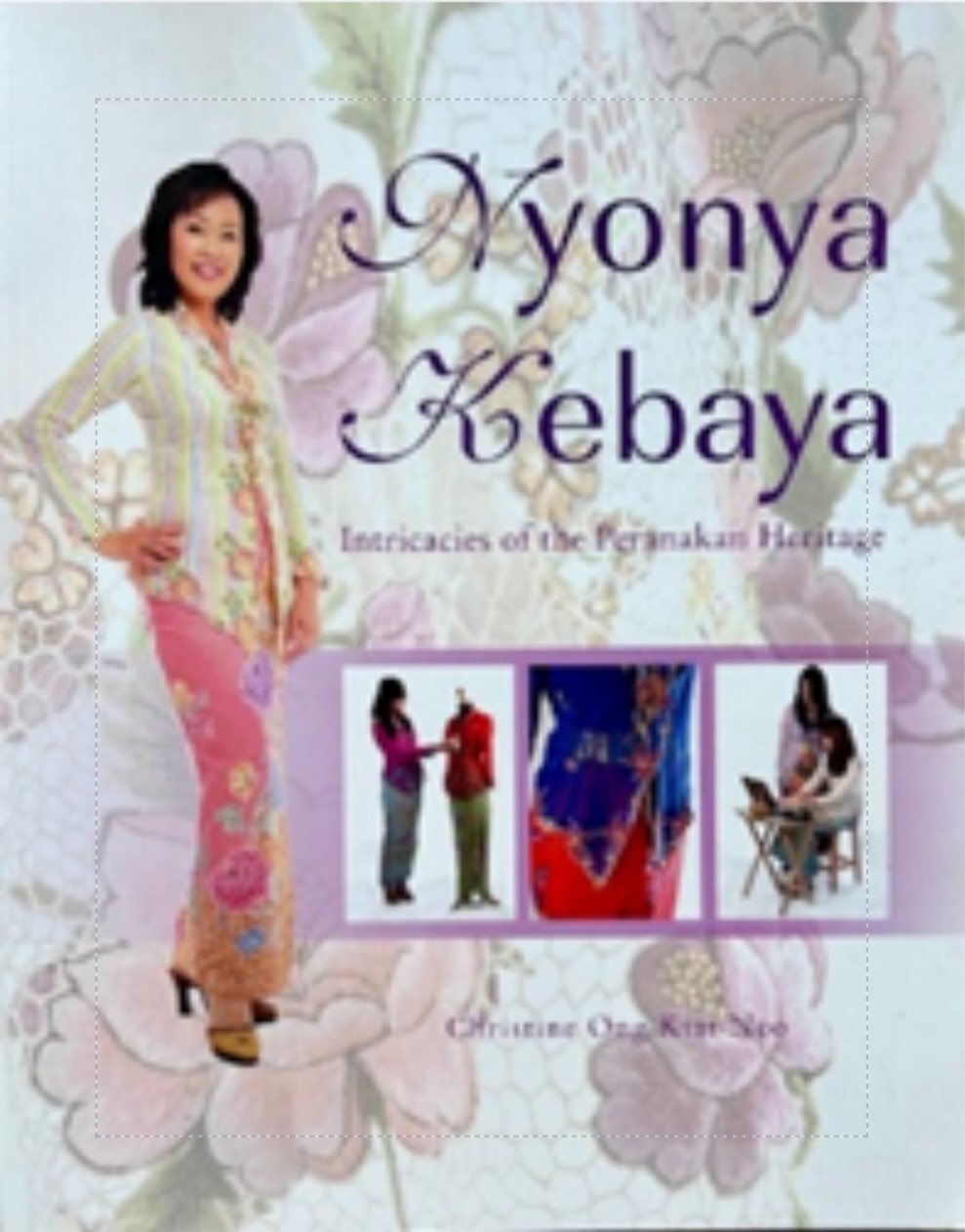
Readers will encounter a concise historical overview that situates the kebaya within its Peranakan lineage, alongside explorations of batik sarong and embroidery traditions that exemplify the artistry of textile craftsmanship. Practical sections on styling and coordination offer guidance for harmonizing the ensemble in contemporary contexts, while the Myriad Collection showcases the diversity of kebaya designs across generations. Beyond aesthetics, the handbook underscores the kebaya’s role as an everlasting fashion icon, a garment that transcends temporal boundaries and continues to inspire admiration. It also provides thoughtful recommendations on garment care, ensuring that this treasured attire may be preserved for future generations.
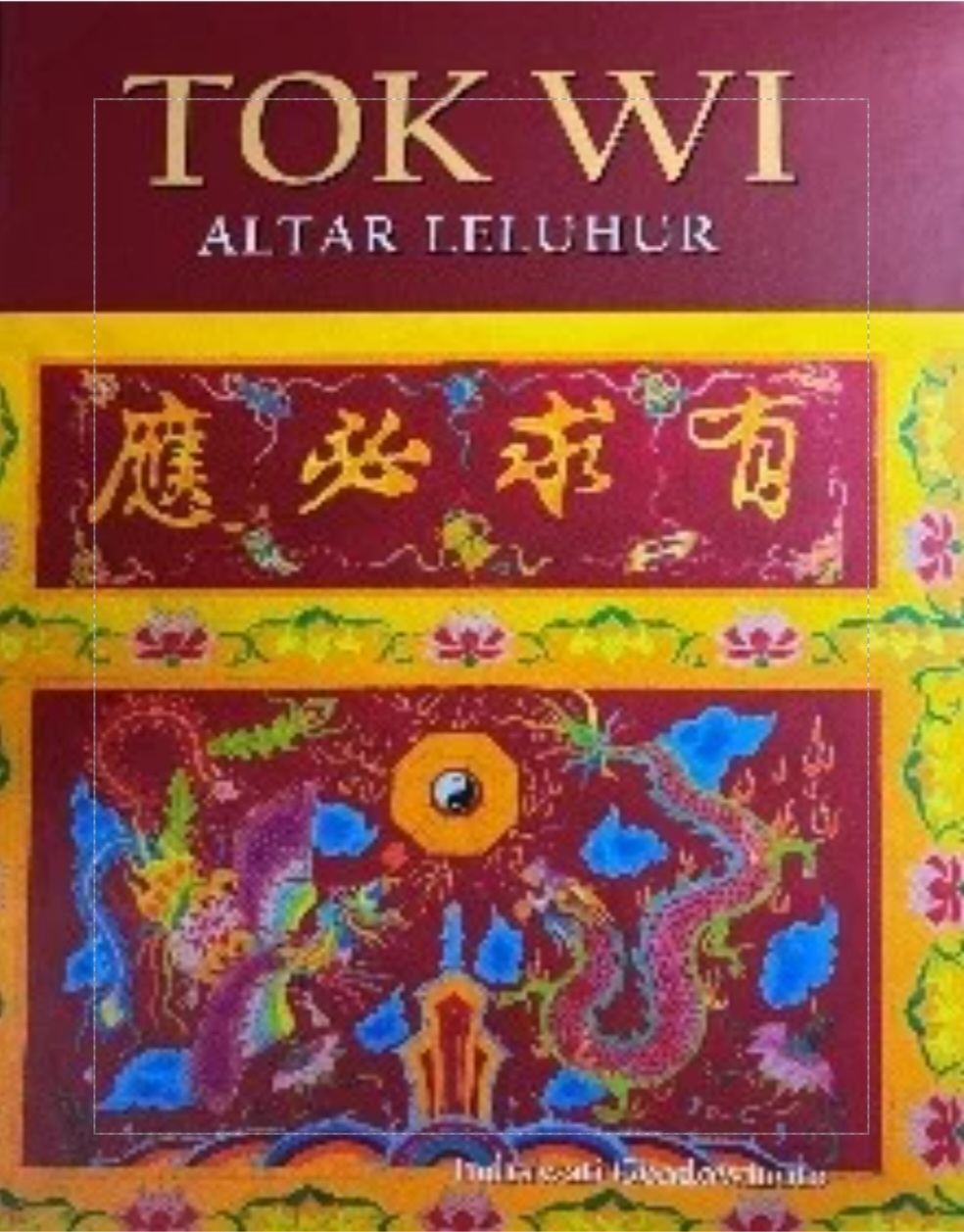
Author: Indriwati Gondowinoto, 2024. 148pgs. (Indonesian) Hardcover
Publisher: PT Quantum Media Aksara, Yogyakarta
This book documents the manifestation of devotion and filial piety through prayers offered before the ancestral altar. It highlights how ancestral worship, once a cornerstone of communal identity, has in contemporary times diminished in prevalence, reflecting broader cultural transformations. Nevertheless, the practice remains a profound expression of respect and spiritual connection to one’s lineage. Historically, Tokwi originated in China and were traditionally made of silk, a material associated with prestige and ritual purity. With the migration of Chinese communities to Indonesia, Tokwi underwent processes of cultural adaptation, eventually evolving into Tokwi Batik. This transformation represents a syncretic fusion of Chinese ritual symbolism with Indonesian batik artistry. The resulting textile is not merely decorative but functions as a medium of religious devotion, embodying prayers and reverence for ancestors. In this way, Tokwi Batik exemplifies how material culture can serve as a vessel for spiritual continuity, cultural hybridity, and the preservation of ancestral memory.
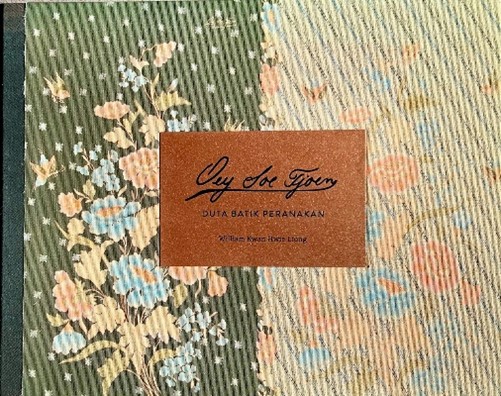
Author: William Kwan Hwie Liong. 2014. 229 pg. (in Indonesian and English)
Publisher: Red and White Publishing, Jakarta
This book is part of a program aimed at documenting works of art in Indonesia to support the development of the country's creative arts and crafts. Oey Soe Tjoen's hand-waxed batik is regarded as one of the finest examples in the Indo-Chinese Peranakan style since 1930 and can be found in museum collections worldwide. For three generations, the family has consistently preserved the unique characteristics of design and the high quality of their batiks. Oey Soe Tjoen's batik stands as an iconic representation of Peranakan art.
Page 60 of 108