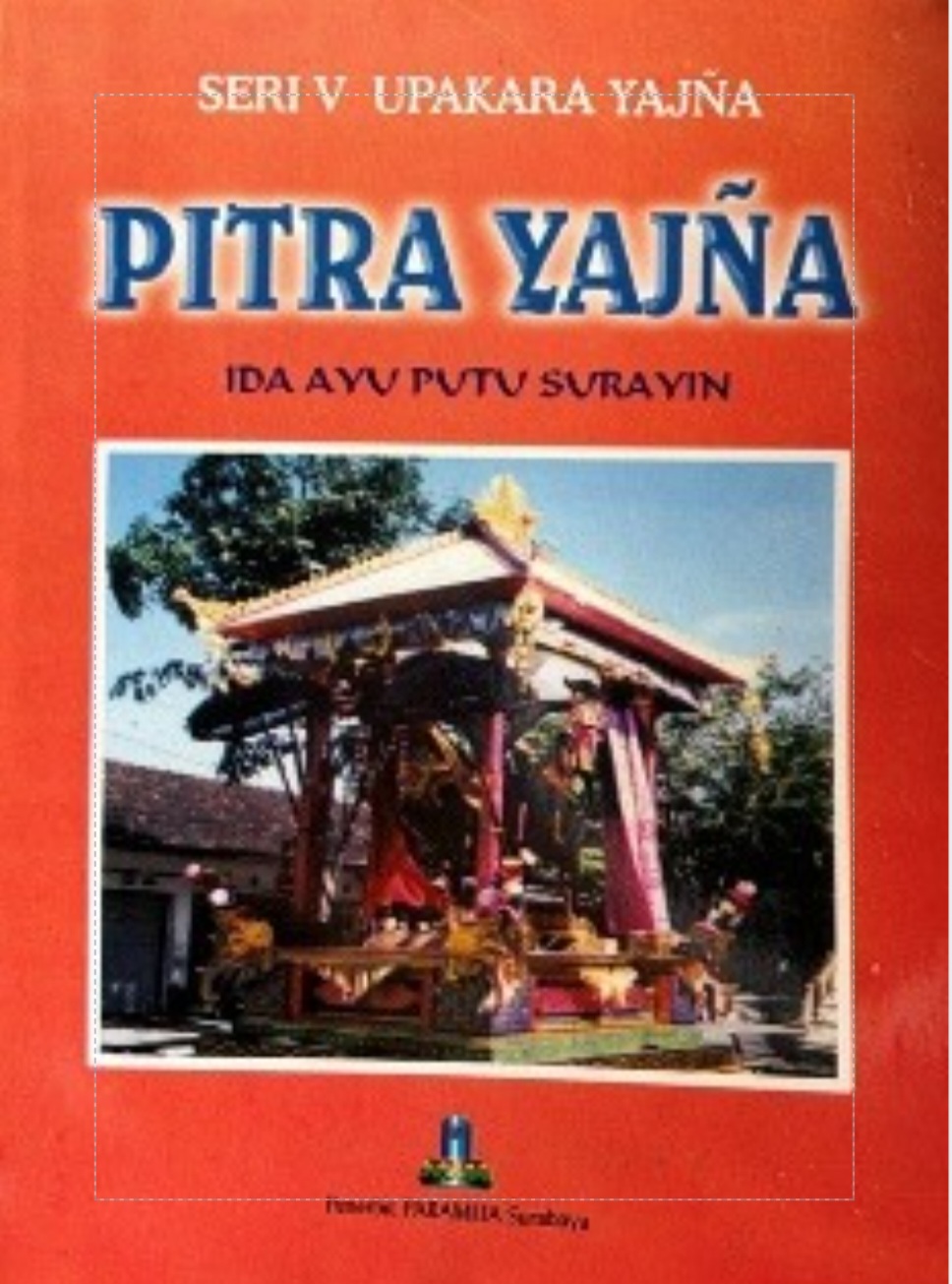
Author: Ida Ayu Putu Surayin, 2002. 104pgs. (Indonesian). Softcover
Publisher: Paramita, Surabaya
The Bali Hindu Dharma tradition perceives death not as an end, but as an integral stage within the cyclical continuum of human existence. This book serves as a comprehensive guide for adherents of the Hindu Dharma faith, offering spiritual and practical direction in accompanying the deceased toward a serene passage into the afterlife. Through prescribed prayers and meticulously structured rites, the soul is assisted in embarking upon its final journey to heaven. Families are carefully guided through the sequential stages of preparation, encompassing both the ritual and logistical aspects of burial or cremation. The text provides clarity on what must be arranged, prepared, and performed, ensuring that each ceremonial act is imbued with reverence and precision. To aid comprehension, the guide is enriched with detailed illustrations, particularly valuable as many ritual terms are expressed in the local Balinese language. Central to the work is an in-depth exposition of the Pitra Yajna ceremony, a sacred rite dedicated to honoring ancestral spirits. The book elaborates on the symbolic significance of this ritual, delineating the types of offerings required, their spiritual meanings, and the manner in which they are to be presented. In doing so, it underscores the profound connection between ritual practice, familial devotion, and the broader cosmological framework of Balinese Hinduism.
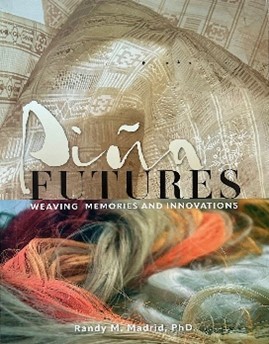
Author: Randy M. Madrid, PhD, 2023. 280pg. (English)
Publisher: Far Eastern University & HABI, Philippines
This book explores the development of piña, highlighting its current state as a valuable fabric that requires intricate production steps. In a world of artificial materials, piña is a genuine natural fiber. It also examines how piña will adapt to the future.
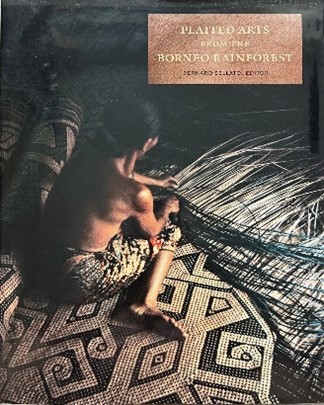
Author: Bernard Sellato, editor, 2012. 536pg. (English)
Publisher: Lontar Foundation, Jakarta
Plaited Arts from the Borneo Rainforest highlights the plaiting tradition as a key creative expression of the peoples of Borneo, resulting in some of the most ingenious and aesthetically pleasing goods on the island. This book utilizes a contextual and interdisciplinary approach, linking botanical and technical features with economic, social, and ritual elements. It explores how the people of Borneo depend on plaited items for both everyday use and ceremonial purposes. The contributors to this volume are leading authorities on Borneo's arts, comprising 20 scholars and artisans from various countries. Their original contributions are complemented by selections from texts written by three pioneering authors who documented Borneo's basketry prior to the Second World War.
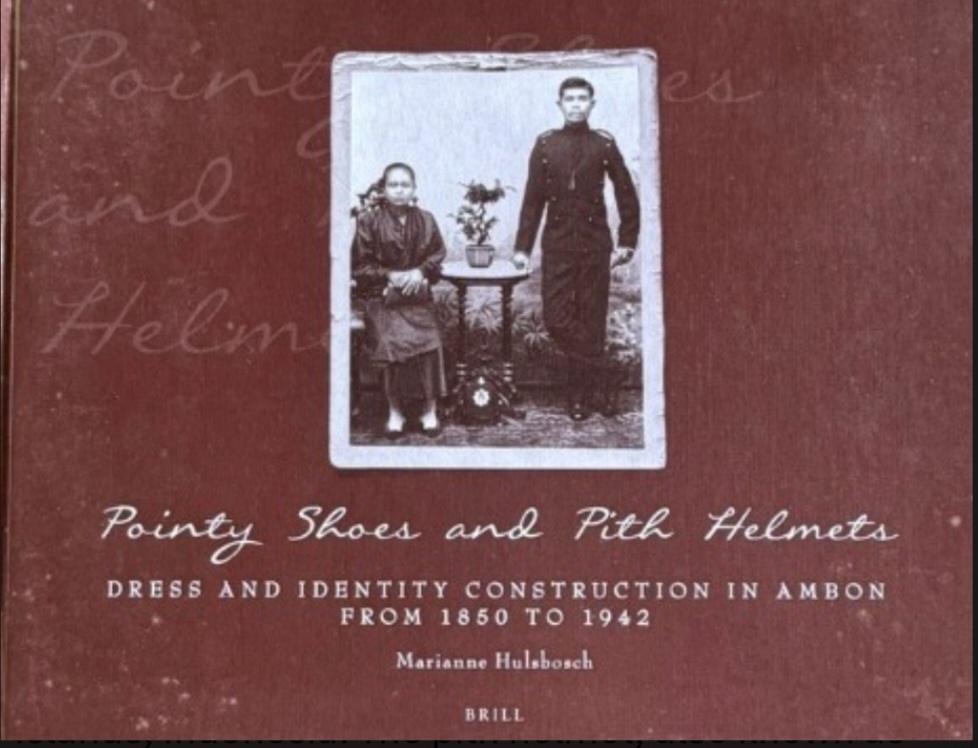
Author: Marianne Hulsbosch, 2014. 237pgs. (English) Hardcover
Publisher: Koninklijke Brill, Leiden, Netherlands
Drawing upon extensive research, Hulsbosch investigates the dress and adornment practices of the Ambonese people of the Central Maluku Islands during the final century of colonial rule. Rather than offering a mere descriptive catalogue of garments, the author foregrounds the problematic of choice—what to wear—highlighting the social, political, and cultural negotiations embedded in acts of dressing. Hulsbosch persuasively argues that dress is not simply a material item of clothing but a performative practice: the act of dressing and adorning the body generates both individual and collective identities. These identities, in turn, reflect political dispositions, ethnic affiliations, class distinctions, and gendered roles. One of the central challenges for the Ambonese, as the author demonstrates, was the tension between maintaining fidelity to their ethnic identity and navigating the constraints of colonial domination. The increasing Westernization of colonial society manifested most visibly in the primacy of European-style dress among the Ambonese, a phenomenon that simultaneously signified assimilation and the erosion of indigenous cultural markers. Employing Arthur Frank’s 1991 model, Typology of Body Use in Action, as an analytical framework, Hulsbosch delineates four typologies of dress: disciplined dress, dominating dress, mirroring dress, and communicative dress. This theoretical scaffolding enriches the study by situating Ambonese sartorial practices within broader discourses of power, resistance, and cultural negotiation. Pointy Shoes and Pith Helmets thus emerges as a valuable contribution to the study of Ambonese-Indonesian and colonial history. It is not only a meticulously researched ethnographic account but also a compelling exploration of how clothing mediates identity under colonial conditions. For scholars of cultural history, postcolonial studies, and Southeast Asian ethnography, this work is both fascinating and indispensable.
Author: Oetari Siswomihardjo-Prawirohardjo. 2011. 110pg. (In Indonesian)
Publisher: Pustaka Pelajar, Yogyakarta
The author strongly believes that the spiritual values represented by classic motifs in Javanese batik are at risk of being forgotten by the younger generation due to a disconnect from their heritage. This break in tradition has resulted in a loss of the spiritual message associated with these motifs. The book aims to present these spiritual values through illustrations and an exploration of the philosophies behind them.
Page 69 of 108