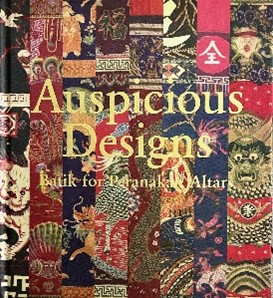
Author: Peter Lee et al, 2015. 139 pg. (English)
Publisher: Asian Civilization Museum, Singapore
Auspicious Designs is a catalog on the Tokwi, or Chinese altar cloths, made using various materials and techniques, such as silk and cotton, embellished with embroidery and using batik techniques. The book focuses on 72 altar cloths donated to the Peranakan Museum in Singapore. Peter Lee, an authority on Peranakan textiles, and many other textile experts contribute their knowledge in various essays.
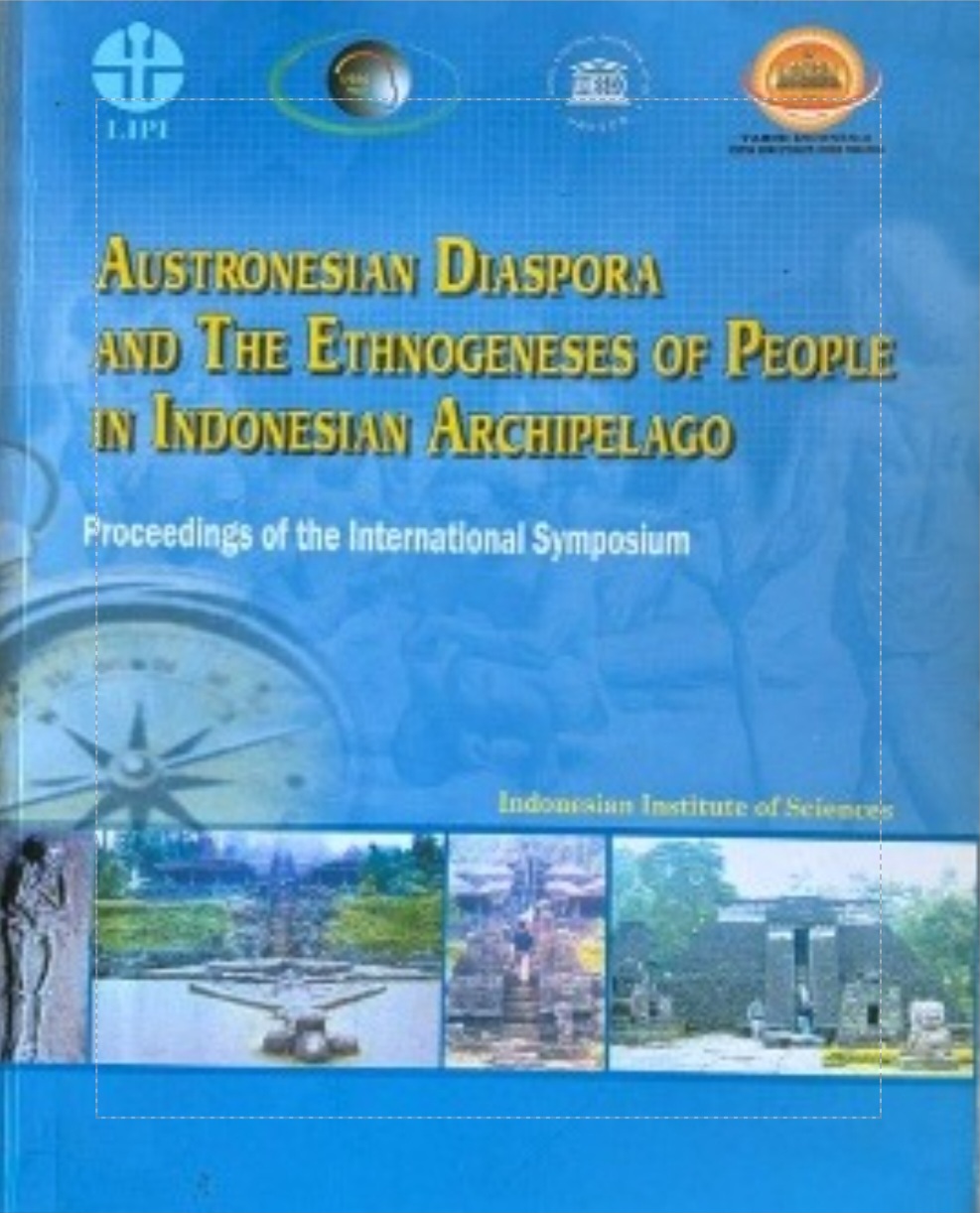
Author: Truman Simanjuntak, Ingrid H.E.Poyoh, Mohamad Hisyam (Eds), 2006. 438pgs. (English). Softcover
Publisher: LIPI Press, Jakarta
The following papers were presented at the International symposium in 2006 Introduction -Austronesia, a Phenomenon of Global Impact in the History of Humanity (Truman Simanjuntak, Inggrid Poyoh and Mohamad Hisyam) -The Problem of Indonesian Origin (Teuku Jacob) Environmental Background -Climate and Continental Records in islands Southeast Asia since the late Pleistocene: Trends in Current Research. Relationship with the Holoceine Human Migration Waves (Francis Semah, Anne=Marie Semah, Magali Chacormac-Rault) -Austronesian Prehistory from a Paleoclimatological and Paleographical Perspective: Settlement and Migration Through Time in Indonesian Maritime Islands (Wahyoe S. Hantoro) Origin, Dispersal and Ethnogeneses -The Early Movements of Austronesian Speaking People n the Indonesian Region (Peter Bellwood) -The Dispersion of Austronesian Speaking People and the Ethnogenesis of Indonesian People (Daud Aris Tanudirjo) -Austronesian Prehistory and Ethnogenesis of Indonesian People: A Cross-disciplinary Perspective (I Wayan Ardika) -Stylochronology of Early Pottery in Islands Southeast Asia: A Reassessment of Archaeological Evidence of Austronesian (Sonny Chr. Wibisono) -Archaeology of Rainforest in Siberut (Mentawai Archipelago, West Sumatra):the Paradox of Lithic and Vegetal Technology in Past and Present Times (Hubert Forrestier et al) -The Prehistory of Austronesian Dispersal to the Southern Islands of Eastern Indonesia (Mahirta) -The Austronesian in Borneo (Karina Arifin) -Austronesian Prehistory from the Perspective of Comparative Megalithic (Bagyo Prasetyo) -Austronesian Prehistory from the Perspective of Skeletal Anthropology (Harry Widianto) -Homo Sapiens in Southeast Asian Archipelago. The Holocene Fossil Evidence with Special Reference to Funerary Practices in East Java (Florent Detroit) -The Indonesian Migrations to Madagascar: Making Sense of the Multidisciplinary Evidence (Alexander Adelaar) -The Austronesian Dispersals and the Spread of Disease (abstract) (Sangkot Marzuki & Herawati Sudoyo) -Balinese Y-Chromosome Perspective on the Peopling of Indonesia: Genetic Contributions from Pre-neolithic Hunter Gatherers, Austronesian Farmers, and Indian Traders (abstract) (Stephen Lansing) -Austronesian Genetic Origins and Dispersals (abstract) (Martin Richards) -Genetic Markers and their Implication to the Peopling of the Idonesian Archipelago (abstract) (Abdul Salam M. Sofro) -Archaeological Evidence of Early Human Occupation in Malaysia (Stephen Chia) -Pottery from the Parliament House Complex Site, Singapore (Omar Chen) -The Philippine Islands and the Discours on the Austronesian Dispersal (Victor Paz) -Polynesian Genetics and Austronesian Prehistory (Geoffrey K. Chambers) -The Initial Settlement of Remote Oceania: the Evidence from Physical Anthropology (Michael Pietrusewsky) Austronesian Today -The Role of Education in Protecting and Saving Endangered Lsnguages (Arief Rachman) -The Distribution of Austronesian and Non-Austronesian Languages in Indonesia: Evidence and Issues (Multamia R.M.T. Lauder & Ayat Rohaedi) -Concept of Origin and Origin Structure of the Austronesians: A Reflection from Kei Islands of Southeastern Maluku, Eastern Indonesia (Dedi Supriadi Adhuri) -Speech Level in Javanese from a Comparative Linguistic Perspective (Maryono Dwiraharjo) -Javanese Language in Palembang and Malagasy. An Austronesian Linguistic Study (Kunardi Hardjoprawiro)
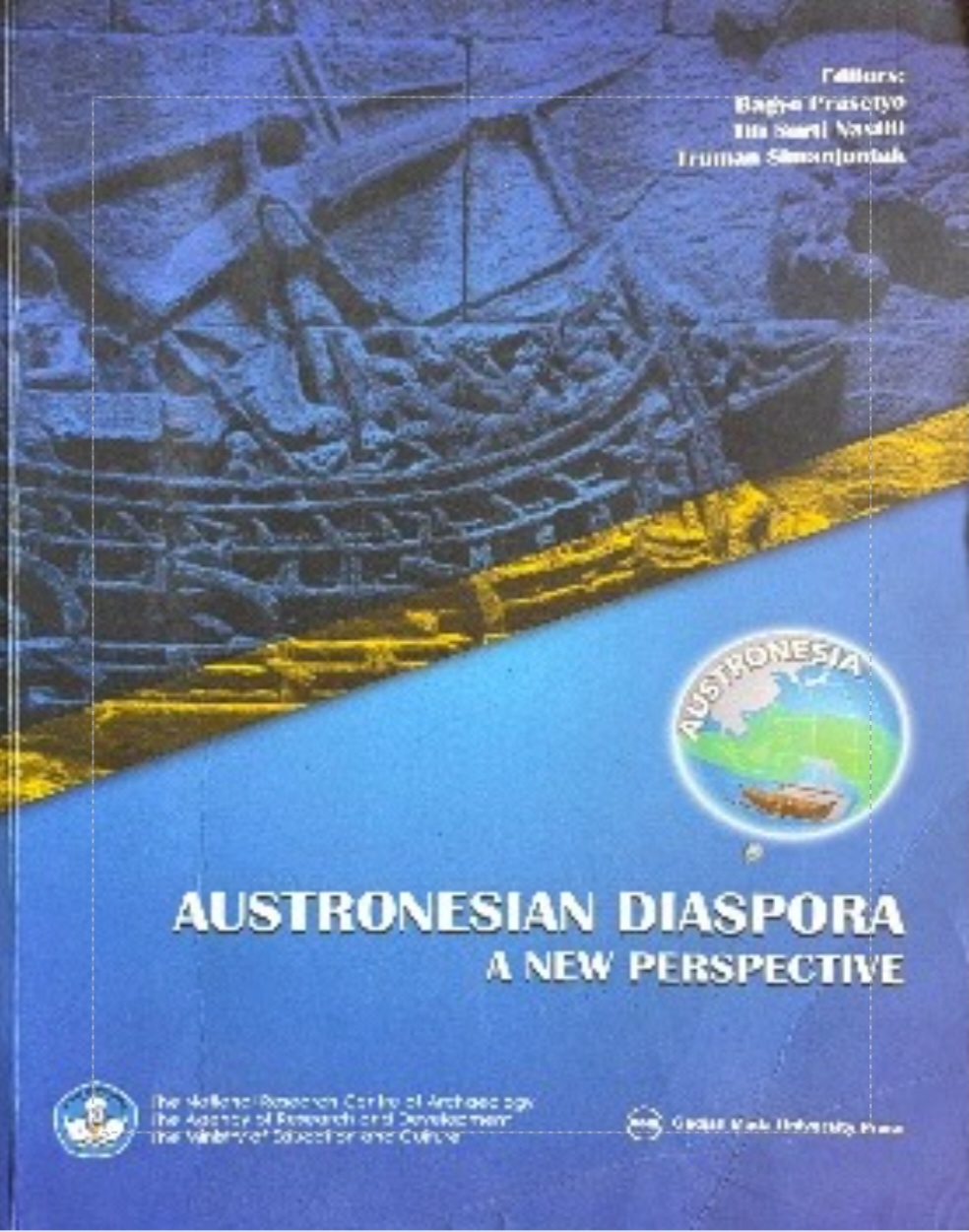
Author: Bagyo Prasetyo, Titi Surti Nastiti, Truman Simandjuntak (eds), 2016. 594pgs. (English). Softcover
Publisher: Gajah Mada University Press, Yogyakarta
Book Proceedings of the International Symposium on Austronesian Diaspora includes the following papers: Austronesia: An Overview -Peter Bellwood. (Austronesian Studies in 2016, Where are we Now?) Diaspora and Inter-regional Connection -Wahyoe S Hantoro. (Occupation and Diaspora of Austronesia: Learning from Geo-oceano-climatology. Prospective in Indonesian Maritime Island.) -Peter Lape et al. (Reframing the Island Southeast Asian Neolithic: Local vs Regional Adaptations.) -Roger Blench. (Splitting up Proto-Malayu-polynesian; New Models of Dispersals from Taiwan). -Matthew Spriggs. (Ex Oriente Lux: Recent Data from Lapita Culture Sites Bearing on the Austronesian Diaspora within Island Southeast Asia.) -Hsiao-chun Hung. (The Formation and Dispersal of Early Austronesian speaking Populations. New Evidence of Taiwan, the Philippines and the Marianas of Western Micronesia.) -Nguyen Lan Cuong. (Austronesian and Australian Analogs in Vietnam Through Paleo-anthropological Evidence.) -Noel Hidalgo Tan. (Rock Art as an Indication of Austronesian Migration in Island Southeast Asia.) -Chi-shan Chang. (The Connection and Tradition – the Barkcloth making in Hawaii and Taiwan.) -I Wayan Ardika. (Bali in the Global Context and the Rise of Complex Society.) Regional Highlights -Truman Simanjuntak, Adhi Agus Oktaviana, and Retna Handini. (Updated Views on the Austronesian Studies in Indonesia.) -Grace Baretto-Tesoro (Reasessing the Neolithic-Metal Age. Transition in Batangas, Philippines: A Distinct Southern Luzon Pottery Tradition.) -Andjarwati Sri Sajekti. (Indication of Early Plant Domestication in Java based on the Palinology Research.) -Stephen Chia. (Austronesian Dispersal to Malaysian Borneo.) -Marlon Ririmasse. (Sea, Stones and Stories: the Maritime Tradition in Southeast Moluccas Islands.) -Titiek Koesbardiati et al. (Swinging-like Movement: Pattern of Ancient Migration in Eastern Part of Indonesia). -Tara Steimer-Herbet & Marie Besse. (Indonesian Megaliths as the Result of the Interaction between Indigenous Peoples and Hindu Buddhist Kingdoms.) -Bagyo Prasetyo. (Austro-protohistory, the Dispersal of Megaliths in Indonesia Islands.) -Daniel Perret & Heddy Surachman. (Inter-Island Relations. The Javanese factor in Barus and Padang Lawas, North Sumatra (9th to 16th CE). -XIE Guangmao. (The Neolithic Cultures of Lingnan, Southern China). -Amri Marzali. (The Origins of Orang Melayu.) -Keiko Kusakabe (Techno-cultural Development of Toraja Textiles in relation to Austronesian Origin: Materials, Types, Looms and Weaves.) -Bambang Budi Utomo. (Maritime People and Wetland Settlement.) -Luh Anik Mayani. A Shifting Phenomenon in Tomini-Tolitoli Language Group: Tallo as a Case study.) Alifah Mahirta, & Sue O’Connor. (Small Island as a Bridge in Austronesian Diaspora: Case in Here Sorot Entapa Caves, Kisar Island, Maluku.) -I Nyoman Wardi. Tradition and Function of Cili on Agricultural Ritual of Subak in Bali.) -Ery Soedewo & Deni Sutrisna. Archeao-linguistics for a Study on Ethnic Group Fomation: a Case Study of Speakers of Austronesian in Northern Sumatra.) -Ni Luh Soetjiati Beratha, (The Contribution of Sanscrit to the Balinese Language.) -Wuri Handoko. (The Continuity of Austronesian Tradition on Islamic and Early Colonial Period in Maluku.) Gua Harimau: Research Progress -Hirafumi Matsumura et al. (Verifying Austronesian Hypothesis from the Skeletal Human Remains from Gua Harimau Site in Sumatra.) -Ken-Ichi Shinoda et all. (Determination of Genetic Characteristics of Ancient Skeletal Remains Excavated from the Gua Harimau Site in Sumatra.) -D. Prastiningtyas et al. (Prehistoric Burial of Gua Harimau, Socio Cultural Complexity of Austronesian Society.) -M.Ruly Fauzi & Truman Simanjuntak. (Continuity on Rainforest Foraging during the Course of Neolithic Period in Sumatra. Evidence, Artefacts and Chronology). -Adhi Agus Oktaviana & Pindi Setiawan.(Comparative Analysis of Non-figurative Rock Art at Gua Harimau Site within the Scope of Indonesian Archipelago.) -Harry Oktavianus Sofian et al. (Metal Artifacts Analysis from Gua Harimau, South Sumatra, Indonesia.)
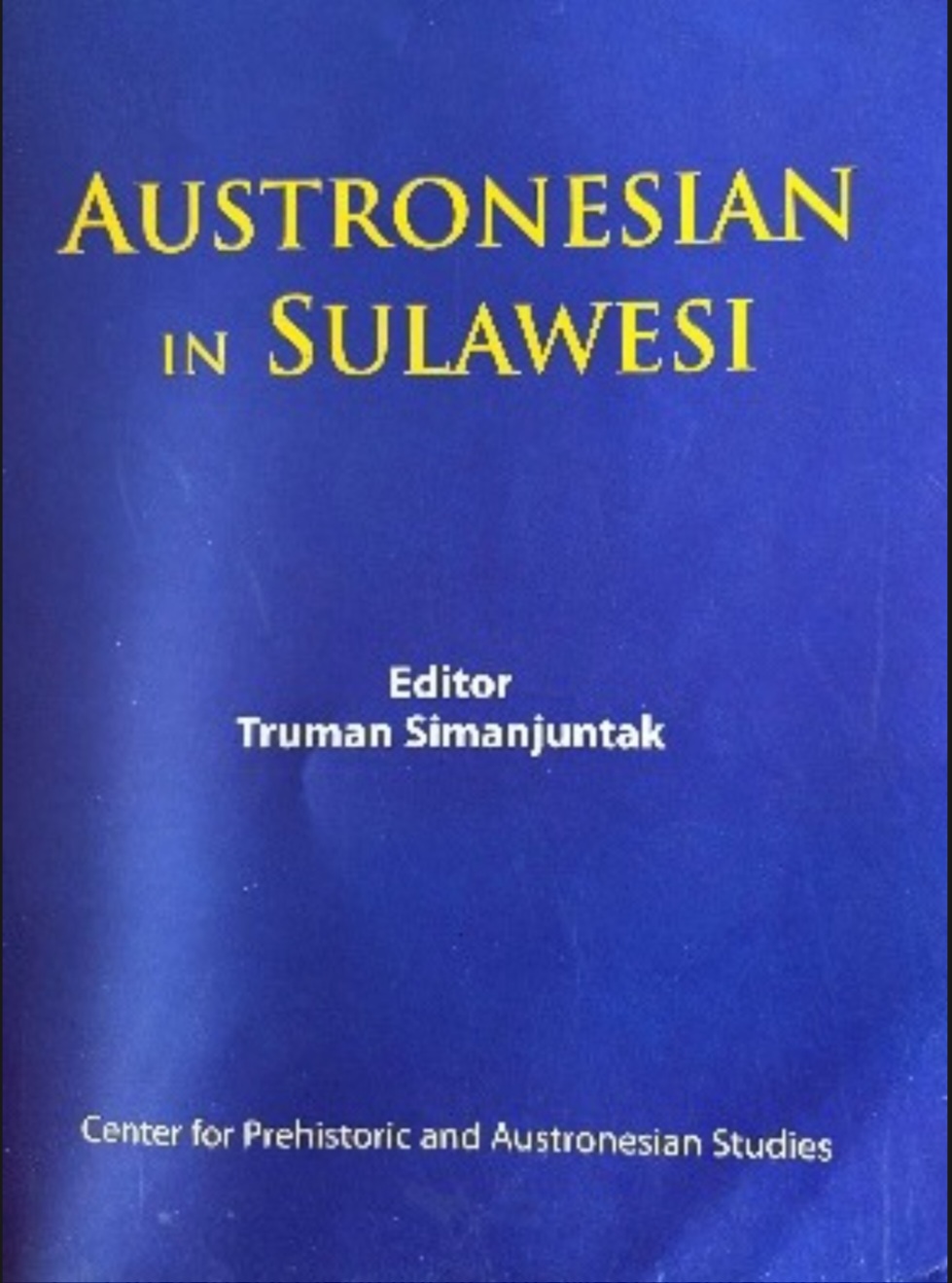
Author: Truman Simanjuntak (Ed), 2008. 268pgs. (English). Softcover
Publisher: Center for Prehistoric and Austronesian Studies, Depok, West Java
The book is a compilation of papers written by various researchers, on the topic Austronesians in Sulawesi. Research ob Austronesian Culture and Society (R.P. Soejono) A Century of Archaeology in Sulawesi (David Bulbeck) Quatenary Geology of Sulawesi (Fadlan Intan) Human Arroval and its Dispersal duribg the Holocene in Sulawesi (Harry Widianto) Austronesian Diaspora ant its impact on Island Southeast Asia and Oceania Daud Aris Tanudirjo) Minanga Sipako qnd the Neolithic of the Karama River (Truman Simanjuntal et al) Pottery from the Neolithic Sites and the Bank of the Karama River (Bagyo Prasetyo) New Insight on the Paleovegetation of the Minang Sipakko Site (Vita) The Neolithic and the Etnogenesis process of Enrekang (Irjan Mahmud) The Neolithic Site of Malawa (Irfan Mahmud) The Neolithic of Northern Sulawesi (Truman Simanjuntak & Joko Siswanto) Austronesian Cultural Traditions among the Kajang Tribe (Retno Handini) Austronesian Cultural traditions among the TORAJA Tribe (Irjan Mahmood) Language as a Cultural Market? The South Sulawesi Case (Daud Aris Tanudirjo) An Archaeological Perspective on the Diversification of the Languages of the South Sulawesi Stock (David Bulbeck) Austronesian in Sulawesi: Its Origin, Diaspora and Living Tradition (Truman Simanjuntak)
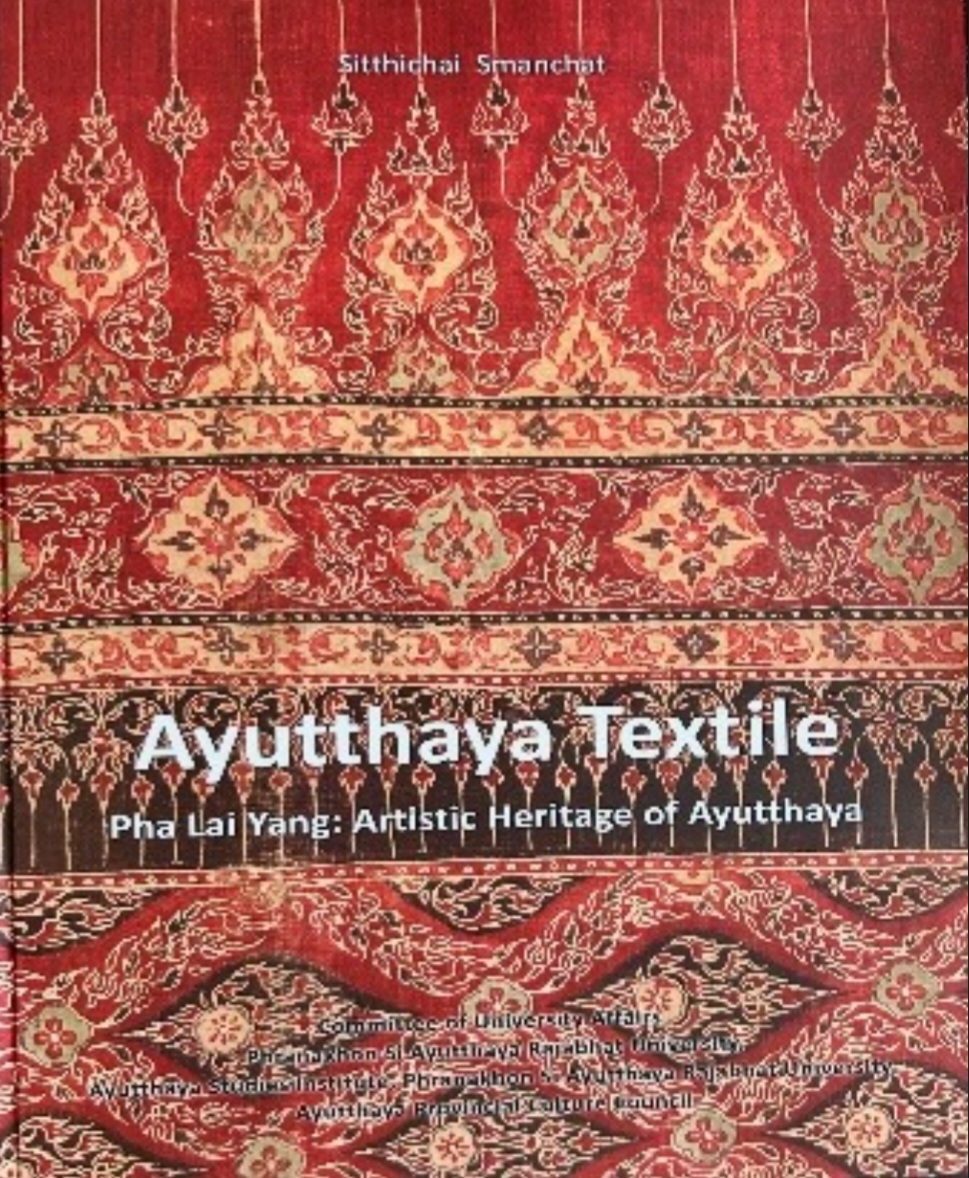
Author: Sitthichai Smanchat, 2021. 264pgs. (Thai & English). Hardcover.
Publisher: Committee of University Affairs & Ayutthaya Studies Institute, Phranakhon Si Ayutthaya Rajabhat University; Ayutthaya Provincial Culture Council, Thailand
Added to the SEA Library in April 2025 as a gift from the author. This erudite volume offers a comprehensive exploration of Pha Lai Yang, or Siamese chintz, during the Ayutthaya period spanning the fourteenth to eighteenth centuries. The author foregrounds the intricate textile artistry produced by the highly skilled artisans of the Ayutthaya royal court, demonstrating that these fabrics transcended mere utilitarian function to become distinguished works of art. Traditionally, these textiles—manufactured in India for international markets—were celebrated for their vivid chromatic schemes and elaborate motifs, achieved through sophisticated painting and printing techniques. In Thai, Pha La-Yang denotes “cloth produced according to model-based design,” a phrase that underscores the meticulous craftsmanship and aesthetic intentionality embedded in their creation. Dr. Smanchat provides a rigorous historical analysis of Siamese chintz, tracing the networks of traders and the maritime routes that facilitated the circulation of these luxurious fabrics. His study illuminates the multifaceted role of Siamese chintz within both quotidian and ceremonial contexts at the Ayutthaya court, while also situating the textiles within broader transregional exchanges. Notably, he identifies cultural affinities between Thailand and Japan, particularly in the shared motifs evident in textiles preserved in the Ryukyu archipelago. The monograph concludes with a critical discussion of the decline and subsequent revival of Siamese chintz, thereby elucidating its enduring cultural and artistic legacy.of the cloth.
Page 7 of 108