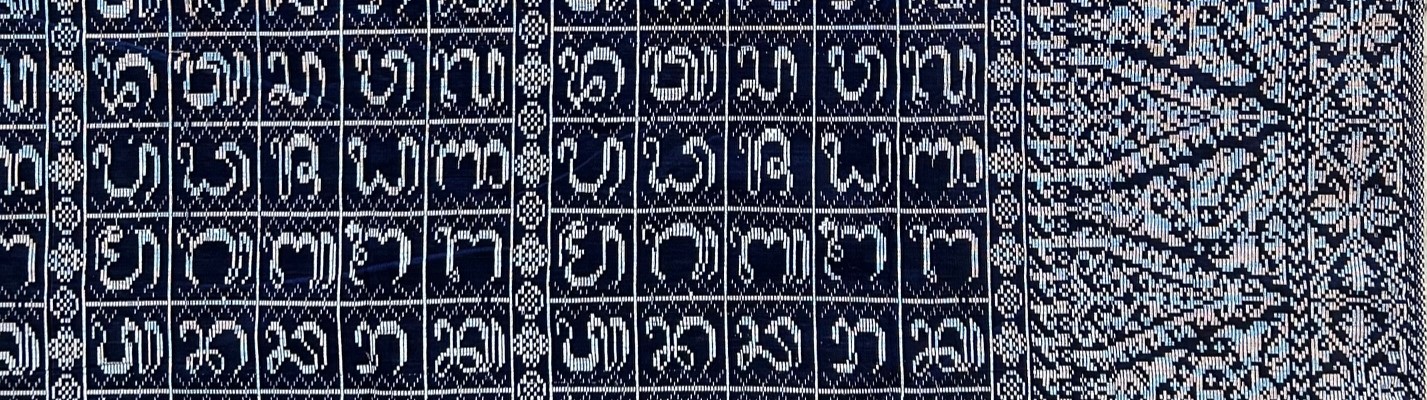
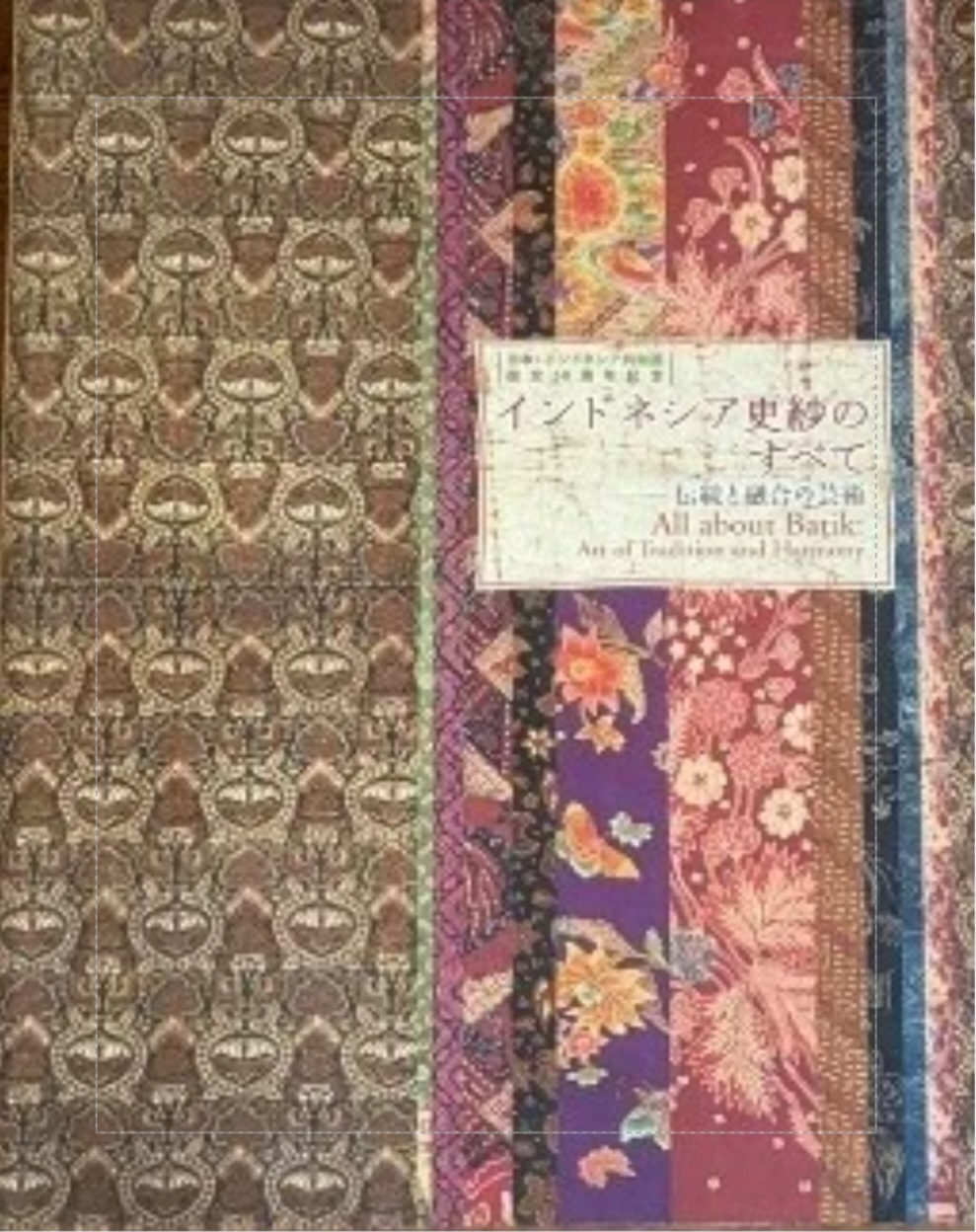
Author: contributions by Masakatsu Tozu, Sae Ogasawara, Panembahan Hardjonagoro, Museum Ulen Sentalu, Yogyakarta, Nian S. Djoemena & Afif Syakur, 2007. 229pgs. (Japanese & Indonesian). Softcover
Publisher: Asahi Shimbun, Japan
This commemorative volume was published to mark the fiftieth anniversary of diplomatic relations between Japan and Indonesia. The accompanying exhibition, hosted at the Embassy of Indonesia in Tokyo, featured an exceptional collection of batiks curated from the holdings of Professor Masakatsu Tozu of Kokushikan University, Japan. The publication is enriched by messages of endorsement and reflection from distinguished figures, including His Excellency Ambassador Dr. Jusuf Anwar; Sri Sultan Hamengkubuwono X, the reigning Sultan of Yogyakarta Hadiningrat; Yultin Ginanjar Kartasasmita of the Batik Foundation; and Dyah Damayanti of the Jakarta Textile Museum. Scholarly contributions within the volume were authored by recognized authorities in the field of batik studies, each offering insights grounded in their expertise. Collectively, these writings underscore the cultural significance of batik as both an artistic tradition and a medium of intercultural dialogue, situating the textile not merely as a craft but as a profound symbol of heritage and diplomacy.
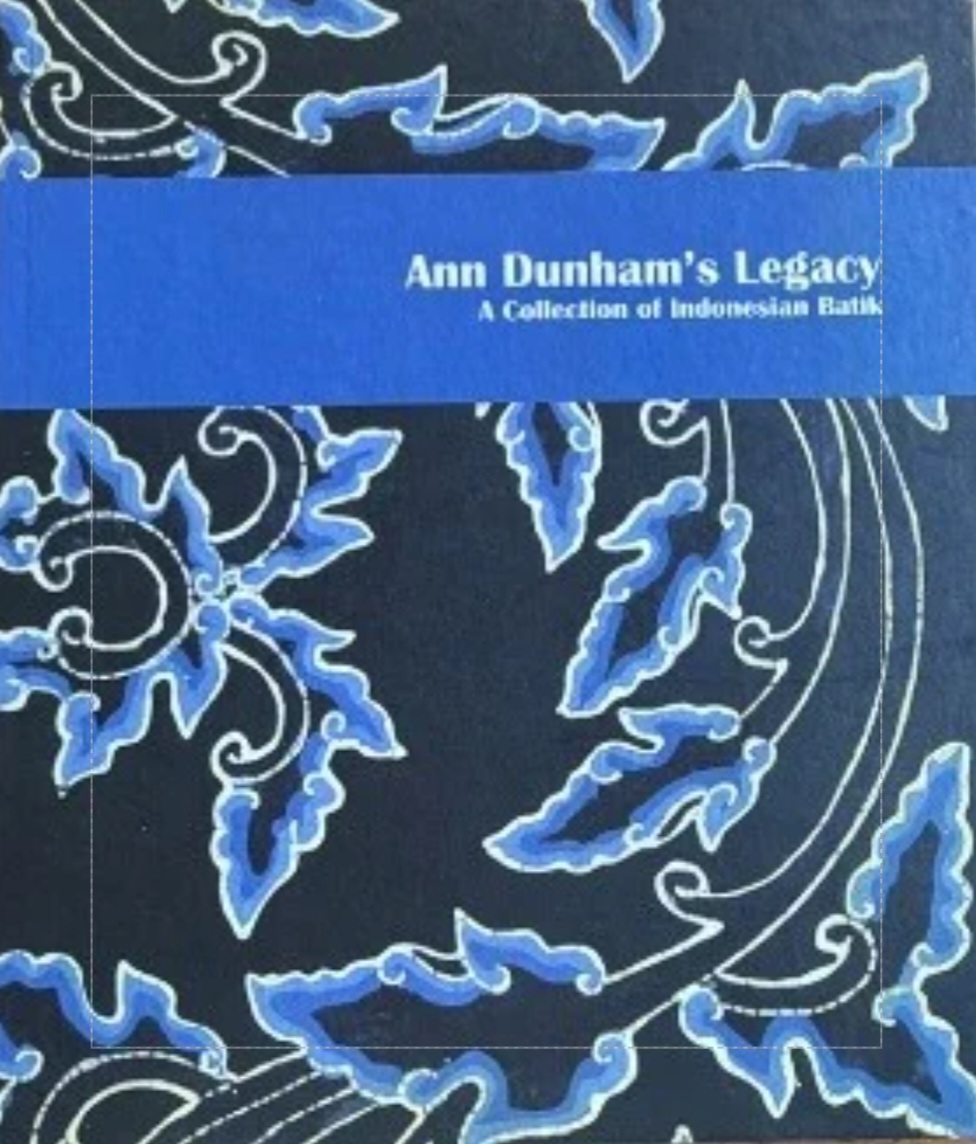
Author: Hebal Nayel Barakat Adline Abdul Gani, Ros Mahwati Ahmad Zakaria, 2012. 110pgs, (English), Hardcover
Publisher: Islamic Arts Museum Malaysia, Kuala Lumpur
This volume is a nice coffee-table book to honor the life of Ann Dunham, the mother of the 55th President of the United States, Barack Obama . She lived in Indonesia from 1967 for more than 14 years with her second husband, Lolo Soetoro The book presents her batiks that she collected when doing fieldwork on Java while studying the village industries of Java. The exhibition was held in 2012 at the Islamic Arts Museum Malaysia, in Kuala Lumpur.
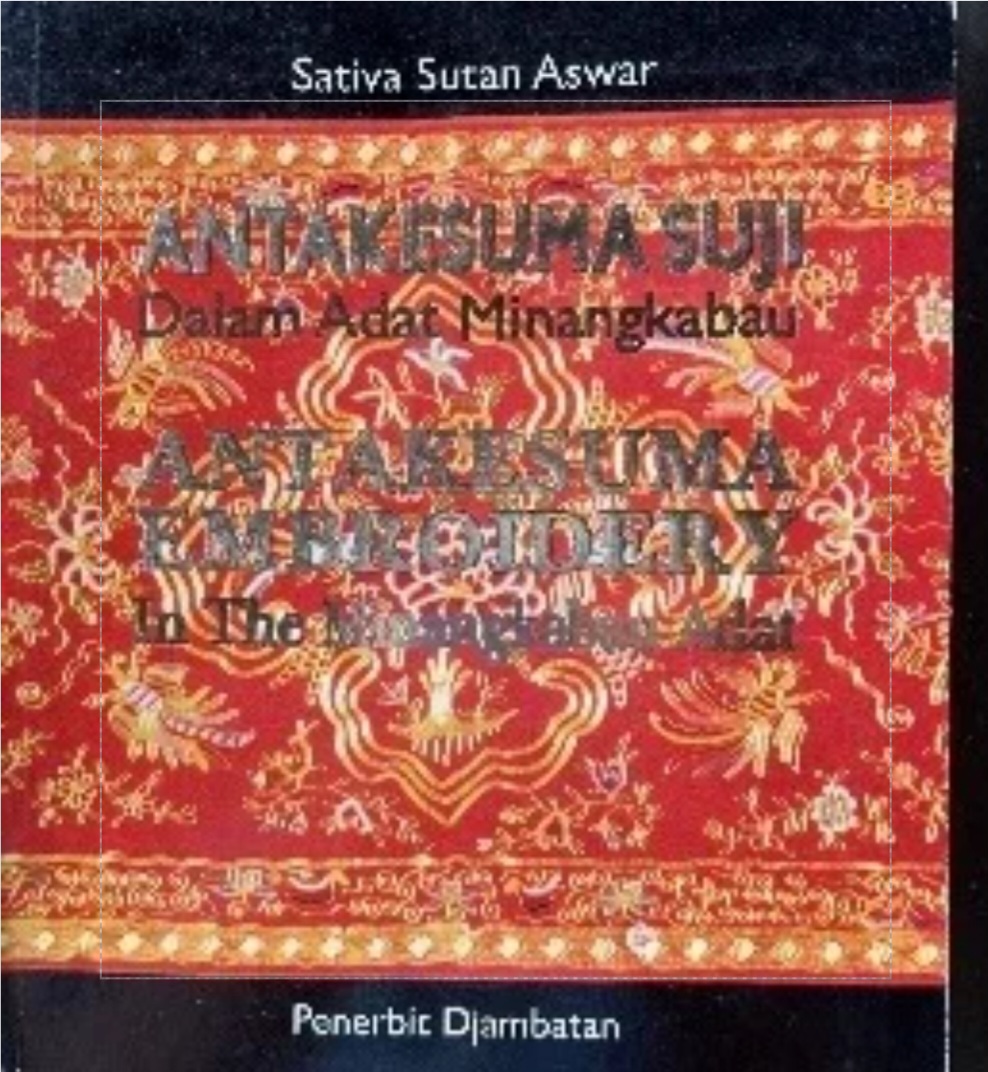
Author: Sativa Sutan Anwar, 1999, 115pg. (Indonesian & English). Softcover
Publisher: Djambatan, Jakarta
The author has elected to examine a distinctive cultural practice originating from an ethnic community markedly different from the broader Indonesian heritage: the Minangkabau tradition of hand embroidery. One of the defining features that renders Minangkabau embroidery particularly remarkable is the diversity of its needlework patterns. This artistic form represents a synthesis of multiple cultural influences, shaped historically by the influx of merchants who frequented the region’s ports. The embroidery techniques were significantly influenced by Chinese traditions, a connection evident in the tools employed, the stylistic approaches to embroidery, and the chromatic choices. Such influences are most clearly manifested in techniques such as suji cair (satin stitch), suji kepala peniti (French knot), and suji batakaik (raised embroidery). These forms of embroidery have been practiced since the early eighteenth century, reflecting cultural exchanges that trace back to the period spanning the Shang through the Han dynasties.
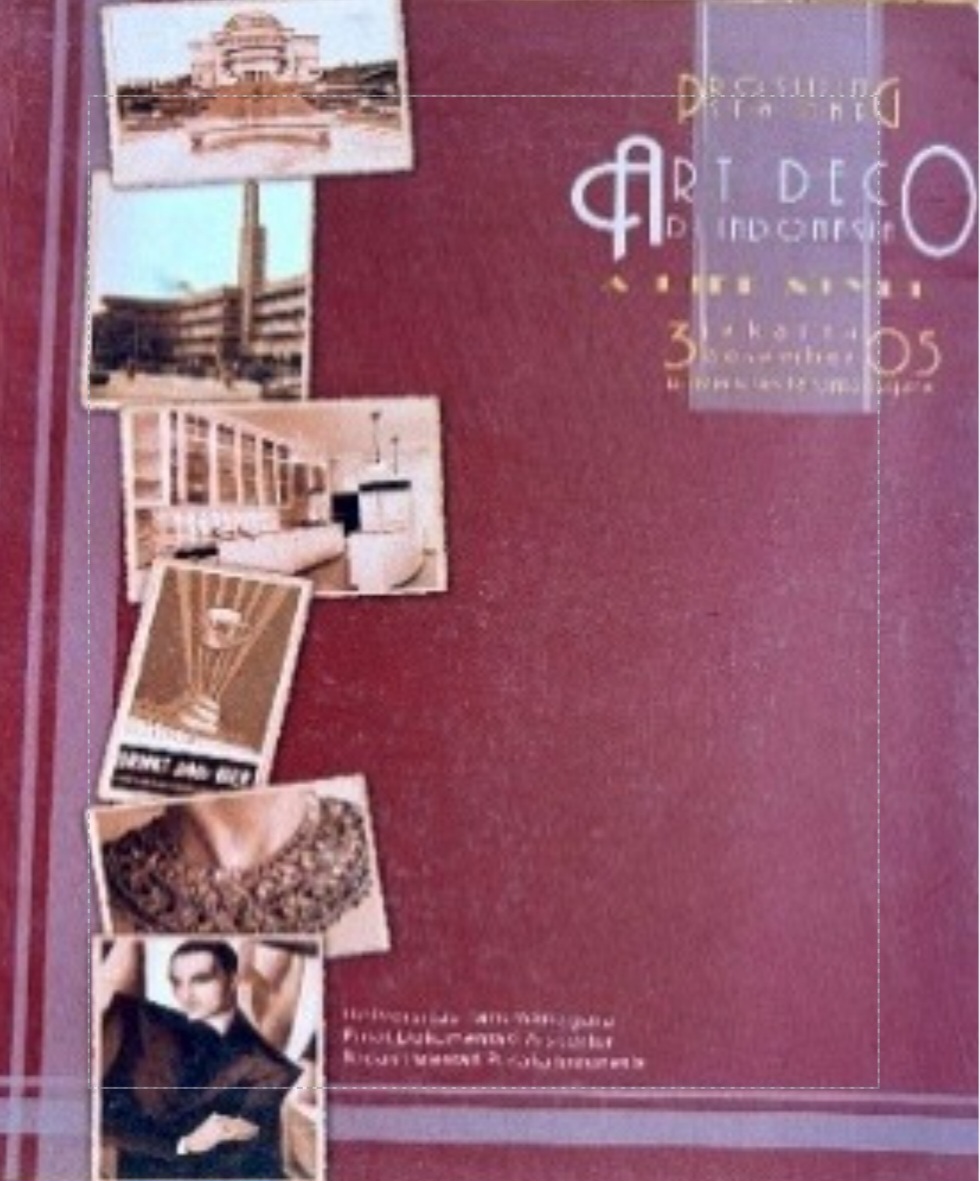
Author: See below:, 2005, 88pgs. (Indonesian). Softcover
Publisher: Pusat Dokumentasi Arsitektur, Universitas Tarumanegara, Jakarta
The catalog-cum-proceedings was published in conjunction with a seminar on Art Deco in Indonesia, convened by Tarumanegara University, Jakarta, in 2005. Art Deco, as a stylistic movement, profoundly shaped architecture, fashion, interior design, and other cultural domains during the first half of the twentieth century. Emerging as a global phenomenon, it embodied modernist aspirations while simultaneously incorporating historical motifs. In Indonesia, however, Art Deco was not merely an imported aesthetic; it became entangled with the lived realities of colonial society, urban modernization, and the negotiation of cultural identity. The Indonesian articulation of Art Deco thus developed distinctive characteristics, reflecting both the influence of European design currents and the adaptive creativity of local artisans and architects. This hybridity underscores the need to define Indonesian Art Deco on its own terms, as a cultural expression shaped by the interplay of colonial modernity, indigenous sensibilities, and global stylistic circulation. The catalog situates Art Deco within the broader historical context of lifestyle transformations during the First and Second World Wars, highlighting its relationship to globalization and its manifestations in architecture and design across France, Japan, the United States, and Indonesia. By juxtaposing these diverse trajectories, the volume underscores how Art Deco in Indonesia was simultaneously part of a transnational aesthetic movement and a localized cultural negotiation.Contributors to the volume include: Frances Affandi / Bandung Heritage: Art Deco di Dunia: A Lifestyle — situating Art Deco as a global cultural phenomenon. Dibyo Hartono: Arsitektur Art Deco di Indonesia — tracing architectural adaptations within the Indonesian context. Yuswadi Saliya: Memahami Art Deco — offering interpretive frameworks for understanding the style. Amanda Prihutomo: Art Deco as a Manifestation of Women’s Emancipation in Fashion — examining gendered dimensions of modernity. Wagiono Sunarto: The Influence of Art Deco on Graphic Design in the Dutch East Indies during the 1920s — exploring colonial-era visual culture. Pamudji J. Suptandar: Applications of Art Deco in Interior Design — analyzing domestic and spatial aesthetics. Imam Santoso: The Spirit of Art Deco in Contemporary Contexts — reflecting on the style’s enduring resonance. Agus S. Sardana & Swambodo M. Adi: Art Deco Elements in Bandung’s Gedung Merdeka and Their Contemporary Resonances — linking architectural heritage with present-day identity. Yulia Nurliano Lukito: Art Deco as a Decorative Style: Eclectic and Flexible — emphasizing stylistic adaptability. Beta Suryokusumo & Noviani Suryasari: The Transformation of “Indis” Architecture into Art Deco Ornamentation — tracing hybrid architectural genealogies. Naniek Widayati: Art Deco Discourse in the Batik Houses of Laweyan, Surakarta — situating Art Deco within artisanal and textile traditions. Moh. Nanda Widyarta: A Story Behind Villa Isola — narrating the social and cultural histories embedded in iconic architecture. Tanti Johanna: Art Deco Architecture — providing a comprehensive overview of stylistic developments.
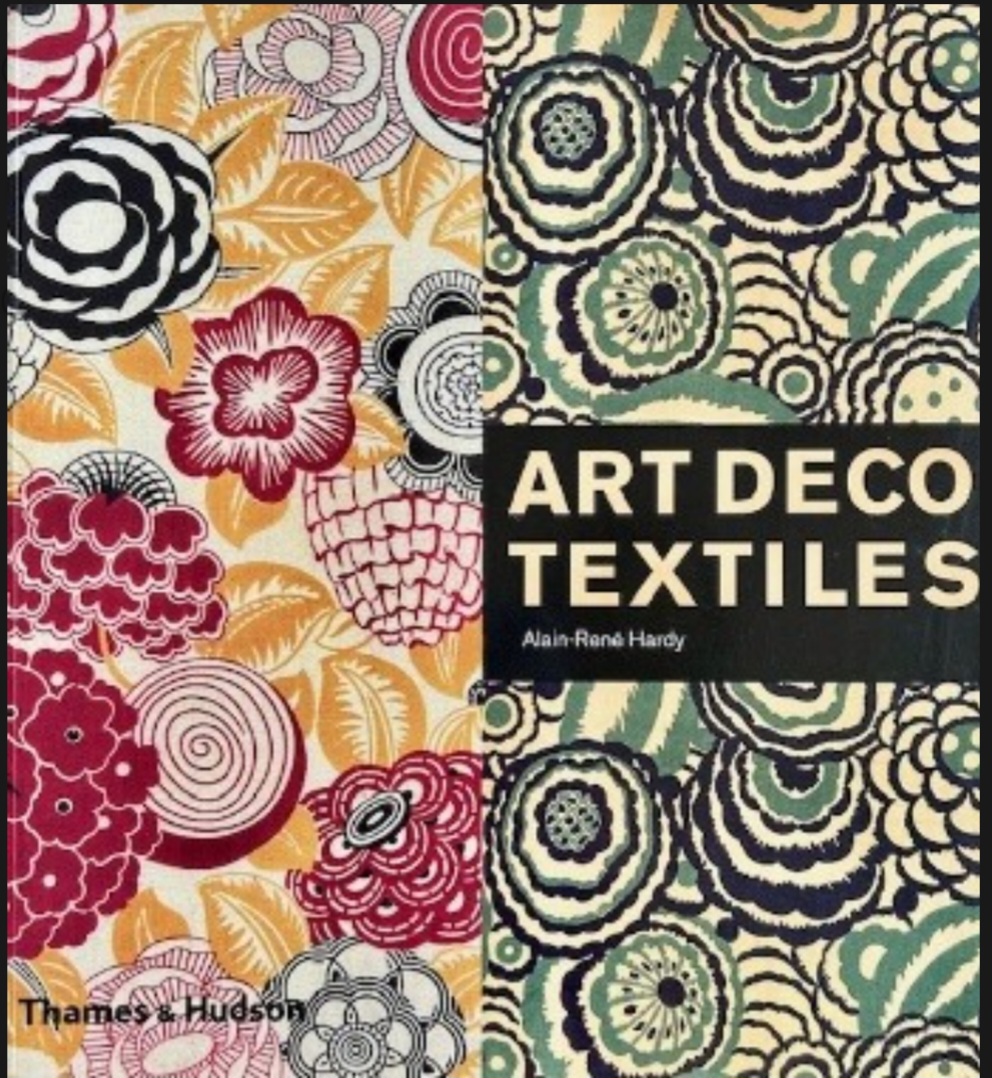
Author: Alain René Hardy, 2003. 256pgs. (English). Softcover.
Publisher: Thames and Hudson, London
A visually compelling exploration of French Art Deco textile design. The decorative arts were revitalized by the Paris International Exhibition of 1925, which inaugurated a flourishing era that profoundly influenced the cultural and domestic aesthetics of an entire generation. Alternately opulent or restrained, these textiles range from exuberant floral motifs to austere geometric compositions, oscillating between classical timelessness and the celebration of modern innovation. This curated presentation of fabric artistry offers a wealth of inspiration for those seeking to understand the pivotal role of textiles in defining the avant-garde spirit at the forefront of Art Deco style.
Page 5 of 108