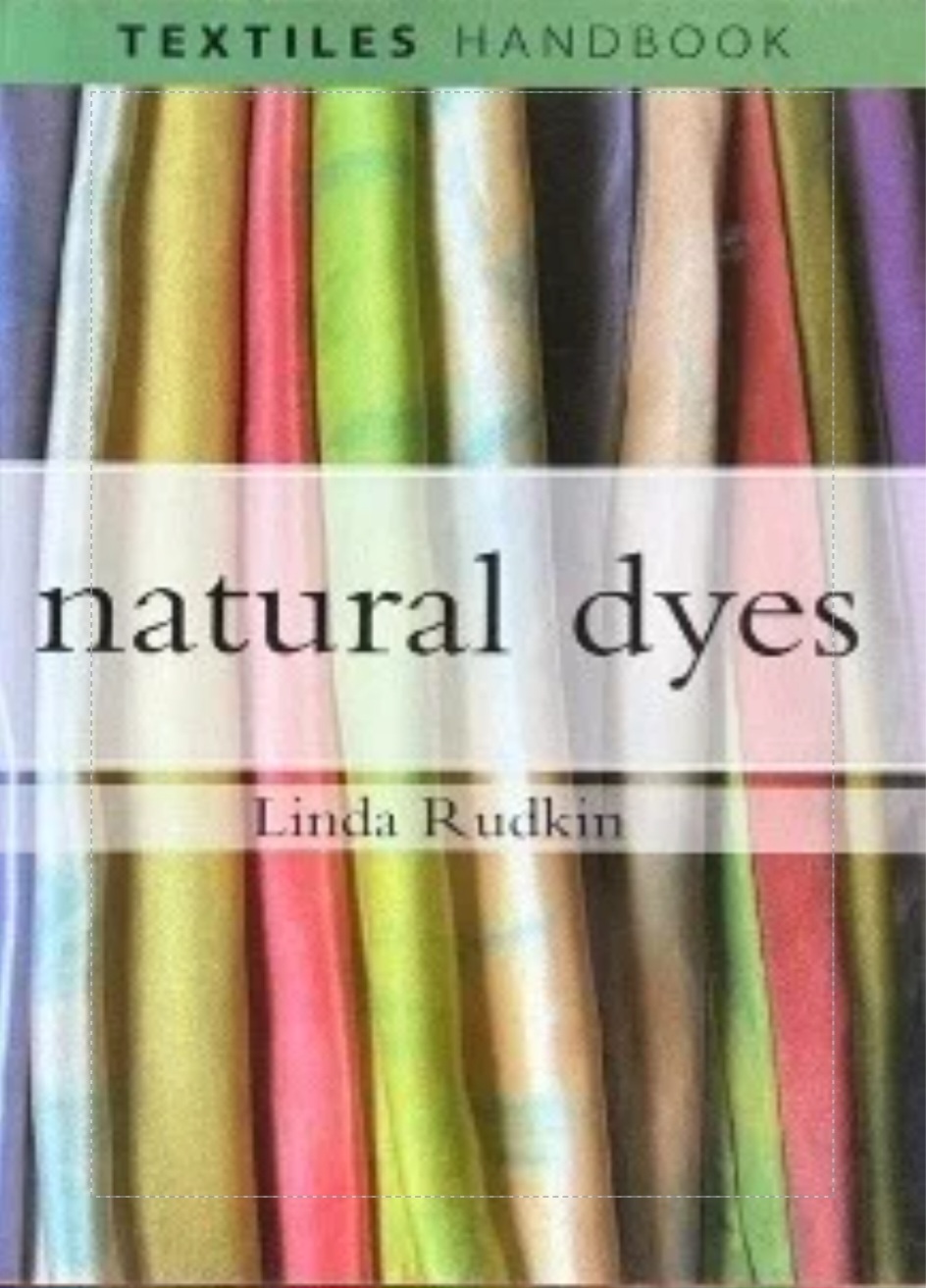
Author: Linda Rudkin, 2007. 114 pgs. (English). Softcover
Publisher: A & C Black Publishers, London
The volume Natural Dyes constitutes a significant contribution to the literature on textile arts and sustainable craft practices. It offers a meticulously curated selection of projects, practical guidance, and sequential instructions that collectively demystify the process of dyeing yarns, fabrics, and embroidery threads. The clarity of exposition and the minimal technical requirements render the text accessible to both novice practitioners and experienced artisans, thereby broadening its pedagogical reach. A particularly noteworthy feature of the book is its inclusion of over forty documented experiments employing diverse botanical dye sources. This empirical section provides a comparative framework through which readers may discern the chromatic variability and aesthetic potential inherent in different plants. The systematic presentation of results enhances the text’s scholarly value, situating it not merely as a manual but as a repository of experimental knowledge that bridges craft and research. In conclusion, Natural Dyes transcends the boundaries of a conventional craft manual. It functions simultaneously as a pedagogical tool, an experimental archive, and a source of creative impetus. Scholars of material culture, practitioners of textile arts, and advocates of sustainable design will find in this volume a compelling synthesis of tradition, experimentation, and innovation.
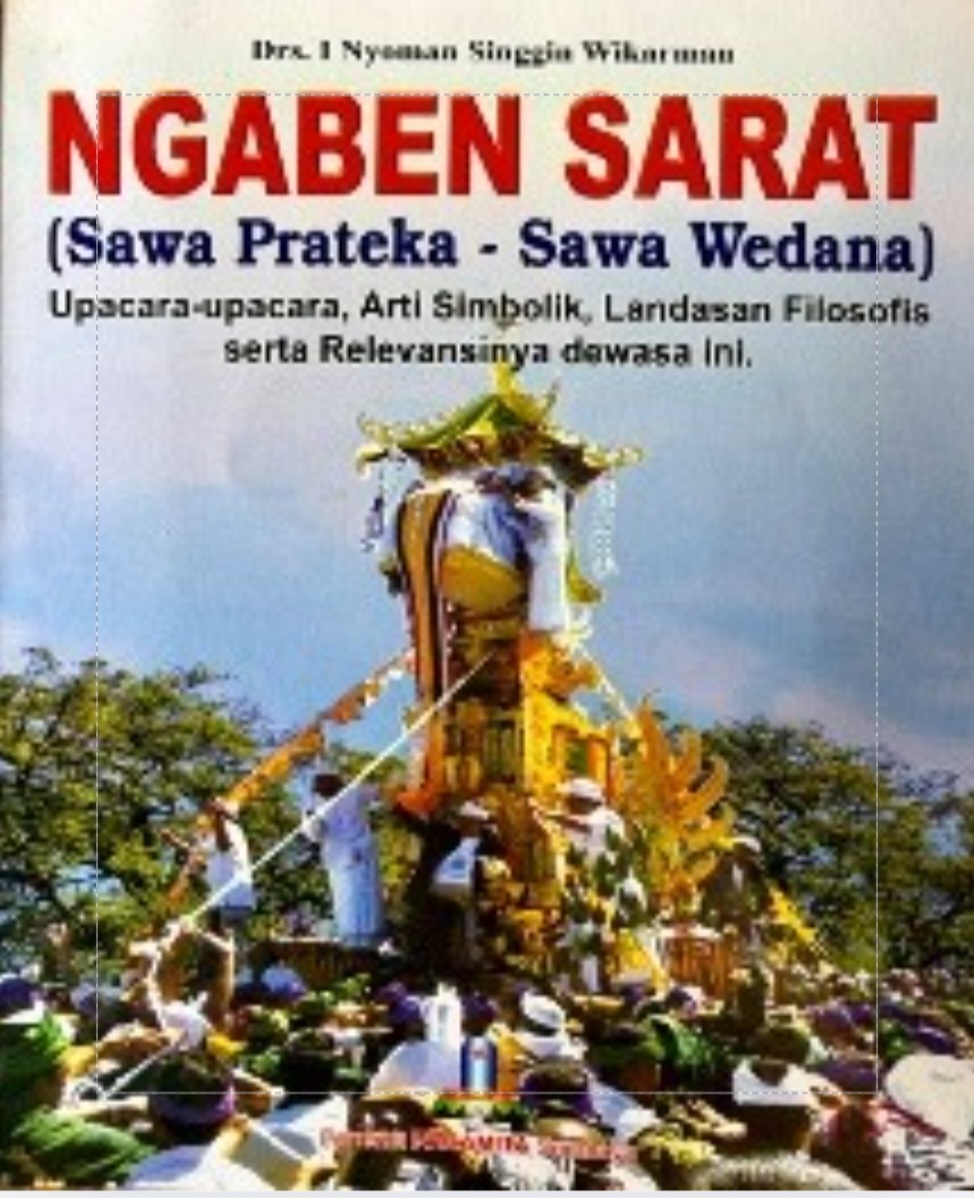
Author: I Nyoman Singgin Wikarman, 1998, 76[gs. (Indonesian). Softcover
Publisher: Paramita, Surabaya
Ngaben Sarat is a ritual guidebook that codifies the Balinese Hindu cremation ceremony in its most complete form. It prescribes the essential offerings (banten) and ceremonial paraphernalia required by Hindu Dharma, while simultaneously elucidating the symbolic meanings and philosophical foundations of the rite. Beyond its practical function, the text situates cremation within the Balinese cosmological worldview, presenting it as both a spiritual necessity and a cultural expression that remains relevant in contemporary society. The booklet underscores the ceremony’s ultimate purpose: to liberate the soul from worldly attachments and provide a sanctified path for its return to the divine origin. By integrating ritual prescriptions with philosophical reflection, Ngaben Sarat affirms the enduring significance of cremation as a sacred passage, embodying the Balinese understanding of death not as an end, but as a transformative journey within the eternal cycle of existence.
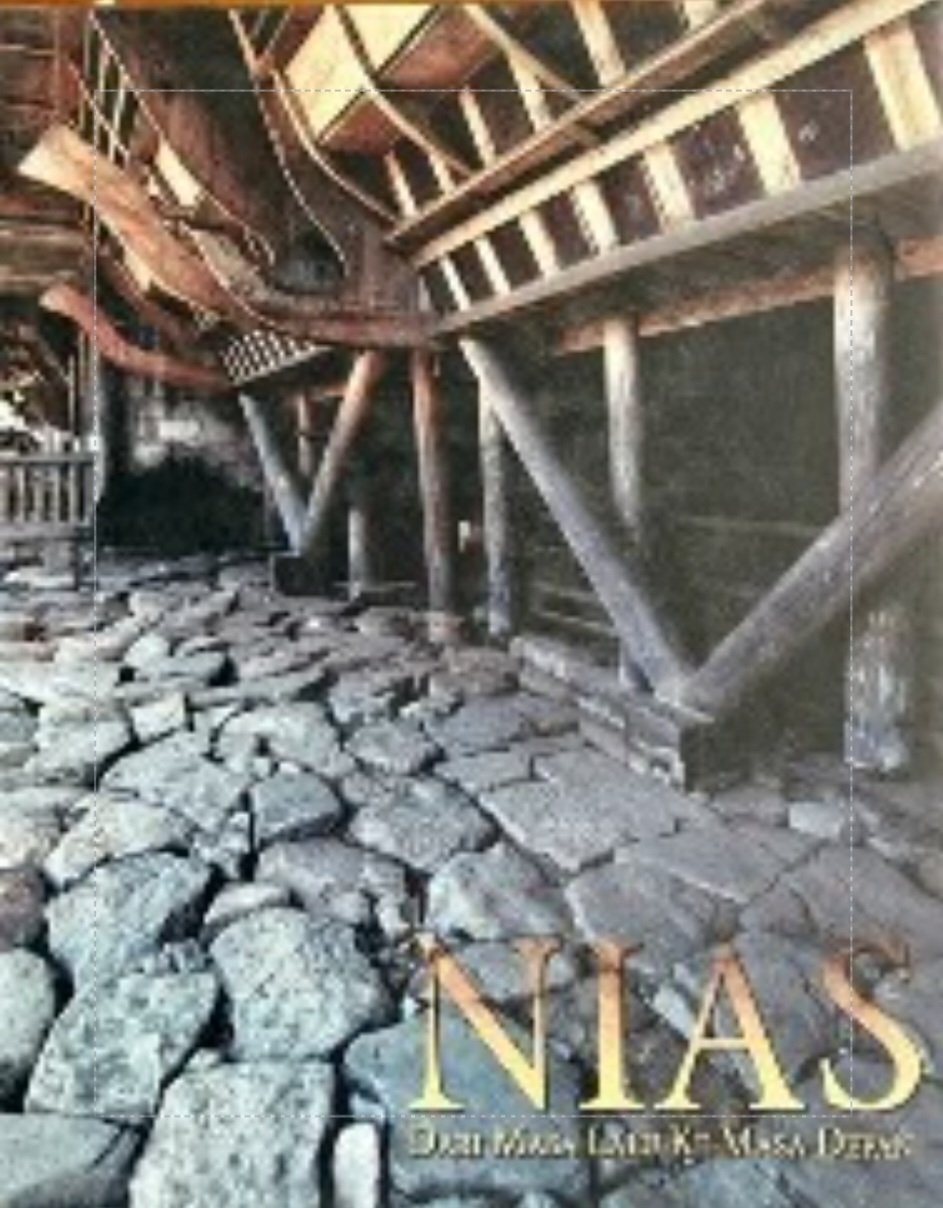
Author: Suhadi Hadiwinoto, Rijadi Joedadibroto, Ketut Wiradayana, Edy Suhartono, Catrini Pratihari Kubontubuh, 2008. 247pgs. (Indonesian). Hardcover
Publisher: Badan Pelestarian Pusaka Indonesia/Indonesian Heritage Trust, Jakarta
This volume constitutes a compelling visual and cultural exploration that foregrounds Nias as one of the world’s rare living megalithic civilizations. Unlike global megalithic sites such as Stonehenge or the Egyptian pyramids—monuments that belong exclusively to antiquity—Nias sustains a living tradition in which massive stone structures remain integrated into the quotidian rhythms of village life. The book assembles essays, photographs, and historical overviews that illuminate how the indigenous Ono Niha society has preserved its distinctive architecture, social systems, and oral heritage across generations. Published in the aftermath of the devastating 2004 Indian Ocean tsunami and subsequent earthquakes, the work functions as both documentation and admonition: a wake-up call to national and international communities to recognize and safeguard an often neglected dimension of world heritage. Richly produced photography and thoughtful layout capture the dramatic landscapes, vernacular wooden architecture, and the celebrated stone-jumping traditions with striking clarity. Rather than presenting itself as a dense anthropological treatise, the volume operates as an appreciative cultural portrait—an evocative heritage book designed to inspire preservation and civic pride. Its central argument is persuasive: Nias culture merits recognition equal to that accorded to Bali or Toraja within the Indonesian archipelago. By situating Nias within this broader comparative framework, the book urges contemporary generations to safeguard their ancestral legacy, affirming that cultural heritage is not merely a relic of the past but a living continuum demanding stewardship in the present.

Author: Rens Heringa, 2010, 92pg. (English). Softcover
Publisher: Fowler Museum at UCLA, California, USA
Nini Towok, the venerable grandmother figure with sunken eyes, is envisioned as transmitting her handspun cotton yarn to the earthly realm in the ethereal form of moonbeams. This luminous thread constitutes the foundational raw material of Kerek’s intricate textile system, a cultural matrix imbued with layered symbolic meanings. The spinning wheel of Nini Towok transcends its utilitarian function as a weaver’s instrument; it emerges as a profound metaphor for the cyclical nature of existence itself. Within Javanese cosmology, Nini Towok is perceived as the celestial agent who initiates this perpetual rotation, her presence discernible upon the moon’s surface as it traverses the darkened sky above Java. Thus, the act of spinning is not merely a craft but a cosmological gesture, binding together material production, mythic imagination, and the rhythm of life’s eternal recurrence.

Author: Peter ten Hoopen, 2024, 233pg. (English). Hardcover
Publisher: University of Hongkong, Museum and Art Gallery, Hongkong
This volume presents an examination into the surprising asymmetry hidden in the work of Sumbanese weavers. In his study, ten Hoopen reveals levels of virtuosity that remained overlooked for over a century of Indonesian textile research. The richly decorated men’s wraps, hinggi from the author’s own collection and of the Hongkong University Museum, have commonly been described as symmetric along both axes. Sumba’s noble weavers managed to create asymmetry by hiding tiny visual elements that disrupted symmetry and were made to be overlooked. For a deeper understanding, interested readers and researchers are encouraged to do further research into the matter.
Page 84 of 151