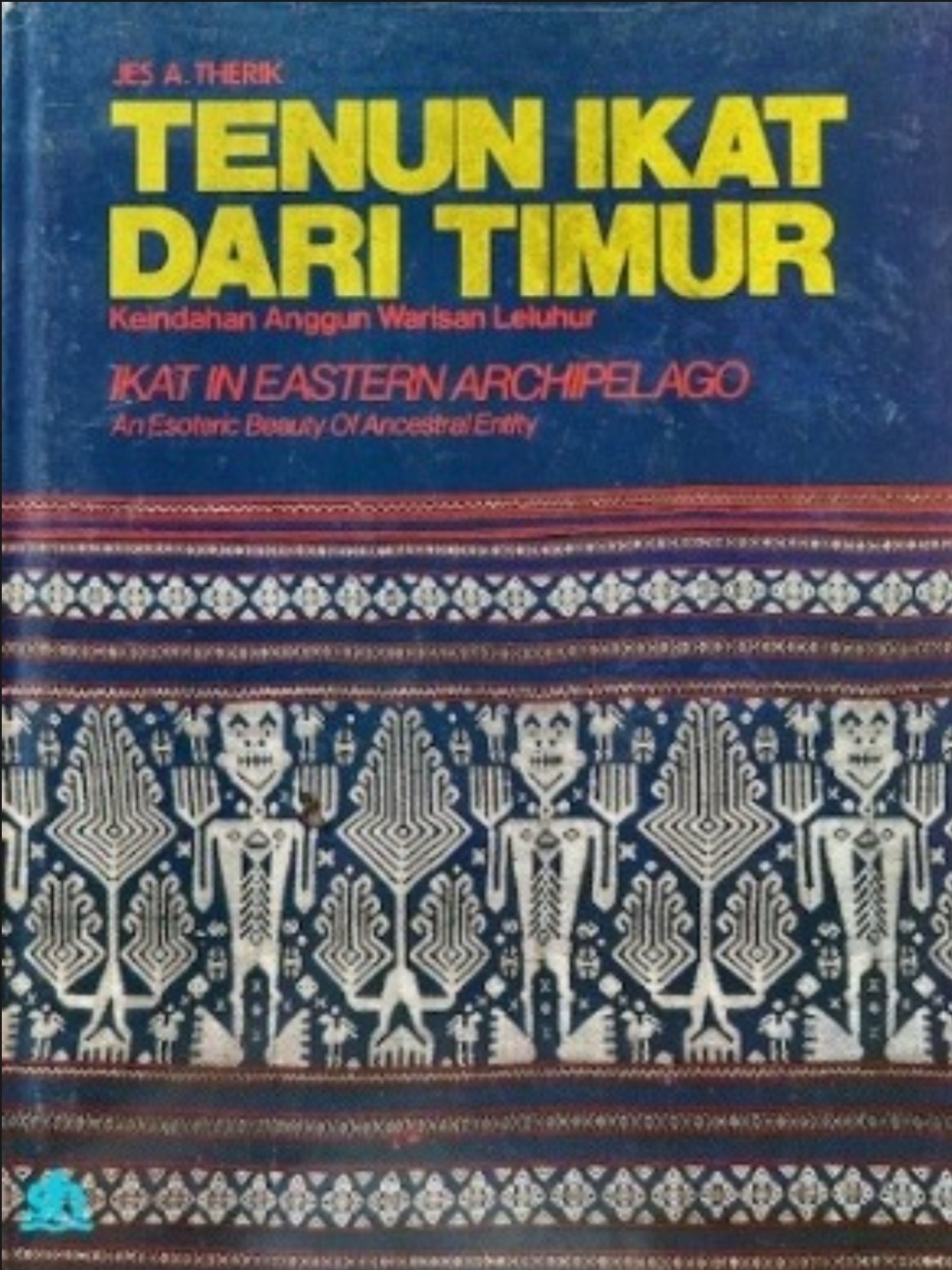
Author: Jes A. Therik, 1989. 107pg. (Indonesian and English). Hardcover
Publisher: Pustaka Sinar Harapan, Jakarta
The book offers a comprehensive exploration of the art of traditional weaving, emphasizing the symbolic resonance embedded within its motifs. It examines diverse techniques of weaving and ornamentation, including warp ikat, sotis, and buna weaving. In the cultural context of East Nusa Tenggara (Nusa Tenggara Timur), textiles are richly adorned with motifs representing animals and objects, each imbued with profound meaning. For instance, the skull tree signifies communal pride, while the tree of life embodies the notion of existence beyond death. Similarly, the horse serves as an emblem of courage, whereas the parrot conveys deliberation and thoughtful discourse. The volume is further enriched by illustrations drawn from Dutch archival collections alongside vivid depictions of colored textiles. In its concluding chapters, the book reflects on the trajectory and sustainability of traditional weaving practices, contemplating their future amidst cultural preservation and modern transformation.
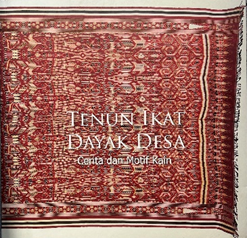
Author: Unknown, 2014. 180 pg. (in Indonesian)
Publisher: DEKRANAS, Jakarta
This book is the first to spotlight the weavers of the Jasa Menenun Mandiri cooperative in Sintang, West Kalimantan, with support from the KOBUS Foundation. Father Jacques Maessen, SMM, initiated efforts to revitalize local weaving traditions. The book features the weavings, the names of the artisans, the meanings of the motifs, and the stories behind the textiles, highlighting the contributions of these previously unknown textile artisans.
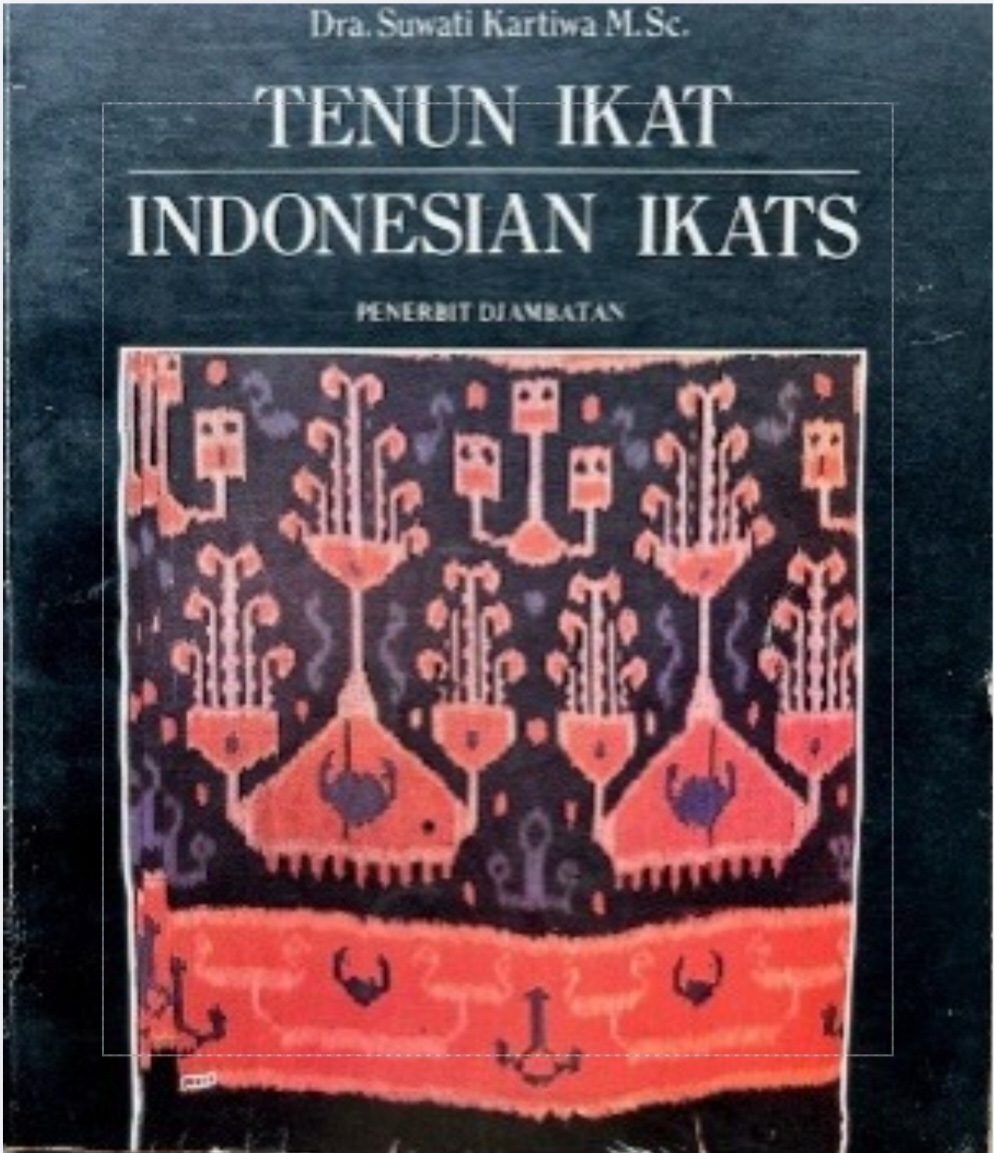
Author: Suwati Kartiwa, 1987, 97pg. (Indonesian & English), Softcover
Publisher: Djambatan, Jakarta
This book is one of th first books on Ikat Weavings from the collection of the National Museum in Indonesia. In the first chapter it presents how the warp ikats, weft ikats and double ikats, spread through the Archipelago, the Neolithic and Dongson decorative elements in textiles, Hindu decorative elements in woven clothing, Warp ikats weavings as a prehistorical Dongson cultural element, and weft Ikat weaving during the prehistoric era, including the double ikat weaving technique. In the second chapter, the authors present the role of textiles in communial life. The last chapter discusses ikat ornamentation of the various island in the archipelago.
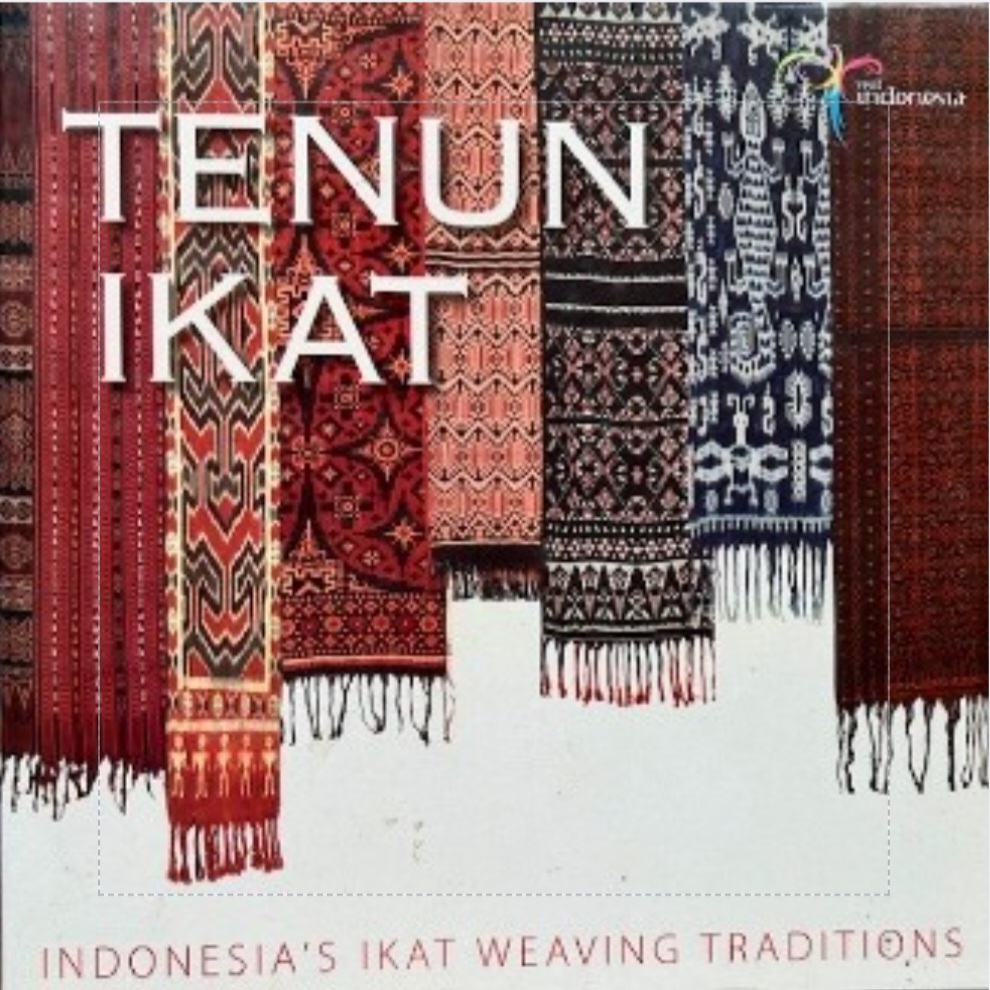
Author: Judi Achjadi, 2009, 122pg. (English) softcover
Publisher: Ministry of Culture and Tourism of Indonesia, Jakarta
The volume offers a comprehensive overview of the ikat weaving traditions across Indonesia, situating them within both historical and contemporary contexts. It begins with a general introduction to the cultural significance of ikat, before examining regional variations across the diverse islands of the archipelago. The discussion culminates in an exploration of ikat’s evolving role within modern society, where traditional artistry intersects with global markets and contemporary aesthetics. Conceived as a visually engaging coffee-table publication, the book serves as both an accessible introduction and a scholarly gateway into the rich textile heritage of Indonesia, illuminating the intricate interplay between craft, identity, and cultural continuity.
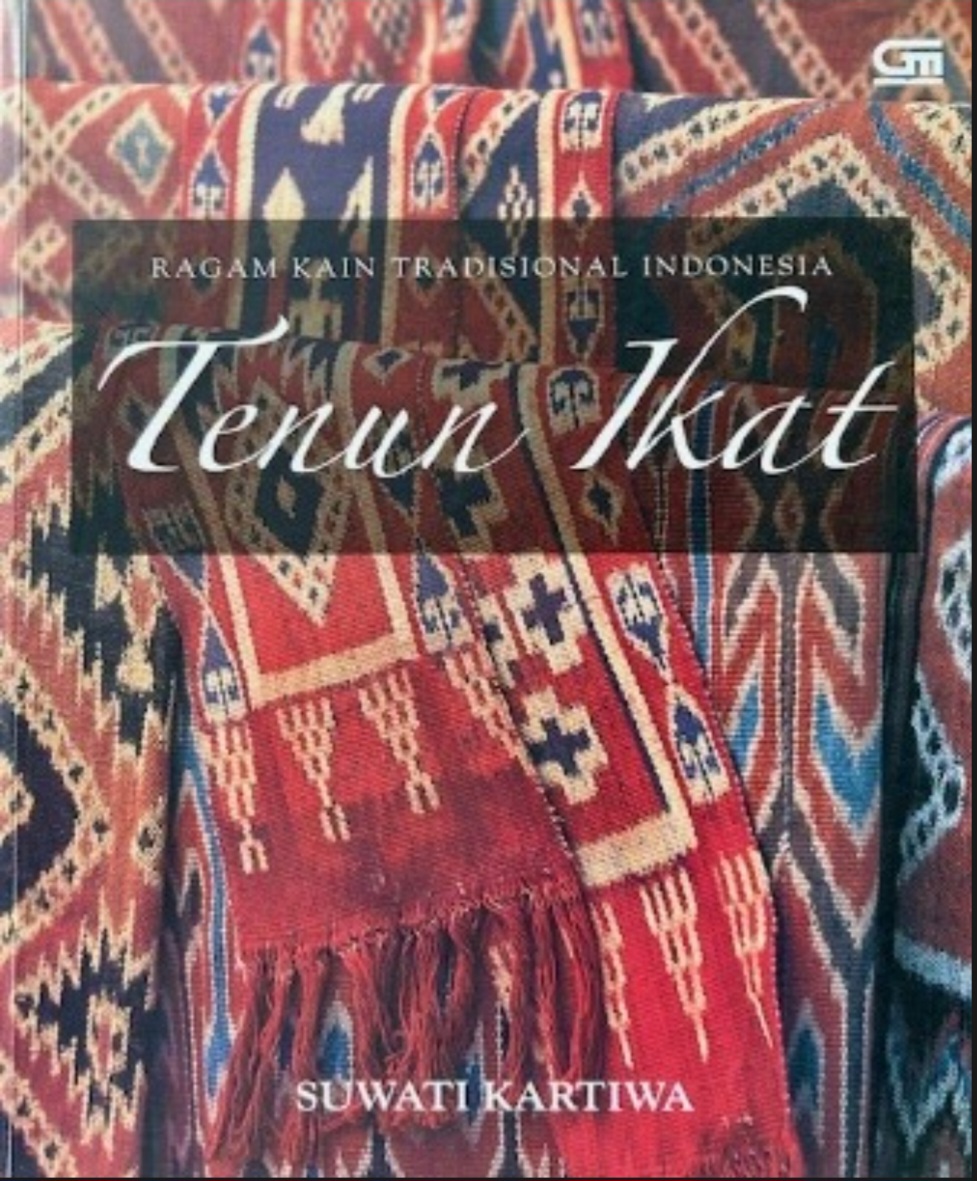
Author: Suwati Kartiwa, 2007. 156pg. (Indonesian). Softcover
Publisher: Gramedia Pustaka Utama, Jakarta
Tenun Ikat is a traditional resist-dyeing technique in which threads are meticulously bound and dyed prior to weaving. This intricate process produces distinctive, often mesmerizing patterns. In her book, Suwati showcases the diverse tie-dye practices found across Indonesia, with particular emphasis on Sumatra, Kalimantan, Sulawesi, Bali, Flores, Nusa Tenggara Timur, and the Moluccas. The volume serves as an accessible yet insightful introduction to the rich heritage of ikat weaving throughout the Indonesian archipelago.
Page 83 of 108