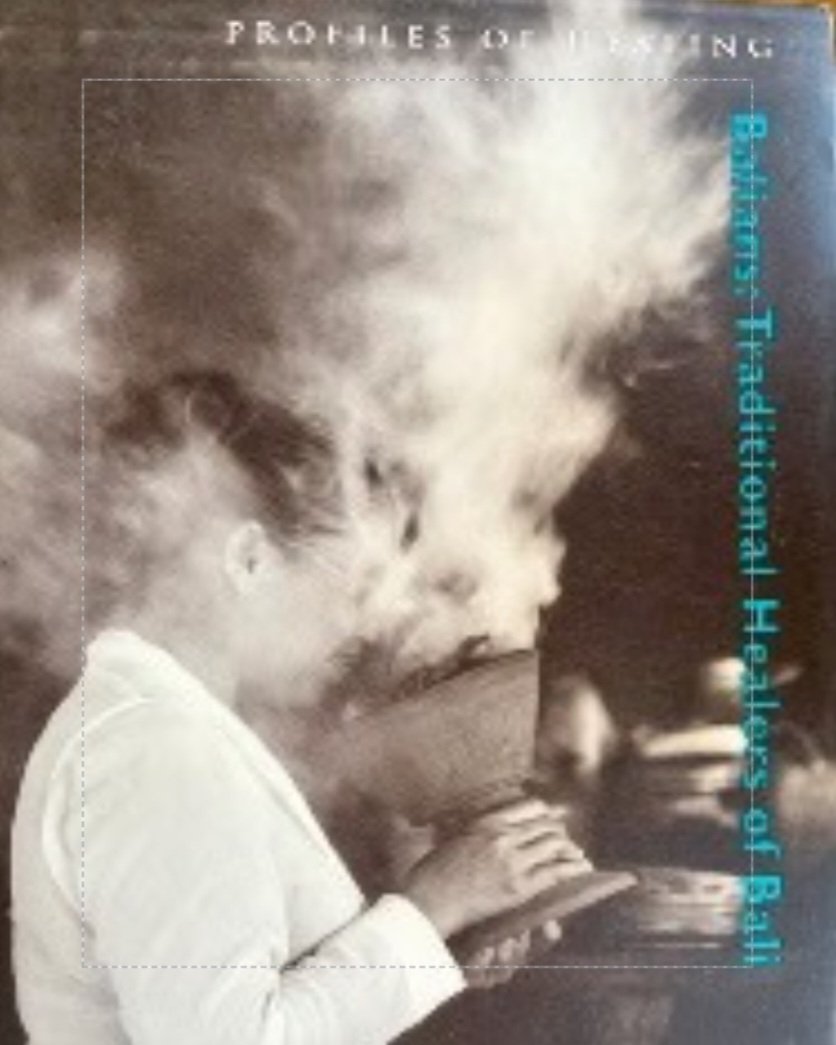
Author: Bradford Keeney (Ed) & I Wayan Budi Asa Mekel, 2004. 255pgs. (English). Softcover. CD-ROM included
Publisher: Ringing Rock Press, Philadelphia, PA, USA & Leete’s Island Books.
This volume constitutes a captivating and intimate ethnographic portrait of the lives, spiritual visions, and ritual practices of Balinese traditional healers (balian). Through personal narratives and direct accounts, the text illuminates the profound cosmological experiences that structure the daily existence of these ritual specialists, situating their healing work within the broader matrix of Balinese Hindu philosophy and communal life. Central to the book’s exploration is the ancient corpus of lontar manuscripts—sacred medicinal texts meticulously inscribed on dried palm leaves. These manuscripts embody centuries of accumulated wisdom, encoding therapeutic knowledge, ritual prescriptions, and metaphysical insights that continue to inform contemporary healing practices. The inclusion of striking mystical photographs, finely rendered drawings, and an accompanying audio CD featuring traditional music and recitations from the lontar further enriches the sensory and cultural dimensions of the volume, offering readers a multisensory encounter with Balinese ritual knowledge. The work succeeds in providing a rare and respectful window into indigenous epistemologies, allowing readers to feel as though they are seated in direct dialogue with the healers themselves. Its strength lies in the immediacy of experiential storytelling and the evocative presentation of mystical visions, which foreground the affective and spiritual dimensions of healing. However, the text privileges narrative immersion over sustained academic or anthropological critique, thereby positioning itself more as a cultural testimony than as a systematic ethnographic analysis. As such, this beautifully crafted volume holds particular value for those drawn to global shamanic traditions, sacred anthropology, and the living spiritual heritage of Bali. It contributes meaningfully to discourses on indigenous knowledge systems and intangible cultural heritage, while simultaneously reminding readers of the fragile continuity of ritual wisdom in the face of modernization and cultural commodification.
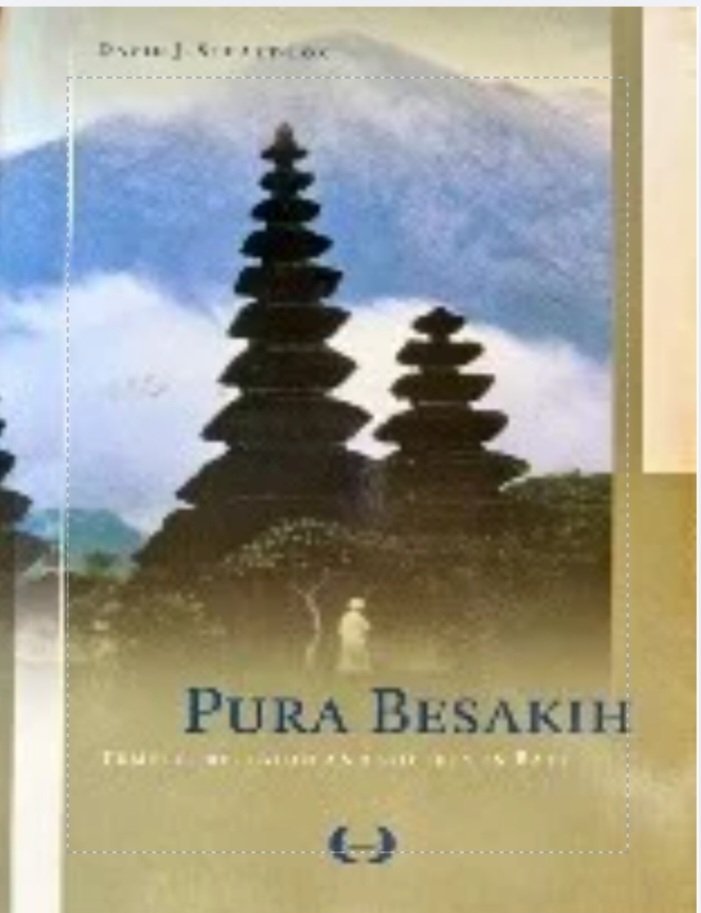
Author: David J. Stuart-Fox, 2002. 470pgs. (English). Softcover
Publisher: KITLV, Leiden, the Netherlands
This volume is widely regarded as the definitive and authoritative monograph on Bali’s most sacred and expansive Hindu temple complex. Transforming an extensive doctoral dissertation into a meticulously researched masterwork, the text exemplifies academic rigor while remaining accessible to serious readers. It is indispensable for those seeking to understand the intricate intersections of Balinese religion, political structures, and local community life. Stuart‑Fox documents with precision how Pura Besakih, situated on the slopes of Mount Agung, evolved over the course of a millennium into a monumental complex comprising 22 interrelated temples. The analysis foregrounds the sophisticated dual and triple classification systems embedded within Balinese society, elucidating how ritual, lineage, and hierarchy are structurally encoded in temple practice. The author further examines the more than seventy annual ceremonies, demonstrating how these ritual cycles weave together diverse kinship networks, regional polities, and national identity into a coherent religious fabric. From the perspective of ritual ecology, the temple’s ceremonial calendar is inseparable from the rhythms of the natural environment. The positioning of Pura Besakih on Mount Agung—the island’s highest and most spiritually charged peak—anchors ritual practice within a cosmological landscape where volcanic power, agricultural cycles, and hydrological systems converge. The annual ceremonies not only reaffirm social cohesion but also mediate ecological relationships, aligning human activity with the fertility of rice terraces, the sanctity of water sources, and the cyclical renewal of the land. In this sense, ritual operates as an ecological regulator, sustaining equilibrium between human communities and the natural world. Particularly notable is the unparalleled documentation of the Eka Dasa Rudra, the massive centenary purification festival most recently held in 1979. This ritual, encompassing the entire island, exemplifies the ecological dimension of Balinese religiosity: it is conceived as a cosmic cleansing that restores balance between humanity, nature, and the divine. The text traces how modern state patronage and global tourism have reshaped centuries‑old spiritual and financial dynamics, thereby situating the temple within broader processes of cultural transformation. Stuart‑Fox seamlessly integrates historical textual analysis with intensive anthropological fieldwork, treating the temple not as a static relic but as a dynamic, living institution embedded in both social and ecological systems. Readers commend the exhaustive detail, though some note that the density of the prose—unaccompanied by extensive visual materials such as photographs—may render the work overwhelming for casual travelers. Nevertheless, for scholars, anthropologists, and dedicated cultural historians, this book remains an unmatched benchmark: a five‑star standard in the study of Balinese religion, society, and ritual ecology.

Author: Sri Sintasari (Neneng) Iskandar, 2013, 88pg. (Indonesian). Catalog
Publisher: Himpunan Wastraprema, Jakarta.
The exhibition entitled Charming Textiles from Indonesia’s Prominent Females was convened at the Museum Nasional, Jakarta, from 4 to 7 April 2013. The curatorial emphasis centered on textile collections associated with distinguished female figures in Indonesian history, including Cut Nyak Dien, R. Dewi Sartika, Johana Sunarti Nasution-Gondokusuma, R.A. Kartini, Laili Roesad, Lasmidjah Hardi, Maria Josephine Catherine Maramis, Rohanna Kuddus, Siti Latifah Herawati Diah, and Siti Nurani Bambang Utoyo. Each textile ensemble was accompanied by a concise biographical narrative, thereby situating these eminent women within the broader socio-cultural and historical context of the nation.

Author: Neneng Iskandar, 2012. 64pg. (Indonesian)
Publisher: Himpunan Wastraprema & Musium Tekstil Jakarta
Slanted rows and diagonal lines serve as striking decorations in Batik, known as "lereng" in Javanese, "rereng" in Sundanese, and "slope" in English. The exhibition dedicated to Batik Lereng unequivocally showcases the diverse facets and variations of batik design present in a single piece. This impressive collection comes from dedicated collectors who are members of Himpunan Wastraprema. Don't miss this opportunity to experience an engaging exploration of batik design.

Author: Unknown, 1980, 40pg. (Indonesian). Softcover. Catalog
Publisher: Himpunan Watraprema, Jakarta
The catalog was issued in conjunction with a textile exhibition drawn from the distinguished collection of Gusti Kanjeng Putri Mangkunegoro VIII, presented at the Jakarta Textile Museum between 17 and 31 January 1980.
Page 98 of 151