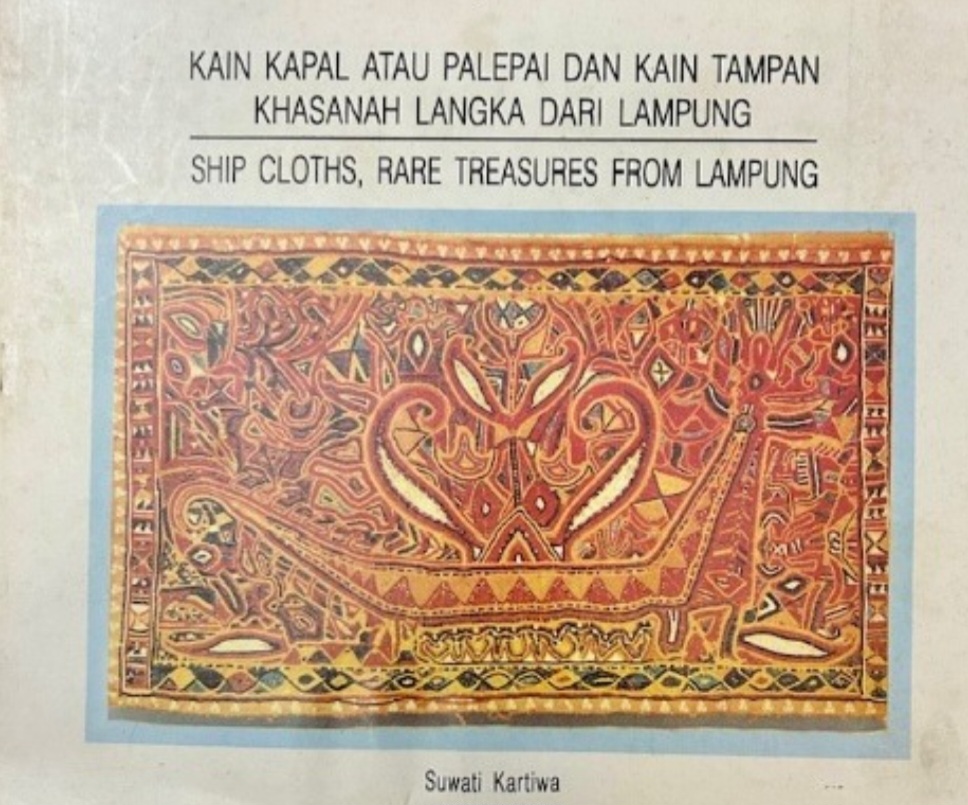
Author: Suwati Kartiwa, 1993, 46pg. (Indonesian and English), Booklet Publisher: Museum Nasional, Jakarta
Publisher: Museum Nasional, Jakarta
This booklet constitutes the first scholarly introduction to the rare shipcloths and tampan textiles originating from Lampung, South Sumatra. The author undertakes a comprehensive exploration of their historical development, cultural origins, and symbolic dimensions, while also elucidating the ritualistic, social, and functional roles these cloths have played within the communities that produced and preserved them. By situating these textiles within broader anthropological and artistic frameworks, the work highlights their significance not merely as material artifacts, but as carriers of collective memory, identity, and cosmological meaning.
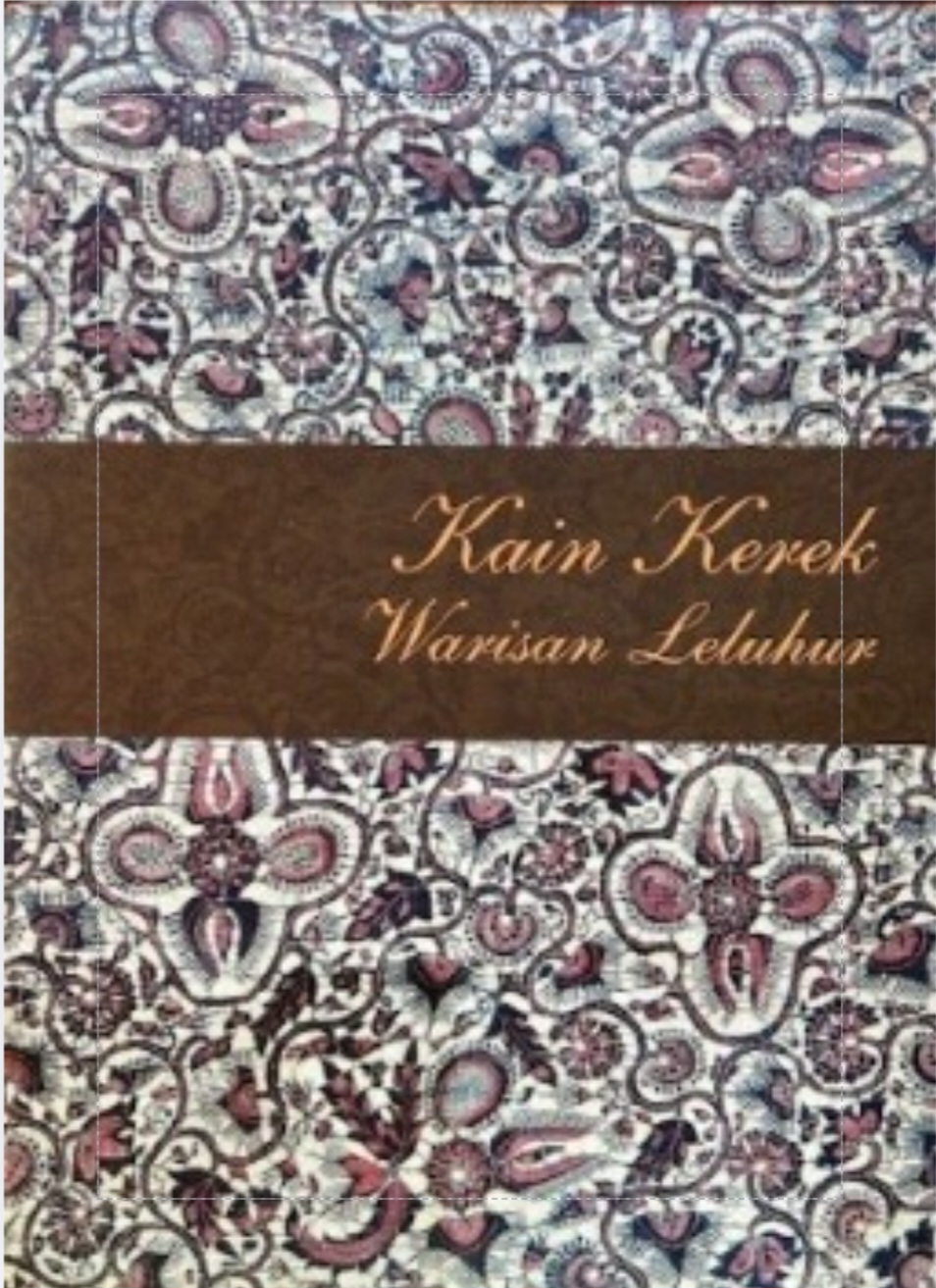
Author: Rens Heringa & Benny Gratha, 2013, 40 pg. (Indonesian). Softcover. Catalog
Publisher: Museum Tekstil Jakarta
The catalog was published in conjunction with the 2013 exhibition of Tuban textiles, held at the Jakarta Textile Museum. This publication not only documented the diverse array of fabrics on display but also served as an important scholarly resource, contextualizing the historical, cultural, and artistic significance of Tuban’s textile traditions within Indonesia’s broader heritage of material culture.
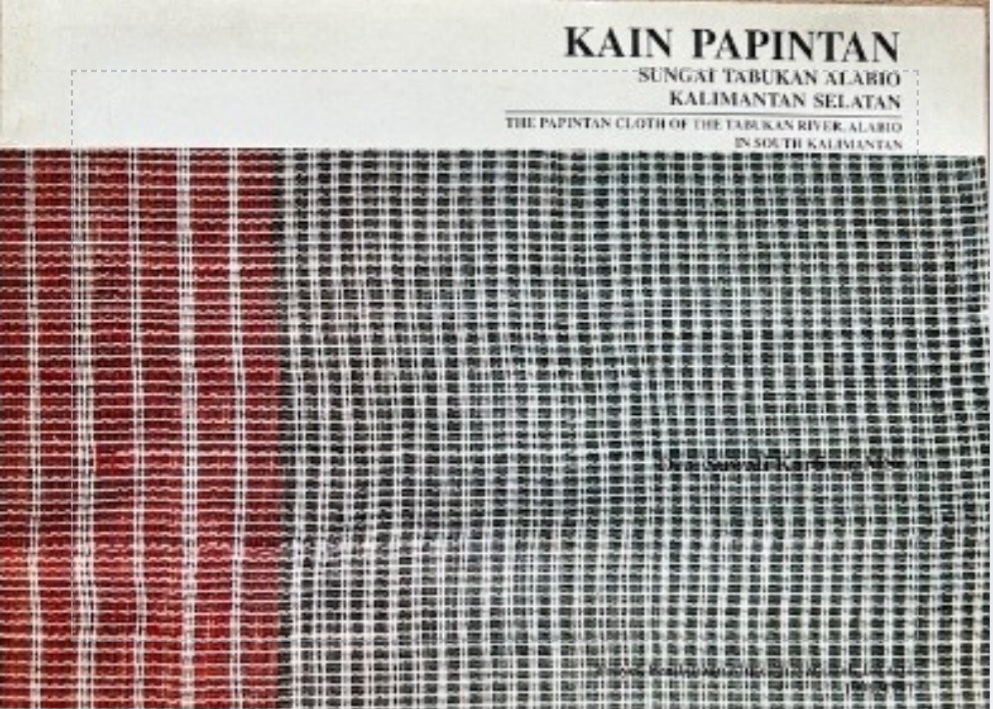
Author: Suwati Kartiwa, 1996, 34pg (Indonesian & English). Booklet
Publisher: Museum Nasional, Jakarta
This booklet introduces the kain papintan, a distinctive woven textile produced by communities residing along the Tabukan Alabio River in South Kalimantan. Characterized by its thin stripes and loosely woven structure, the cloth is regarded as sacred and is traditionally employed in healing rituals. Ethnographic accounts identify approximately nineteen distinct varieties of papintan, each classified according to its design motifs and chromatic combinations. The more delicate, loosely woven forms of papintan are commonly worn as undergarments, while textiles inscribed with verses from the Holy Qur’an are often draped on young children as a protective measure against malevolent spirits.
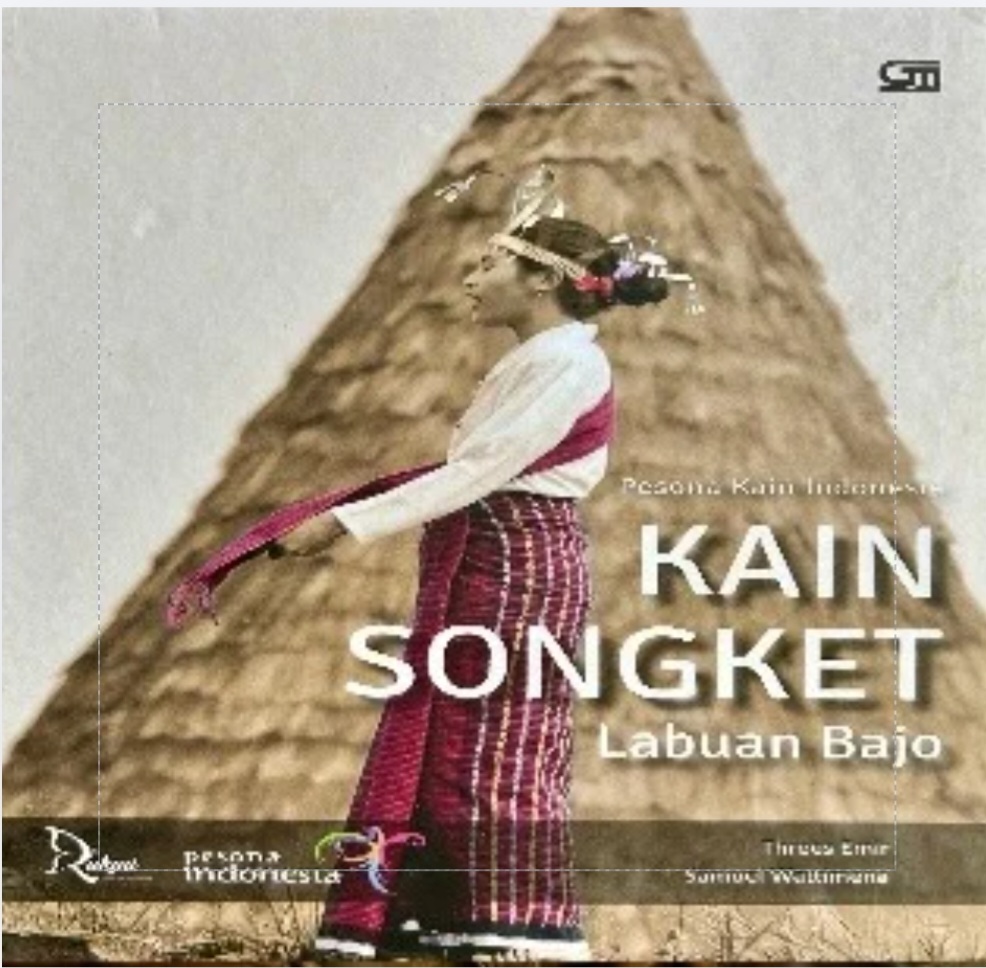
Author: Threes Emir & Samuel Wattimena, 2017. 128pgs. (Indonesian). Hardcover. Pesona Kain Indonesia Series
Publisher: Gramedia Pustaka Utama, Jakarta.
Songket textiles are produced throughout Indonesia, but the weavings from Labuan Bajo, in western Flores Island, receive less attention. This region is noted for its stunning songkets, which exemplify supplementary weft weaving. The book outlines the simple weaving techniques passed down from the Minangkabau ancestors and recounts the history of Todo Village, a former kingdom where traditional motifs have been preserved for generations. Its main objective is to promote these textiles as fashionable products, highlighting that fashion and culinary offerings are vital to the tourism industry.
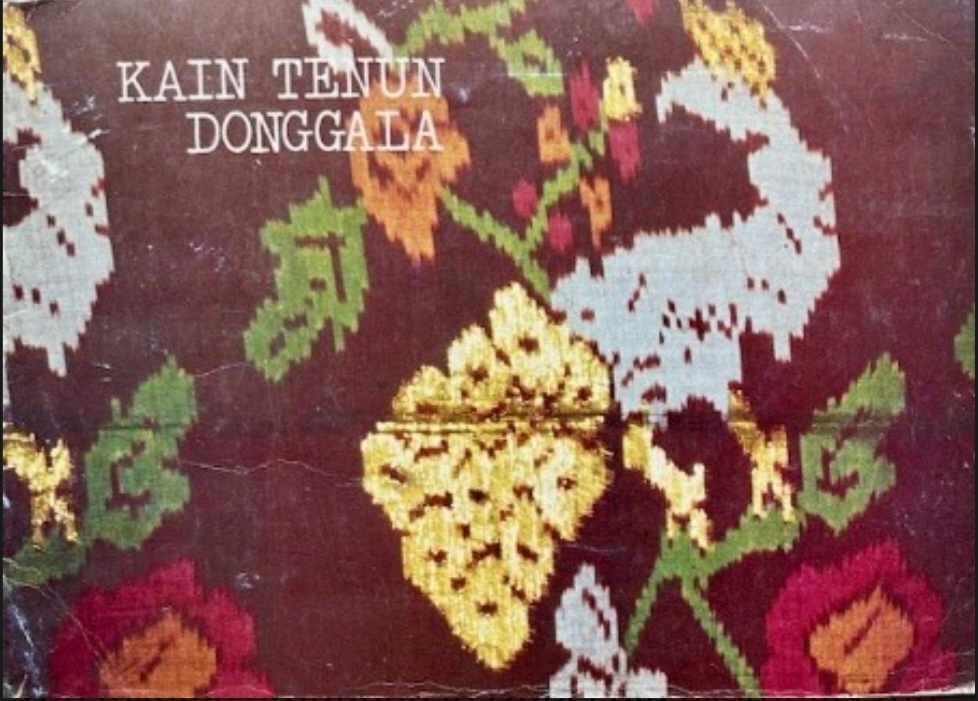
Author: Suwati Kartiwa & Judi Achjadi (Summary in English). 1983, 50pg. (Indonesian & English). Booklet
Publisher: Donggala Press, Donggala, Central Sulawesi
The textiles produced in Donggala exemplify the tradition of weft-ikat weaving, a technique that traces its lineage to the post-Hindu period of Indonesian cultural history. Comparable centers of weft-ikat production include Palembang, Pasemah, Bangka, and Riau Lingga along the eastern coast of Sumatra, as well as Gresik in Java, Bali, West Lombok, and the northern and central regions of Sulawesi. Donggala weavings are traditionally executed on backstrap looms, employing either natural or synthetic silk threads, and frequently incorporating synthetic dyes to achieve their distinctive chromatic effects. The authors provide a detailed exposition of the weaving process, delineate the principal varieties of Donggala silk sarongs, and situate Donggala silks within the broader framework of traditional costume, thereby underscoring their cultural and ceremonial significance.
Page 43 of 108