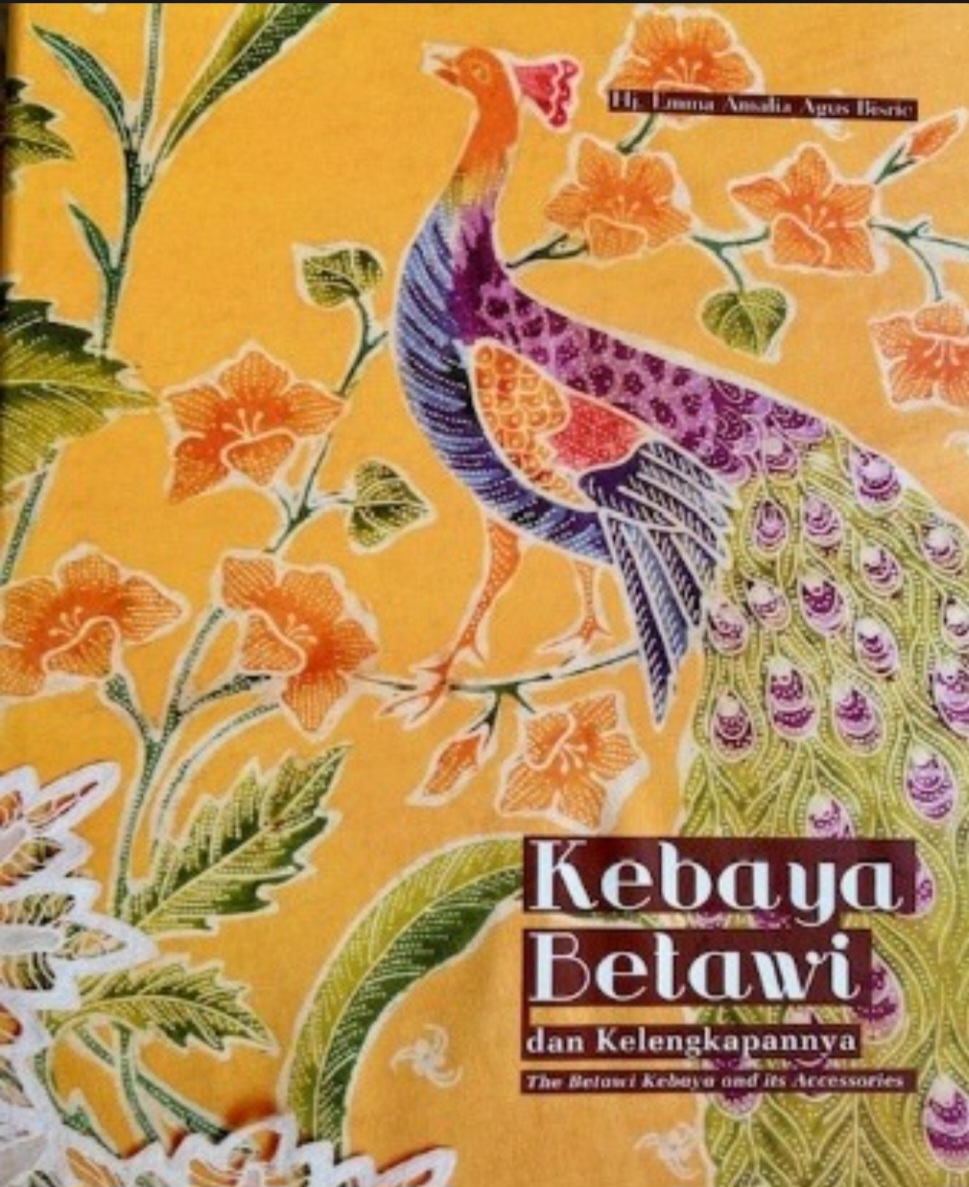
Author: Hj. Emma Amalia Agus Bisri, 2012. 160 pgs. (Indonesian and English). Hardcover
Publisher: Milla House, Jakarta
This volume is one of the first books published about the embroidered Betawi kebaya blouse, which is worn over a batik sarong. It explores the Betawi ethnic group, the original inhabitants of Jakarta, formerly known as Batavia during the Dutch colonial period. In the second chapter, the author describes eight different types of Betawi blouses. The book also includes detailed instructions on how to sew a kebaya, covering aspects such as creating the pattern, selecting materials and threads, and choosing the right embroidery to complement the batik sarong. The book also discusses accessories for the kebaya, including hairstyle, jewelry such as hairpins, and the peniti rantai (pin and chain), consisting of three brooches that secure the front of the kebaya. It also mentions the gold belt used to hold the sarong in place and the embroidered velvet mules worn by the individual. This book is a valuable addition to Indonesia’s textile heritage and is particularly significant for Betawi traditional batik fashion.
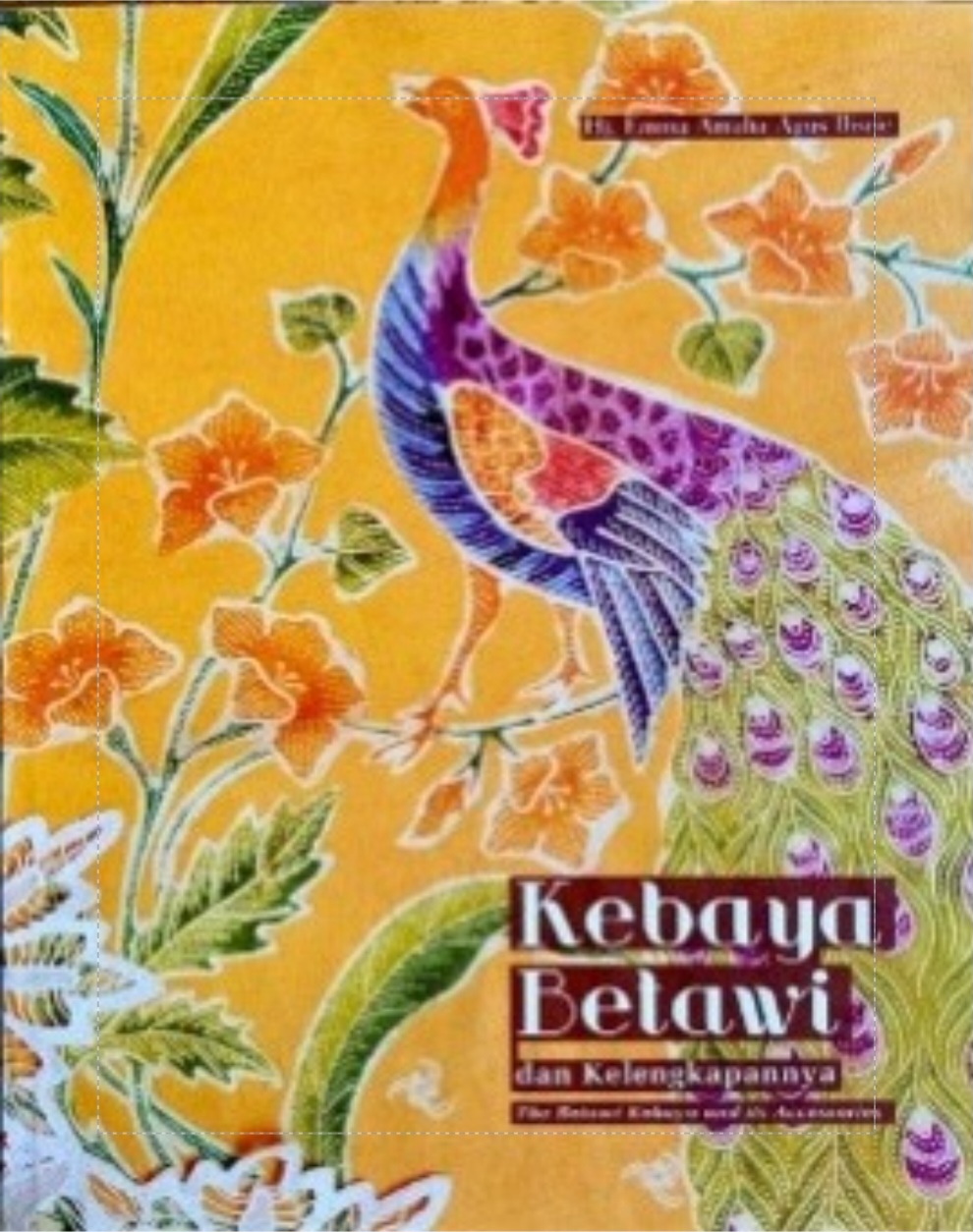
Author: Emma Amalia Agus Bisri, 2012. 159pgs. (Indonesian and English) Hardcover
Publisher: Milla House , Jakarta
This volume constitutes a highly acclaimed and meticulously curated visual encyclopedia of Betawi cultural attire. It documents not only the historical trajectory of the Betawi kebaya but also its profound symbolic resonances and the constellation of traditional accessories that accompany it. In doing so, the work serves as a crucial archival reference for the preservation of Indonesian heritage. The book is distinguished by its richly detailed photographs and finely executed cultural illustrations, which vividly capture the intricate craftsmanship embedded in the Betawi kebaya. The author adopts a holistic ethnographic approach, dedicating specific chapters to the sartorial practices surrounding hairpieces, shawls, jewelry, and footwear. This method underscores the integrative nature of Betawi dress, situating each accessory within its broader cultural and ceremonial context. Far from being a mere fashion compendium, the volume positions itself as an authoritative academic and cultural resource. For scholars engaged in research or students of cultural studies, it remains one of the most definitive references on traditional Betawi fashion, offering both visual documentation and interpretive depth. Its contribution lies in bridging aesthetic appreciation with ethnographic scholarship, thereby ensuring that Betawi sartorial traditions are not only admired but also critically understood and preserved.
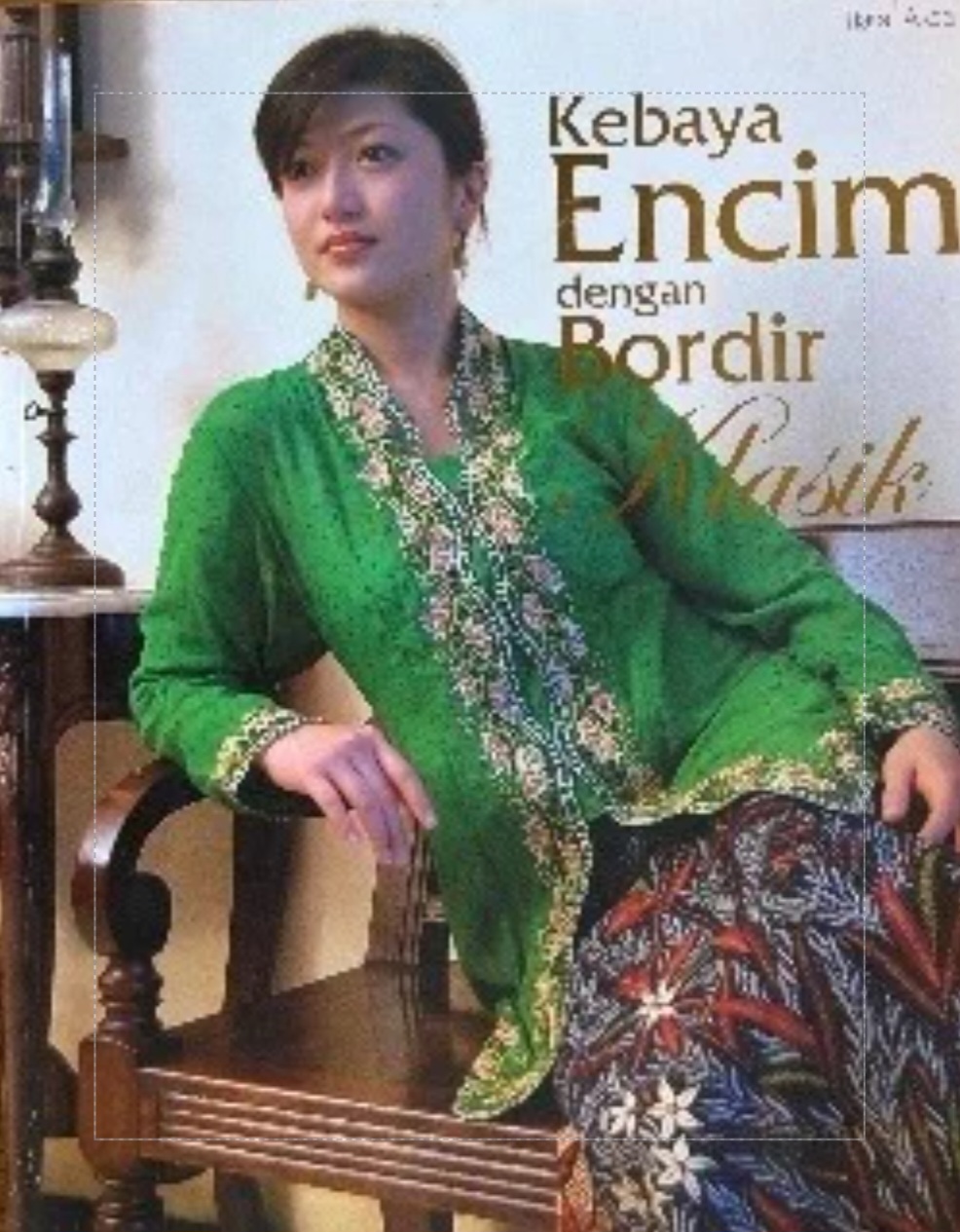
Author: Henny Hashim, 2007. 96pgs. (Indonesian) Softcover
Publisher: Tiara Aksa, Surabaya
Encim, a term originating from the Hokkien language, denotes an aunt or elder sister. This volume presents a curated selection of classic embroidery motifs traditionally employed to embellish the edges of a kebaya blouse by Indo-Chinese women in Indonesia. The encim kebaya rose to prominence during the 1970s, and over subsequent decades its embellishments evolved into increasingly elaborate forms, characterized by striking color palettes and ornate detailing. In contrast, this book emphasizes the understated elegance of earlier embroidery styles, preserving their simplicity as they were practiced in the past. The author not only discusses the qualities of embroidery threads but also shares twenty-two distinct patterns along with their names. Her intention is to inspire younger generations while simultaneously offering a comparative perspective on the stylistic transformations that occurred from the 1970s through the early 2000s.
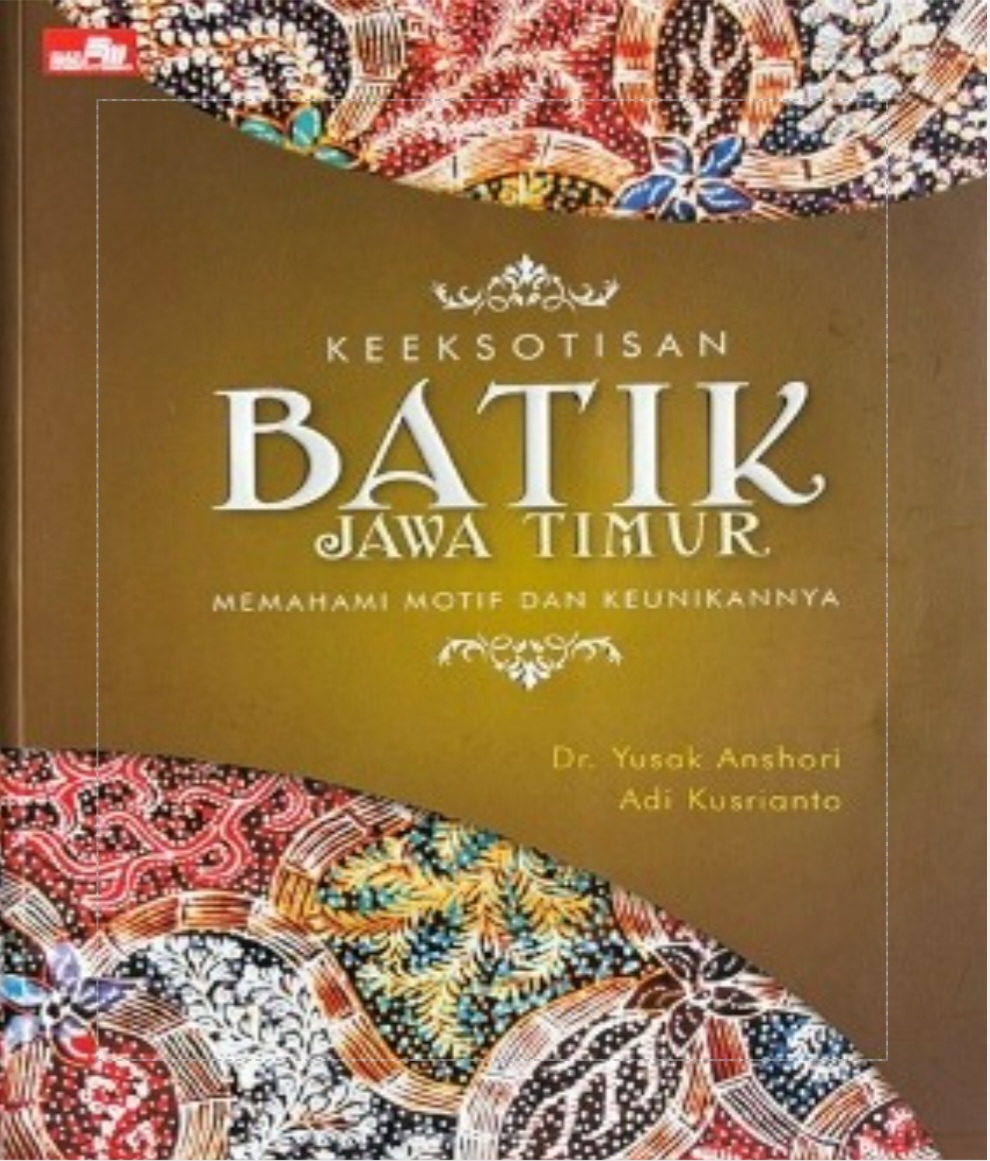
Author: Yusak Anshori & Adi Kusrianto, 2011. 350pgs. (Indonesian). Softcover
Publisher: Elex Media Komputindo, Kompas Gramedia, Jakarta
The cultural history of batik in East Java offers a unique lens through which to examine the intersection of art, trade, and identity in Indonesia. Archaeological evidence, such as textile motifs carved on stone statues from the Syailendra Period (8th–9th century), attests to the early presence of patterned cloth in the region. This tradition was further documented in the writings of Tomé Pirès (14th–15th century), who described East Java as a prominent hub within the spice trade network of the archipelago. From this nucleus, batik practices diffused into Central and West Java, embedding themselves into diverse cultural and social contexts. The evolution of East Javanese batik reflects the dynamic interplay of historical forces. Warfare and religious encounters produced textiles inscribed with Islamic calligraphy, while hierarchical distinctions generated batik reserved for royalty alongside designs accessible to commoners. Cross-cultural exchanges enriched the visual repertoire: Indo-European and Chinese motifs were assimilated into local aesthetics, and during the Second World War, Japanese iconography left a discernible imprint. These layers of influence underscore batik’s role as both a medium of cultural resilience and a canvas of adaptation. In contemporary Indonesia, batik occupies a dual position as a heritage practice and a driver of the creative economy. Its recognition by UNESCO as Intangible Cultural Heritage in 2009 reinforced its symbolic value, while its integration into fashion, design, and digital platforms has expanded its economic relevance. Yet, this vitality is tempered by pressing challenges. The proliferation of cheaper, printed imitations—often produced abroad without the traditional wax-resist technique—raises concerns about copyright protection and the erosion of artisanal authenticity. Environmental sustainability and declining youth participation further complicate its future trajectory.
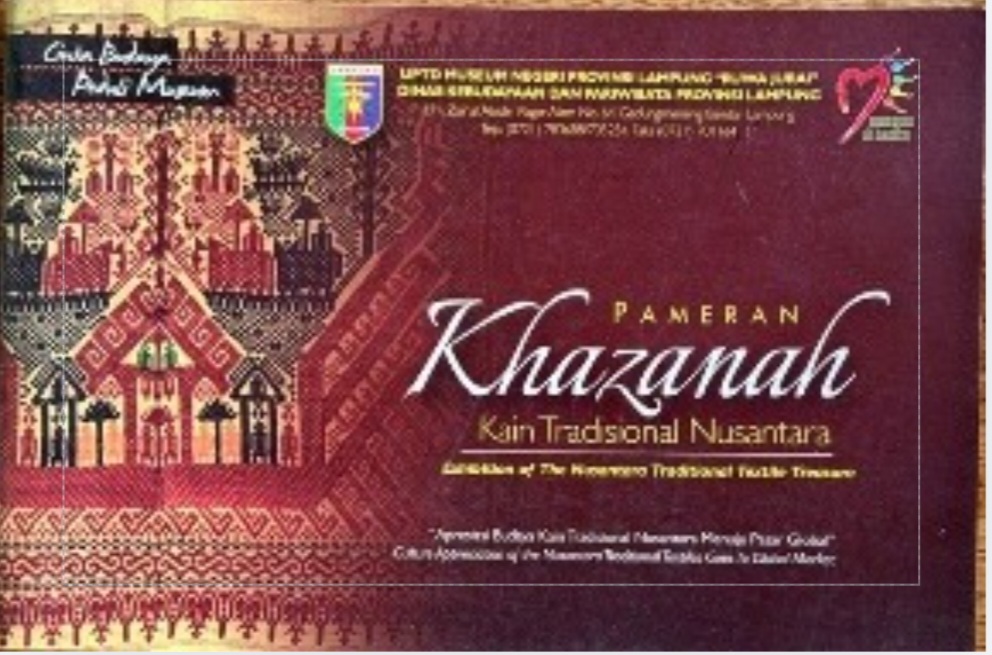
Author: Judi Achjadi & Misari, 2012. 53Pgs. (Indonesian & English). Softcover. Catalog
Publisher: Museum Negeri Provinsi Lampung “Ruwa Jurai”, Bandar Lampung
The exhibition Nusantara Textile Treasures presents a remarkable panorama of Indonesia’s diverse textile traditions, encompassing an extraordinary range of materials, techniques, and cultural expressions. From the barkcloth of Central Sulawesi and the palm-fiber weavings of Sami, Papua, to the monumental ikat blankets of West Sulawesi, the sophisticated batiks of Java, and the opulent gold-thread brocades of South Sumatra, the display culminates in contemporary innovations that extend from the late nineteenth century to the present day. These textiles are not merely static artifacts but living traditions—vibrant, adaptive, and continually evolving. Their vitality is inseparable from economic and social contexts: textile production has always been sustained by demand, for without a market there is neither impetus nor necessity to weave. Thus, the exhibition underscores both the aesthetic brilliance and the dynamic resilience of Indonesia’s textile heritage, situating it within broader discourses of cultural continuity, innovation, and exchange.
Page 45 of 108