

Author: Henny Hashim, 2007. 96pgs. (Indonesian) Softcover
Publisher: Tiara Aksa, Surabaya
Encim, a term originating from the Hokkien language, denotes an aunt or elder sister. This volume presents a curated selection of classic embroidery motifs traditionally employed to embellish the edges of a kebaya blouse by Indo-Chinese women in Indonesia. The encim kebaya rose to prominence during the 1970s, and over subsequent decades its embellishments evolved into increasingly elaborate forms, characterized by striking color palettes and ornate detailing. In contrast, this book emphasizes the understated elegance of earlier embroidery styles, preserving their simplicity as they were practiced in the past. The author not only discusses the qualities of embroidery threads but also shares twenty-two distinct patterns along with their names. Her intention is to inspire younger generations while simultaneously offering a comparative perspective on the stylistic transformations that occurred from the 1970s through the early 2000s.
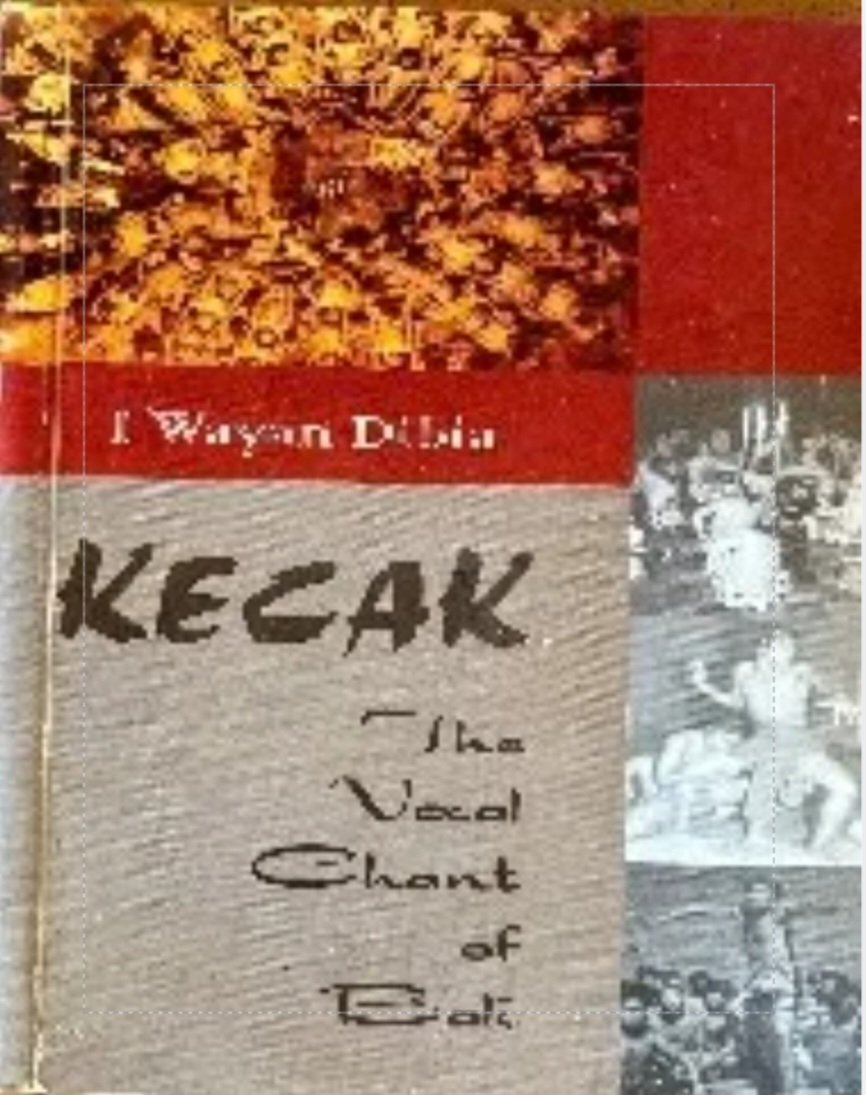
Author: I Wayan Dibya, 2000, Second edition. 92pgs. (English). Hardcover
Publisher: Hartanto Art Books Studio, Denpasar, Bali
The Kecak: The Vocal Chant of Bali emerges as a concise yet illuminating guide to one of the island’s most emblematic performance traditions. This volume, authored by the distinguished Balinese artist and scholar I Made Bandem Dibia, situates the kecak within its historical trajectory, rhythmic complexity, and profound cultural resonance. Drawing upon his lived experience as a dancer and choreographer, Dibia offers a perspective that is both authoritative and deeply personal, bridging practitioner insight with scholarly exposition. The text traces the transformation of kecak from its origins in the sacred Sanghyang trance ritual into a modern performance genre, crystallized in the 1930s through collaboration with the German painter and cultural interlocutor Walter Spies. In doing so, it highlights the interplay between indigenous ritual practice and intercultural artistic exchange, underscoring how Balinese traditions have been simultaneously preserved and reconfigured in dialogue with external influences. Particularly valuable is the book’s explication of the intricate vocal structures—the hypnotic layering of cak-cak-cak syllables—and their integration with narrative episodes from the Ramayana. These analyses render accessible the otherwise daunting polyphonic textures of the chant, allowing readers to appreciate both its aesthetic sophistication and its narrative function. At fewer than one hundred pages, the work functions as an elegant introduction rather than an exhaustive treatise. Its clarity and readability make it indispensable for general audiences and students of Southeast Asian performance, though specialists in ethnomusicology may find its analytical depth limited. The absence of extended theoretical frameworks or comparative indices positions the book more as a cultural primer than as a comprehensive academic monograph. Nevertheless, its synthesis of historical context, performative detail, and insider testimony ensures its enduring value as a gateway into Bali’s vibrant performative heritage.
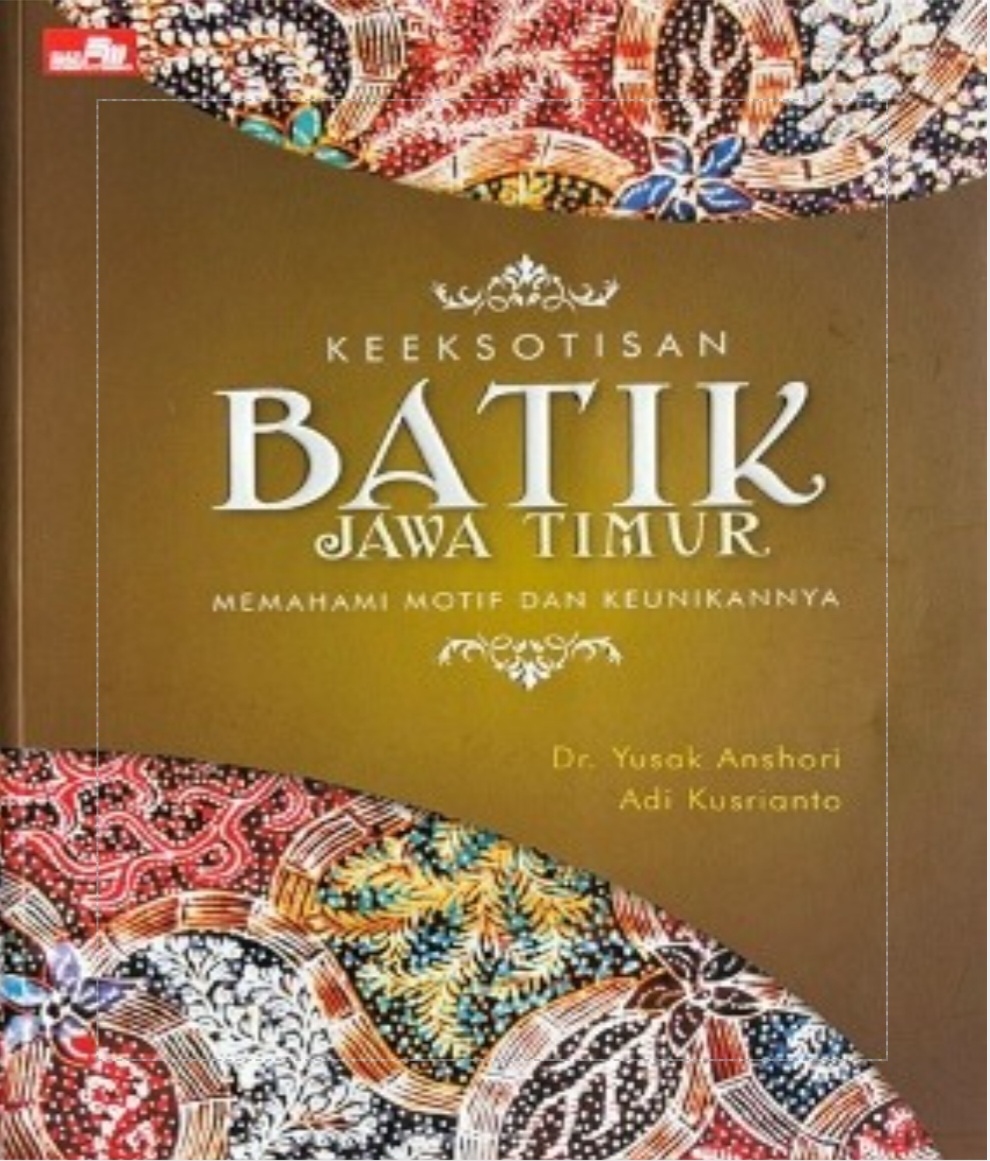
Author: Yusak Anshori & Adi Kusrianto, 2011. 350pgs. (Indonesian). Softcover
Publisher: Elex Media Komputindo, Kompas Gramedia, Jakarta
The cultural history of batik in East Java offers a unique lens through which to examine the intersection of art, trade, and identity in Indonesia. Archaeological evidence, such as textile motifs carved on stone statues from the Syailendra Period (8th–9th century), attests to the early presence of patterned cloth in the region. This tradition was further documented in the writings of Tomé Pirès (14th–15th century), who described East Java as a prominent hub within the spice trade network of the archipelago. From this nucleus, batik practices diffused into Central and West Java, embedding themselves into diverse cultural and social contexts. The evolution of East Javanese batik reflects the dynamic interplay of historical forces. Warfare and religious encounters produced textiles inscribed with Islamic calligraphy, while hierarchical distinctions generated batik reserved for royalty alongside designs accessible to commoners. Cross-cultural exchanges enriched the visual repertoire: Indo-European and Chinese motifs were assimilated into local aesthetics, and during the Second World War, Japanese iconography left a discernible imprint. These layers of influence underscore batik’s role as both a medium of cultural resilience and a canvas of adaptation. In contemporary Indonesia, batik occupies a dual position as a heritage practice and a driver of the creative economy. Its recognition by UNESCO as Intangible Cultural Heritage in 2009 reinforced its symbolic value, while its integration into fashion, design, and digital platforms has expanded its economic relevance. Yet, this vitality is tempered by pressing challenges. The proliferation of cheaper, printed imitations—often produced abroad without the traditional wax-resist technique—raises concerns about copyright protection and the erosion of artisanal authenticity. Environmental sustainability and declining youth participation further complicate its future trajectory.
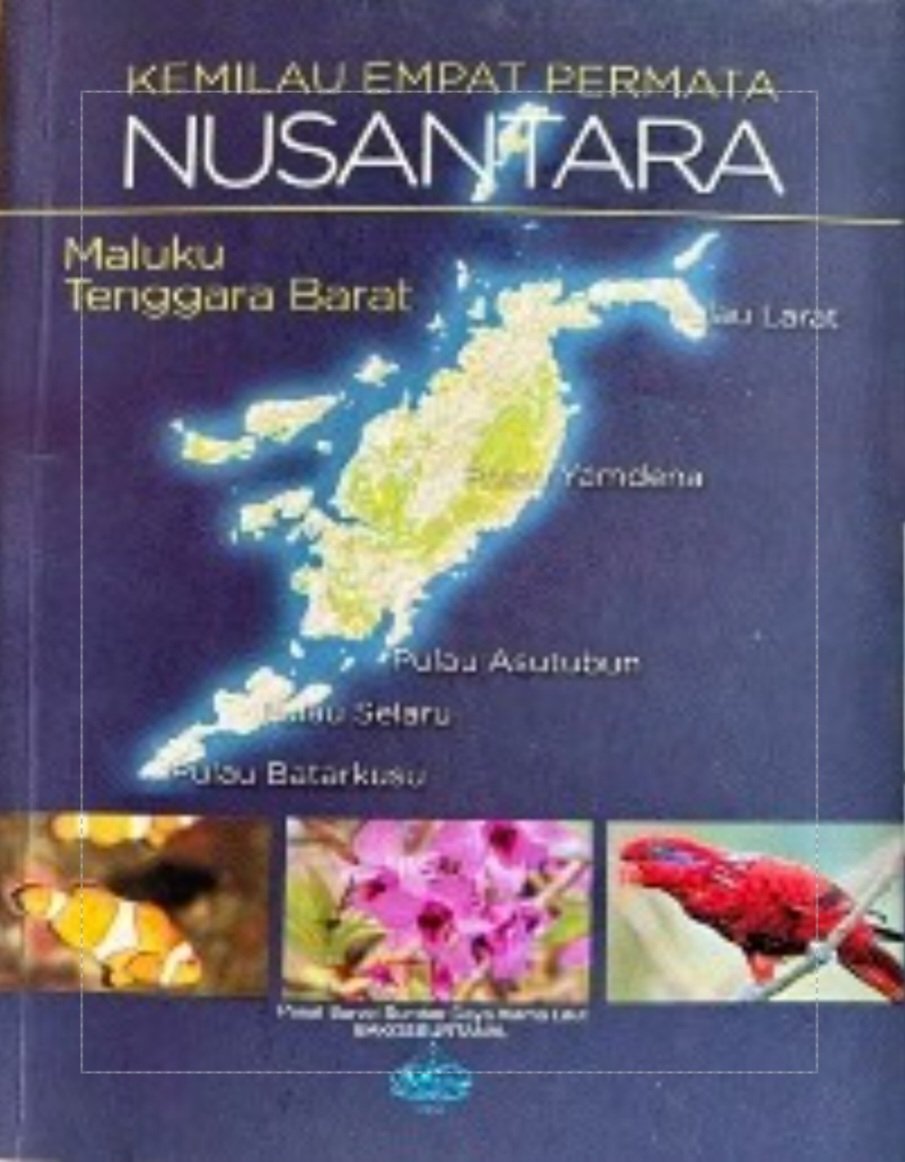
Author: various editors of BAKOSURTANAL, 2010. 158pgs. (Indonesian) Softcover
Publisher: Pusat Survei Pusat Sumber Daya Alam, BAKOSURTANAL, Bogor, Indonesia
This volume constitutes a highly strategic, research-driven publication dedicated to the mapping, inventorying, and ecological assessment of the outermost small islands within West Southeast Maluku (Maluku Tenggara Barat) border zone. The “four gems” referenced in its title structurally designate four critical frontier islands of Indonesia—Pulau Larat, Pulau Asutubun, Pulau Selaru, and Pulau Batarkusi. Far from a casual travelogue, the work functions as a vital scientific blueprint, detailing marine spatial planning, local biodiversity inventories, ecosystem vulnerabilities, and parameters of national sovereignty. The text meticulously documents the geographic realities of these four border islands, underscoring their monumental geostrategic significance as markers delineating Indonesia’s exclusive economic zone (EEZ) adjacent to neighboring states such as Australia. It provides precise geographic coordinates, topographic surveys, and baseline infrastructure data indispensable for geopolitical assertion and territorial preservation. A substantial portion of the literature is devoted to the pristine yet fragile marine habitats surrounding the islands. It records ecological data ranging from coral reef recovery metrics following historical disturbances (including tsunamis) to detailed catalogs of reef fish communities. Published by Bakosurtanal (now the Geospatial Information Agency), the book establishes rigorous technical benchmarks, employing advanced geospatial mapping, ecological metrics, and ecosystem balance methodologies. It further articulates guidelines for local governance, emphasizing the imperative of managing fragile island ecosystems without inflicting irreversible damage upon coastal habitats. By bridging a significant lacuna in the literature on the remote Tanimbar cluster, the volume provides indispensable scientific data for policymakers seeking to foster sustainable maritime economies. Through the inclusion of biological indicators—such as fish population dynamics and coral recruitment rates—it offers a historical environmental baseline against which climate researchers may measure future ecological change. Compiled by a technical survey team, the book’s reliance on geographic coordinates, mapping terminology, and statistical resource inventories may render its style somewhat austere or inaccessible to casual readers and eco-tourists in search of lighter cultural narratives. Nonetheless, its scholarly rigor and methodological precision ensure its enduring value as a foundational resource in the domains of marine ecology, geospatial science, and maritime policy.
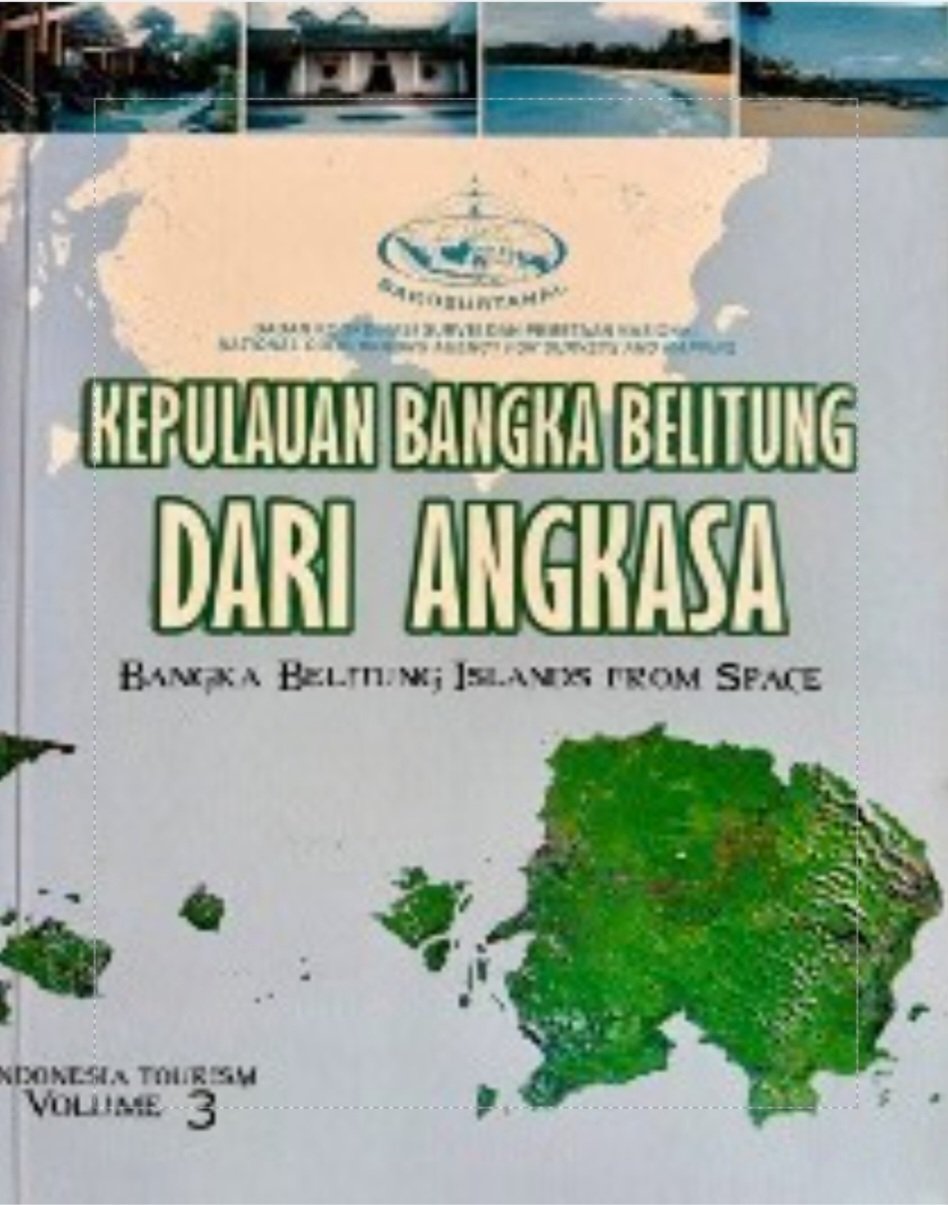
Author: Team of Editors, 2008. 121pgs (English & Indonesian). Softcover Indonesian Tourism Vol. 3
Publisher: Badan Koordinasi Survey dan Pemetaan Nasional (BAKOSURTANAL), Bogor, Indonesia
The volume constitutes a cartographic and pedagogical work that offers a comprehensive aerial and geographical survey of Indonesia’s thirty-first province, systematically mapping its principal territories, natural resources, and administrative divisions. Conceived as an instructive geographical guide, it introduces readers to the physical configuration and structural composition of the Bangka–Belitung Islands. Through the deployment of satellite-style imagery, cartographic renderings, and aerial perspectives, the text guides readers across the province’s administrative framework, encompassing its seven core regions and the capital city, Pangkal Pinang. Distinguished by its capacity to translate complex spatial data into accessible sections, the book emphasizes spatial perspectives by presenting information “from above.” This aerially oriented structure provides an engaging interpretive lens that sets it apart from conventional, text-heavy geography manuals. As such, the work functions as an effective supplementary reference for classroom instruction in Indonesian local geography, regional autonomy, and maritime landscapes. Nevertheless, the book’s availability exclusively in Indonesian poses a limitation for foreign researchers and tourists seeking to engage with the province’s distinctive archipelagic structure. This linguistic barrier restricts broader accessibility, despite the text’s evident value as a scholarly and educational resource.
Page 66 of 151