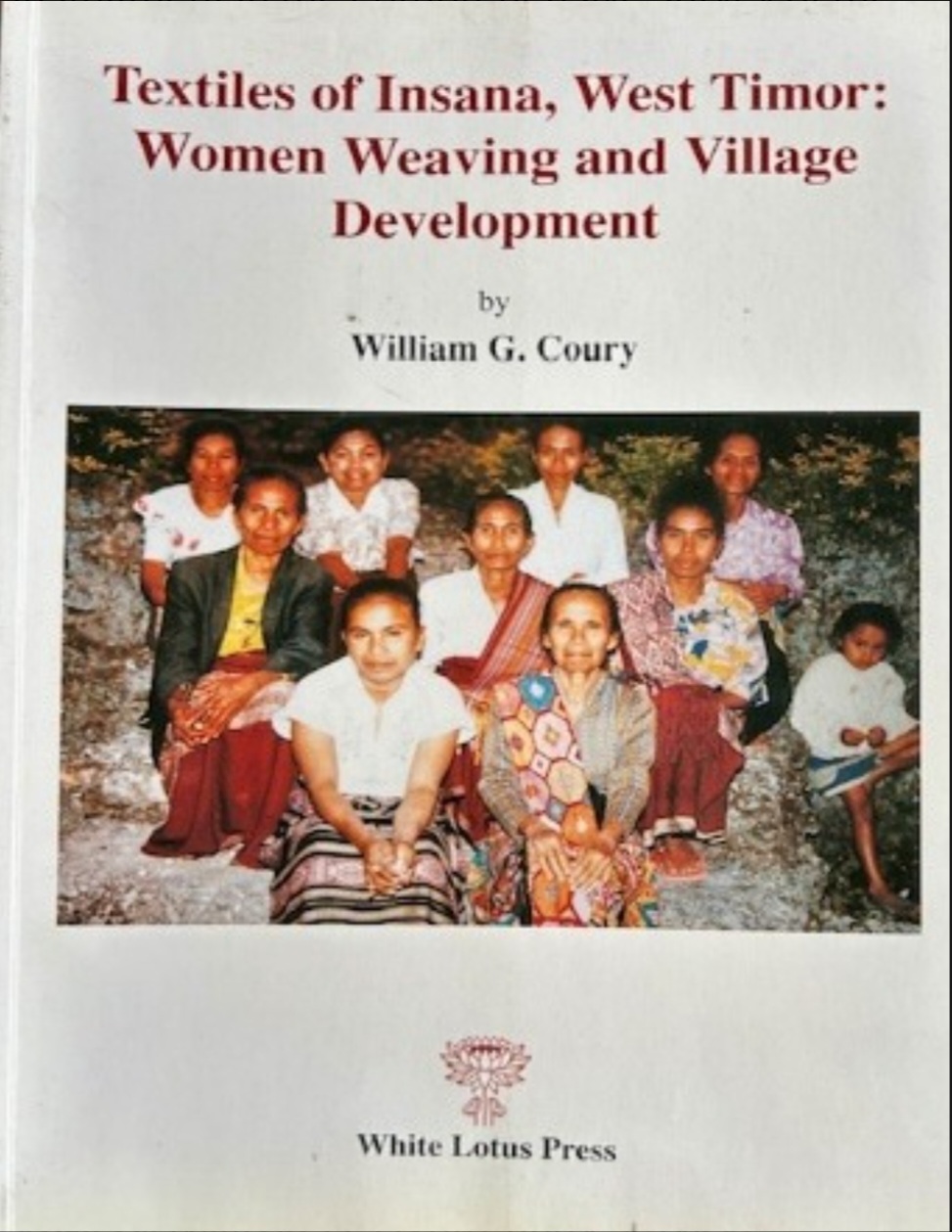
Author: William C. Coury, 2004. 134pgs. (English). Softcover Studies in the Material Cultures of Southeast Asia Series no.6
Publisher: White Lotus, Bangkok
The book offers a comprehensive examination of the textile production processes in Insana, situating them within their broader socio-cultural and economic contexts. It explores the multifaceted functions of weaving in society, including its role in sustaining cultural identity and fostering communal solidarity. Particular attention is devoted to the formation and organization of cooperative weaving groups, which serve not only as economic collectives but also as platforms for social empowerment. Central to the discussion is the pivotal role of women, whose participation in weaving activities contributes substantially to household income generation and, more broadly, to regional economic development. In this way, the text illuminates the intersection of tradition, gender, and economic modernization in Insana’s evolving textile industry.
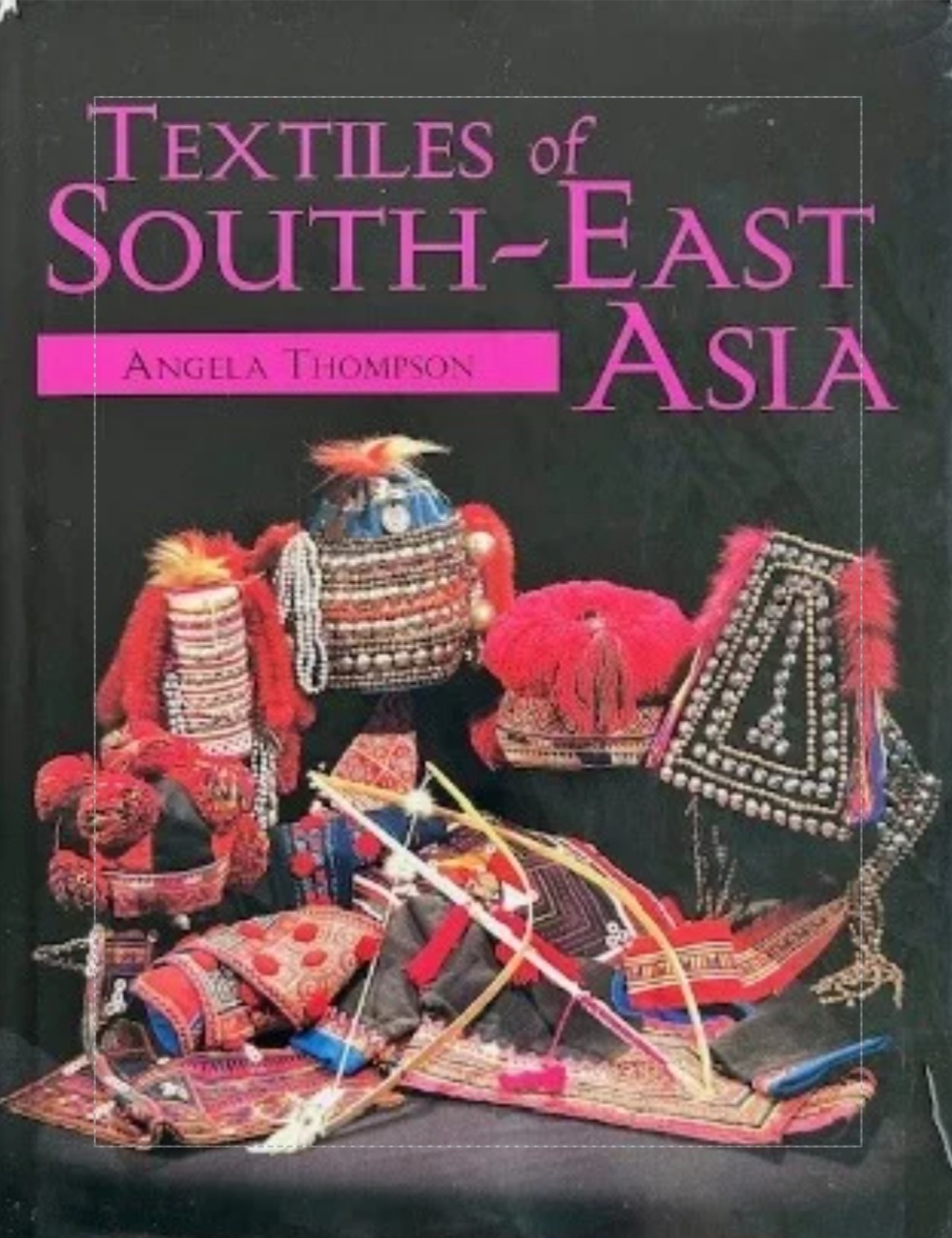
Author: Angela Thompson, 2007. 225pgs. (English). Hardcover
Publisher: Crowood Press, Wiltshire, England
By juxtaposing the costumes, weaving traditions, and textile techniques of diverse nations, this volume immerses readers in the cultural tapestry of Southeast Asia’s “Golden Triangle.” Its chapters traverse the tropical forests, fertile plains, and riverine landscapes of Thailand, Laos, and Myanmar; the verdant rice paddies of Vietnam and Cambodia; and the storied Spice Islands encompassing Malaysia, Indonesia, and the Philippines. The narrative further investigates distinctive practices such as the cultivation of silkworms and the semiotic significance embedded within woven motifs. Richly illustrated and meticulously researched, this work promises to captivate scholars and art connoisseurs alike.
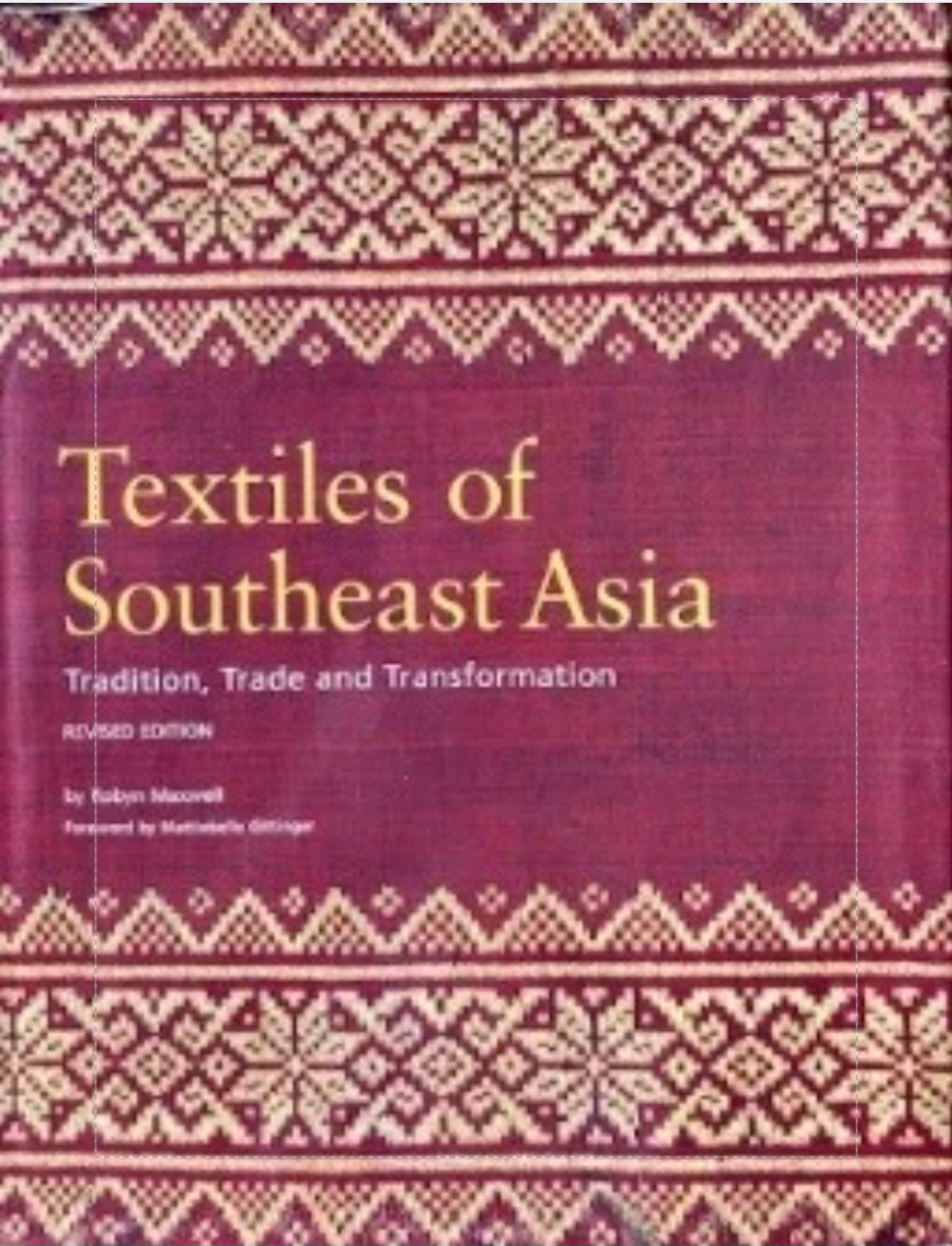
Author: Robyn Maxwell, 2003, 432pg. (English) Hardcover
Publisher: Periplus edition, Singapore
Traditional textiles constitute one of the most significant and enduring categories within the artistic heritage of Southeast Asia. Crafted from a diverse array of locally sourced and imported raw materials, these textiles embody an extraordinary repertoire of techniques, including various forms of appliqué, decorative weaving, ikat and other resist-dyeing methods, batik, and intricate embroidery. Their functions extend across a wide spectrum, ranging from quotidian attire to sacred and ceremonial vestments, as well as shrouds, ritual cloths, banners, and regalia imbued with symbolic meaning. This volume, originally published in 1990 and subsequently reissued in 2003, features more than 400 color illustrations drawn primarily from the distinguished textile collection of the National Gallery of Australia. It endures as a seminal reference work and an authoritative resource for the scholarly study of Southeast Asian textile arts.
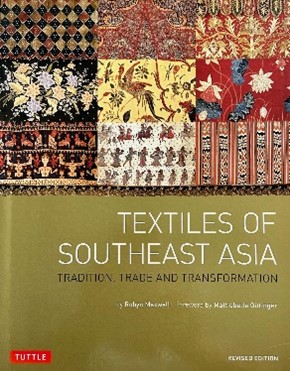
Author: Robyn Maxwell. 2014. Revised edition. 432pg. (English)
Publisher: Tuttle Singapore
Maxwell’s book, a revised edition of her 1990 publication, summarizes her previous research and explores the historical influences on contemporary textiles. Illustrated with beautiful and rare examples, her work draws on extensive fieldwork and connects to collections like those at the National Gallery of Australia. It also includes contributions from other scholars and a thorough bibliography, making it an essential reference for enthusiasts of Southeast Asian traditional textiles.
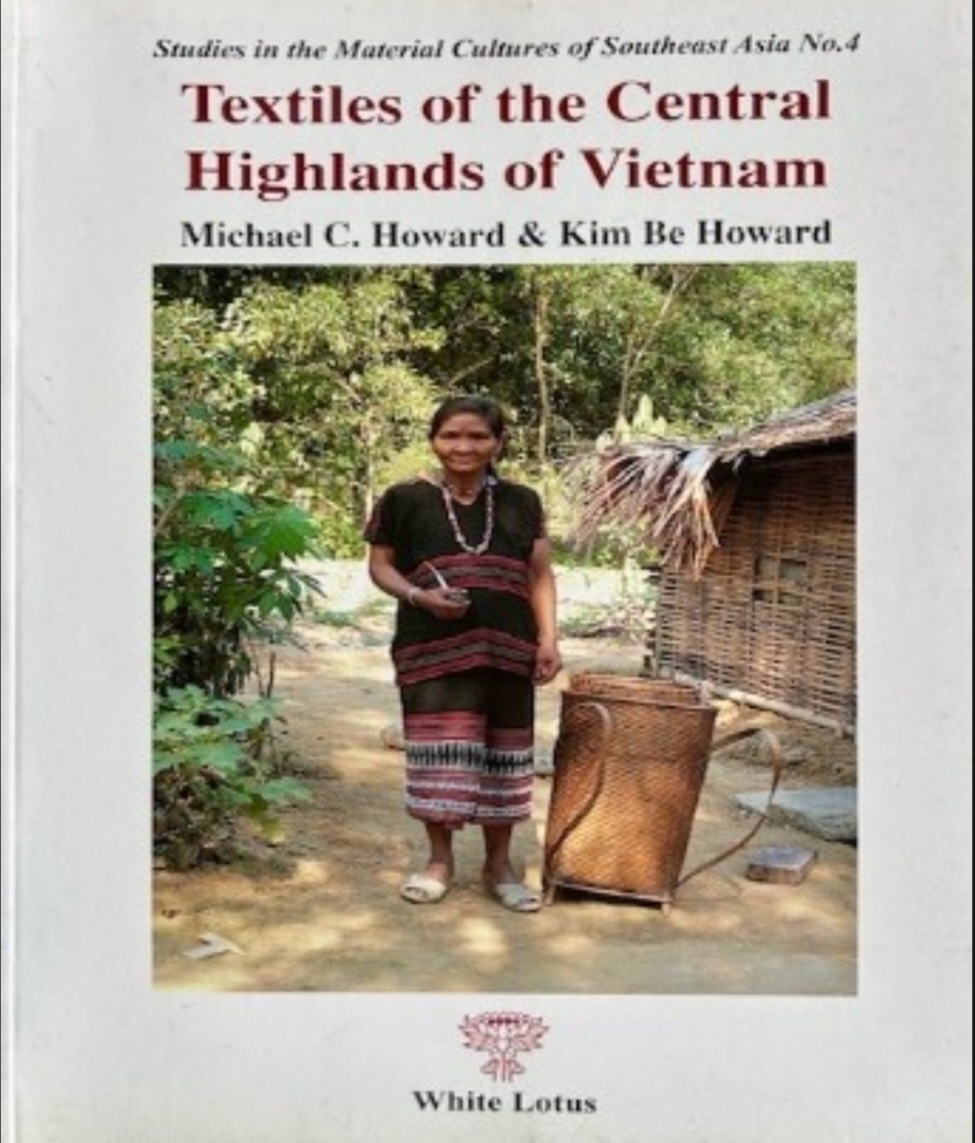
Author: Michael C. Howard, Kim Be Howard, 2002. 220pgs. (English). Softcover Studies in the Material Cultures of Southeast Asia Series no.4
Publisher: White Lotus, Bangkok
The book represents the first comprehensive survey of the textile traditions of the peoples inhabiting Vietnam’s Central Highlands. This region is home to twenty-one distinct ethnic groups, whose members speak languages belonging to the Malayo-Polynesian and Mon-Khmer families. The volume provides a nuanced background on the historical trajectories and cultural practices of these communities, while offering an in-depth examination of their weaving techniques and sartorial traditions. By situating textile production within broader social and cultural contexts, the study illuminates the ways in which clothing and fabric serve not only as markers of identity but also as vehicles of artistic expression and cultural continuity.
Page 87 of 108